A single cracked terracotta pot, abandoned behind my shed, became the unlikely nursery for a self-seeded marsh marigold, its golden blooms tracing a damp, forgotten corner where water once pooled.
That accidental pond edge taught me something: boundaries between water and land are never truly fixed. They’re negotiations, shifting zones where root, stone, and current interweave.
I’ve spent years testing those negotiations across ten distinct approaches, each calibrated for specific site conditions, maintenance capacities, and ecological ambitions.
The methods ahead range from engineered filtration gradients to deliberately unmanaged wildlife margins.
What follows isn’t decoration, it’s infrastructure with consequences.
Start Here: How to Choose Your Pond Border Style
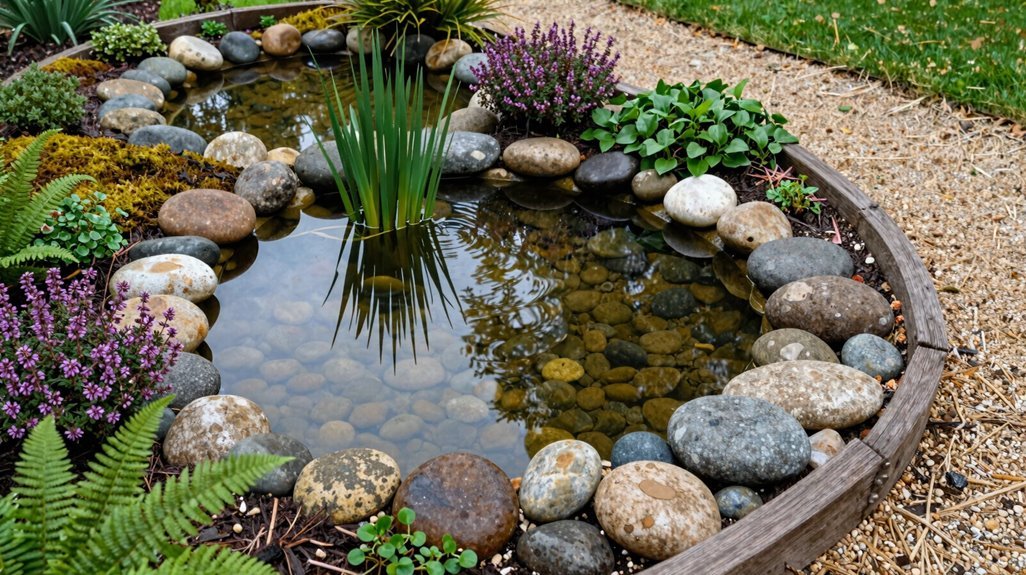
Why does a pond border matter so much? I’ve learned it frames everything, turning a water feature into a living room we all want to gather in. When I choose my pond border style, I start by preserving that precious view, tucking taller plants toward the back while keeping low-growers up front. The edge becomes a threshold, not a barrier.
For edging materials, I match my site’s character, natural stone with its pervious gaps for habitat, or timber for clean lines. I plan plants and edging together, placing moisture-loving marginals right at the waterline while evergreen accents hold structure through winter.
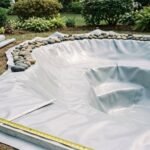
Securing proper footings matters, overlapping edging stones over the liner edge to lock the seal against filtration failures.
Soften Your Pond Edge With a Gentle Pebble Beach
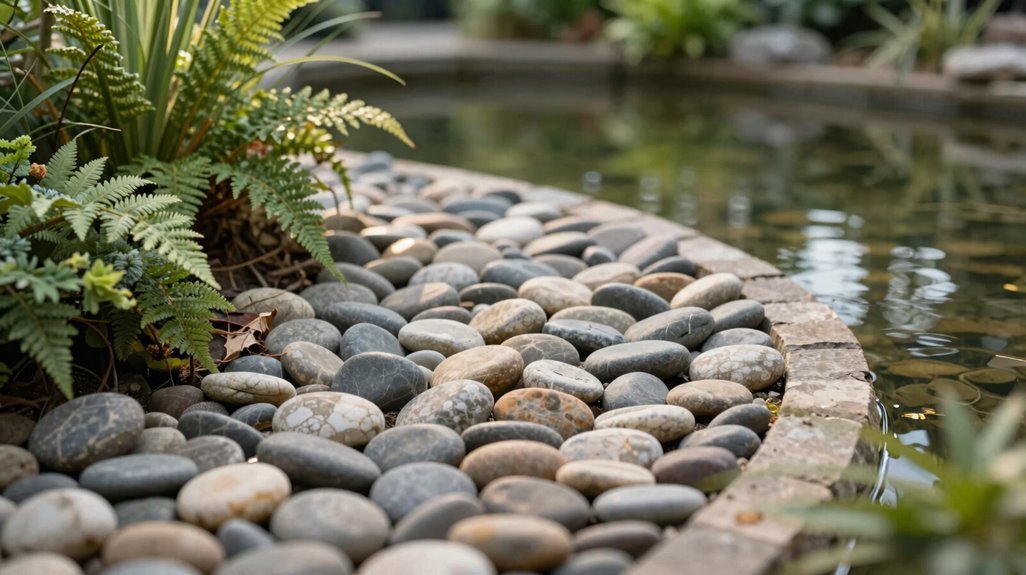
Moving beyond structured edging, I’ve found that a pebble beach offers something stone walls simply cannot: a living gradient where water meets land without a hard stop. I build mine with a gentle slope from the pond floor, letting water lap over layered gravel that shifts from fine pea gravel at the waterline to larger cobbles uphill. This pond edging anchors securely with compacted subsoil and a protective liner beneath, preventing washout while staying pervious enough for root penetration.
Seeking that sense of place we all crave, I’ve watched marginal irises colonize these shelves, their rhizomes knitting the slope together. The texture deepens seasonally: algae films cobbles, insect larvae burrow between stones, and filamentous grasses thread through gaps. Mimicking a natural stream edge, this filtration zone buffers nutrients while gradual habitat develops along the bank.
You’ll belong there, barefoot at dawn, toeing through cool variegated stone.
Choose Natural Stone Edging That Protects Wildlife
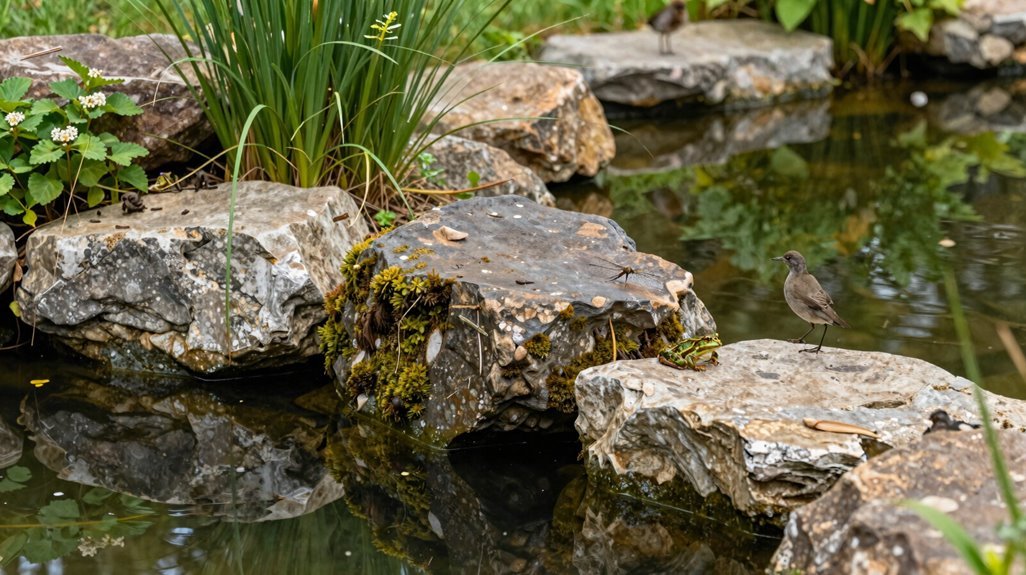
When I line my pond with natural stone, I’m doing more than hiding the liner; I’m building terrain that holds the bank against winter frost and summer drought, while loose-laid gaps become corridors for the creatures I’m hoping to attract.
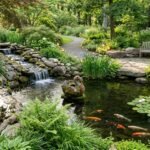
I choose Surrey sandstone or Sussex flint, sourced locally to root my garden in its region. Dry-laid stone edging, stacked without mortar, lets water drain naturally and invites frogs, toads, newts, slow worms, and beetles into crevices that stay cool through summer, warm through winter.
Overlapping each stone onto the liner edge, bedding it into compacted subsoil or sand, I lock the boundary against erosion. This stone edging doesn’t just frame my pond; it weaves a wildlife habitat into every crack and shadow, making my garden a place where belonging extends beyond me.
Create a Bog Border for Moisture-Loving Plants
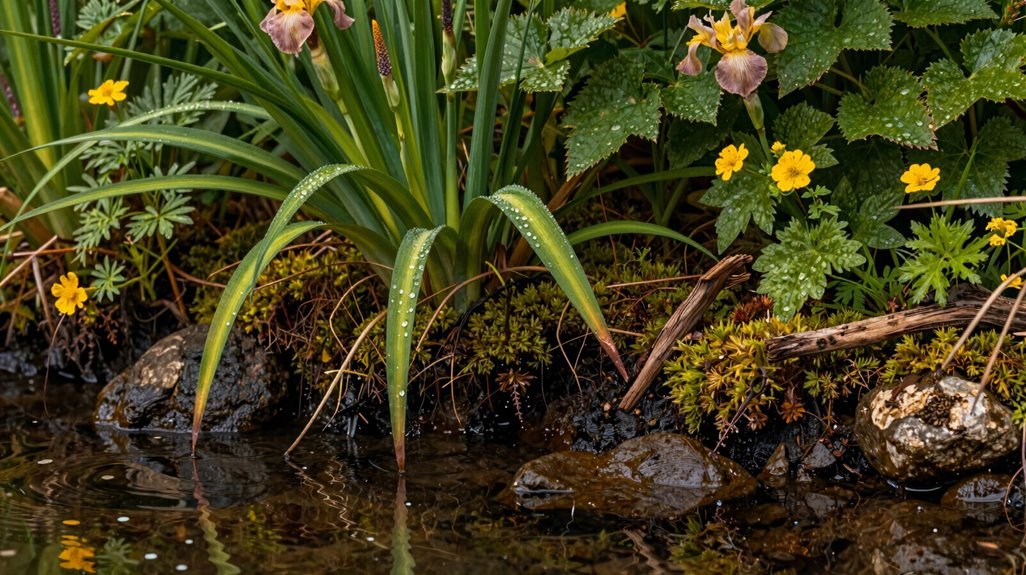
I like building a bog border because it creates that soft, pervious edge where my pond water meets the garden, giving me layered filtration and a home for damselflies. You’ll want to pick plants that don’t just survive wet feet but actually demand them, like marsh marigold pushing through mucky soil in early spring.
When I line my shallow shelf with that perforated rubber and fill it with compost-heavy mix, I’m building a living sponge that stays damp without drowning anything.
Bog Garden Benefits
Because soggy margins often look messy yet serve essential ecological functions, I’ll show you how a bog border turns that awkward pond edge into a deliberate, habitat-rich space. I construct this shelf-like margin using a perforated liner, topsoil, and compost, maintaining constant moisture for moisture-loving plants without standing water.
The bog garden benefits extend beyond aesthetics. Native marginals like marsh marigold and purple loosestrife establish filtration zones, their roots trapping sediment while offering cover. I’ve watched pollinators cluster these blooms, and amphibians shelter among the stems.
Integrating meadow-like edges with native grasses balances your access against habitat needs. In Surrey and Sussex projects, I’ve seen these planted margins become living corridors, where damselflies perch on reed stems and the pond’s edge feels intentionally wild, not neglected.
Plant Selection Tips
Though the margin’s soggy soil limits your options, I’ve found that constraint becomes a creative framework once you understand which plants actually want these conditions. I build my bog border along a shallow marginal shelf, lining it with perforated material, topsoil, and compost to maintain that pervious, consistently damp environment moisture-lovers crave.
I select marsh marigold, yellow iris, and purple loosestrife for their reliable performance in saturated edges. For visual depth, I pair broad-leaved Mojito colocasia against the delicate fronds of foxtail fern, creating that textural tension we garden-keepers seek. Native marginal plants anchor my filtration system while feeding pollinators who’ve become regular visitors to my water’s edge.
I tuck annuals around the outer rim for seasonal color, letting perennials provide the structural backbone that connects this bog border seamlessly to the pond beyond.
Stack Logs and Deadwood to Feed Local Wildlife
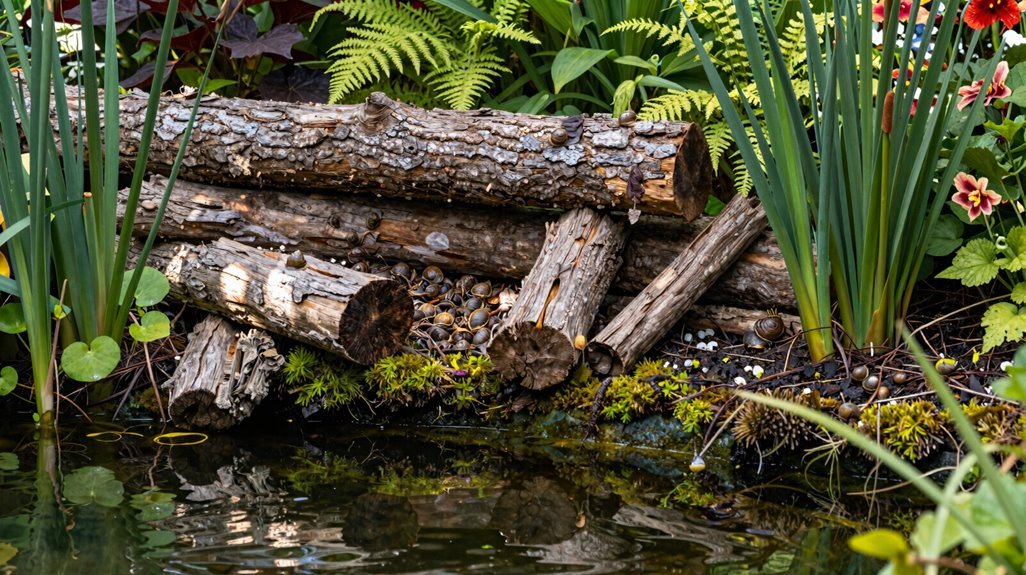
Why settle for a rigid border when I can invite the whole woodland edge to live at my pond? I stack logs and deadwood along the perimeter, creating a pervious, living boundary that breathes with the garden. Partially burying these pieces prevents rolling, anchoring a stable habitat pile where fungi lace the bark, mosses carpet damp crevices, and invertebrates colonize every fissure.
Submerged wood harbors stag beetle eggs, while woodlice, centipedes, and ground beetles shelter in the labyrinth of decay. This filtration of life extends right to the waterline, doubling as low retaining walls with hexagon-tiled textures of lichen and bark. By incorporating deadwood, I align my pond with woodland management practices, supporting the cornerstone of healthy ecosystems. The wildlife comes, and I belong here too.
Grow a Meadow Border Right to the Waterline
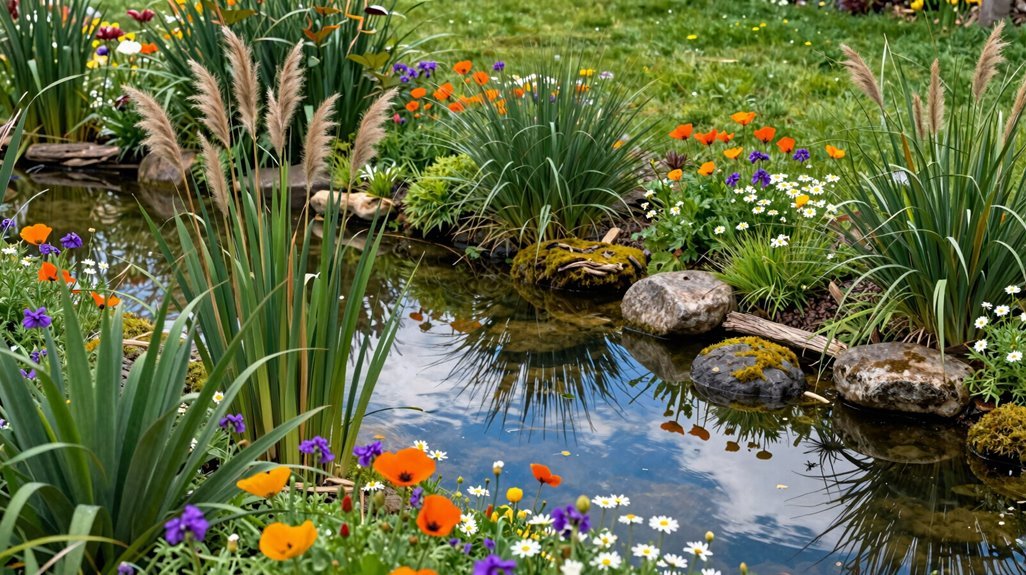
Where else could I find such effortless abundance than at the water’s edge itself? I’ve found that simply stopping mowing along a one-meter-wide strip around my pond edge invites native grasses and wildflowers to establish themselves, creating meadow edging that feels both wild and intentional.
Sowing native seed mixes directly into the bank, or laying wildflower turf, builds a meadow-like margin that ages gracefully across seasons. I’ve combined this meadow edging with pebble beaches and marsh margins, achieving a natural filtration zone that balances human access with habitat provision.
Native plantings in my bog margins support pollinators, while the ground-level cover shelters damselflies, grass snakes, and amphibians. This pervious transition zone changes my garden into a living corridor, where I belong among the buzzing, creeping, fluttering life I’ve welcomed to the water’s edge.
Level the Edge and Protect Your Liner
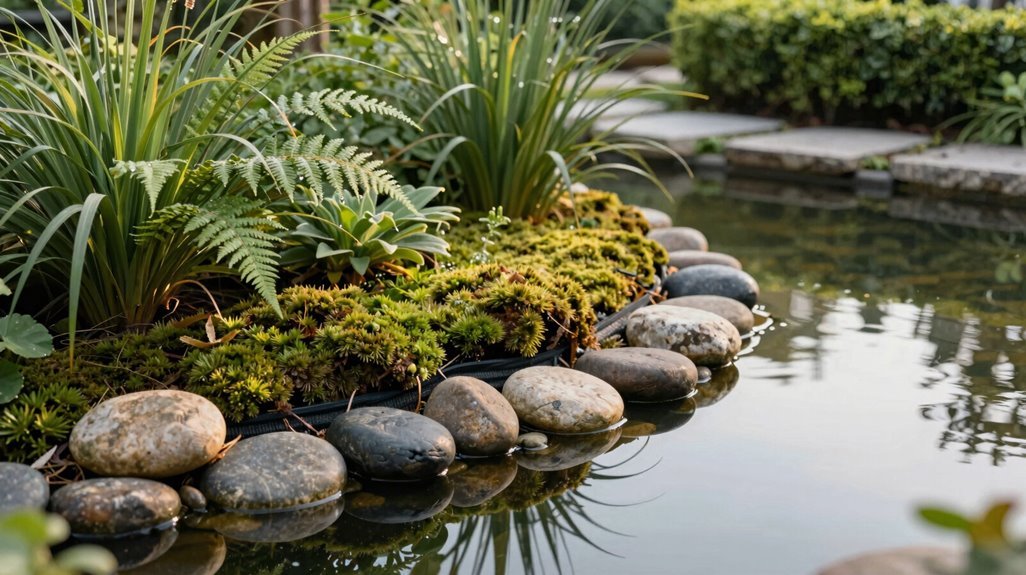
I start by establishing a level edge around my pond’s perimeter, driving a central stake to set my reference height and running a spirit-leveled timber outward to guarantee consistent grading. Protecting the liner comes next, so I bury protective underlay beneath overlapping stone or paving that shields the rubber from UV degradation and root penetration, much like wrapping a fragile membrane in armor.
With these foundations set, I select edging materials, perhaps rough-hewn slate, poured concrete, or timber sleepers, that marry pervious drainage with visual weight, creating a border that contains the water while inviting the eye to linger.
Level Edge First
How do we guarantee a pond’s edge won’t settle unevenly or tear the liner years from now? I’ve learned that starting with a level edge helps everything that follows, creating a foundation our whole garden community can build upon together.
When I’m establishing pond edging, I drive a central stake at finished pool height, my reference point. Running straight timber from this stake to the perimeter, I check with a spirit level until the level edge rings true. For irregular shapes, I pour concrete footings, maintaining uniform stability.
Here’s my field-tested sequence:
- Drive 30 cm pegs every 50–100 cm, leaving 10–15 cm exposed as guides
- Stretch string between pegs, marking the precise waterline
- Excavate to consistent depth, checking against your central stake
- Prepare the overlap zone where final edging will anchor the liner
This precision protects our shared investment.
Secure Liner Protection
Why risk the heartbreak of a punctured liner or a shifting border when a few deliberate steps anchor everything in place? I always start by driving a stake into the center of my excavation at finished pool level, running a straight timber outward to establish my reference plane. Checking with a spirit level, I guarantee the pond edging sits perfectly horizontal, preventing uneven water lines that betray a sloppy build.
For intricate curves demanding precision, I pour a level concrete footing, creating a stable perch for stone pillar fountains or hexagon-tiled backdrops. I hammer 30 cm pegs every 50–100 cm, leaving 10–15 cm proud as height guides. When bedding rigid materials, I sandwich the liner with protective underlay for proper liner protection against lime leaching and abrasion, safeguarding my water garden for years.
Choose Edging Materials
With the liner anchored and level guides in place, I’m ready to select materials that’ll frame my water feature while guarding against punctures and UV damage. I level the edge by tapping a stake at finished pool height, running straight timber with a spirit level to check precision around the perimeter.
For intricate pond edging, I’ll pour a concrete footing, setting 30 cm pegs every 50–100 cm with 10–15 cm proud above grade.
My material options include:
- Smooth river pebbles, bedded partially submerged for seamless transitions
- Natural rockery, anchored on cement to prevent liner abrasion
- Cut paving stones, overlapping edges to lock liner protection in place
- Dense hardwood or moisture-loving plantings, keeping treated timber away from the membrane
I always leave adequate liner slack for settlement, so my water garden succeeds for years among fellow enthusiasts.
Blend Hardscaping and Plants Into One Coherent Border
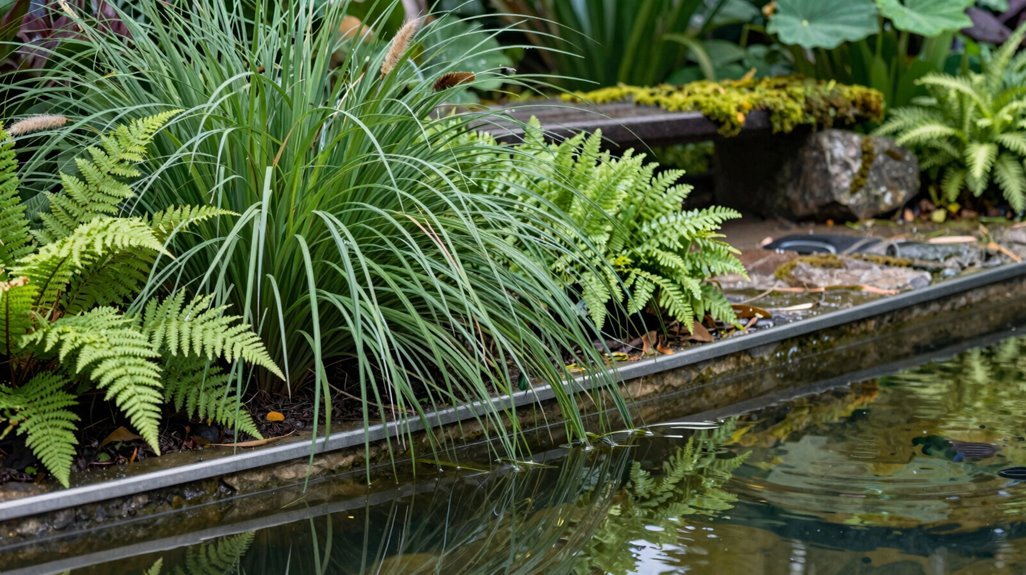
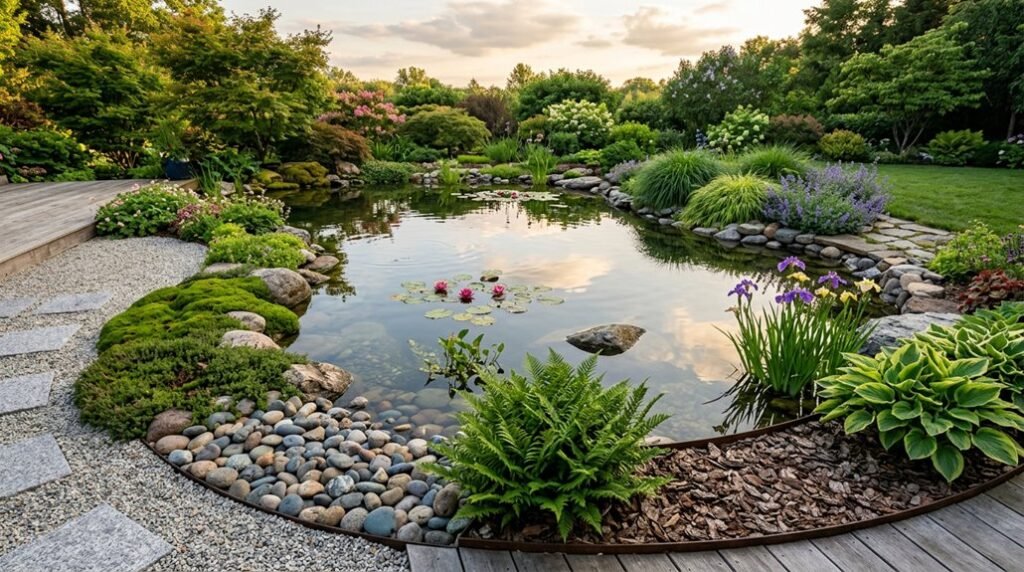
Where exactly does your pond end and your garden begin? I blur this boundary through unified pond edging that marries timber decking with rock clusters and planting pockets, creating seamless transitions between hard surfaces and living green.
For wildlife pond edging, I favor natural stone with deliberate gaps: small crevices where frogs shelter and insects traverse between water and land. Locally sourced stones anchor the design while supporting biodiversity. I often incorporate pebble beach edging, sloping gently from pond floor to bank, which provides essential amphibian habitat and built-in shelves for marginal plants like irises and rushes.
Raised edges demand careful attention: proper footings, liner protection, and permitted slack accommodate ground settlement over seasons. I integrate bog garden zones and wildlife beaches, where saturated margins merge planting with pond borders, forming cohesive ecosystems rather than isolated features.
Frame Your Pond Border With Layered Plant Heights
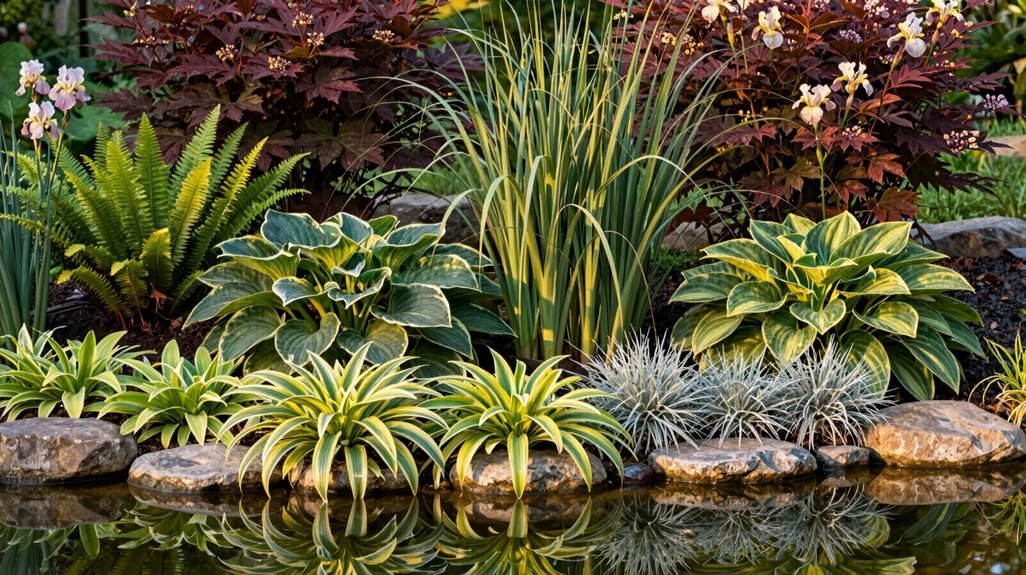
I arrange my pond plantings with tallest specimens, perhaps a clump of moisture-loving irises or a compact papyrus, set behind the waterline, creating that essential back-to-front placement strategy.
Through the mid-layer, I weave mounding plants like variegated spider lilies or compact astilbe against the hexagon-tiled backdrop, building visual depth without obstructing sightlines. Finally, I anchor the foreground with creeping jenny or dwarf mondo grass, that low-growing edging acting as a living frame that keeps the pond’s surface pervious to view while supporting marginal filtration.
Back-to-Front Placement Strategy
Why settle for a flat, one-dimensional pond edge when you can build living architecture? I frame my pond borders using back-to-front placement, creating depth that draws you into the scene. Layering turns the ordinary into something that feels intentional, welcoming.
Here’s how I structure this edge-to-edge approach:
- Position moisture-loving giants: Louisiana irises, tall rushes at the rear, anchoring the composition against the water
- Slide mid-height performers like daylilies and agapanthus into the middle ground, bridging the vertical gap
- Nestle low foxtail ferns and edging perennials at the front, preserving that precious water view
- Sculpt continuous color sweeps with staggered bloom times, so something always calls you closer
I keep taller forms from shading shorter neighbors, maintaining balanced light. Cohesive palettes: cool blues, soft violets echo the water itself, binding shore to surface in quiet harmony.
Mid-Layer Visual Depth
How does a pond border transform from a flat green edge into something that pulls you inward? I build visual depth through layered planting that invites your eye to travel, to settle, to feel part of something intentional.
I place tall Louisiana irises at the back, their sword-like leaves catching afternoon light. Mid-layer daylilies step forward, bridging the vertical gap. The foreground stays deliberately lower, pervious to sightlines across the water.
Texture matters as much as height. I pair broad Mojito colocasia leaves with wiry foxtail fern, creating filtration for your gaze without blocking the pond’s surface. Reflections need breathing room.
Color choices anchor the composition. I balance iris purples against daylily oranges so neither overwhelms the water’s mirror. Perennials maintain structure; annuals rotate through for shifting seasonal notes.
Low Foreground Framing
Where water meets earth, I often start my design by looking down, not out. Low foreground framing anchors your pond border, drawing the eye gently toward reflective water without obstruction. I layer plant heights deliberately, placing tall specimens at the rear and cascading downward, so sightlines remain pervious to the pond’s surface.
Position broad-leaved Mojito colocasia behind finer foxtail fern for textural filtration at the edge. Insert mid-height irises or daylilies as transitional stepping stones between layers. Reserve the front row for low-growing edging perennials that kiss the waterline softly.
Coordinate lily, iris, and daylily hues to complement, not compete with, reflections.
This vertical progression creates depth, invites lingering, and makes your pond border feel like a discovered sanctuary rather than a staged display.
Mix Bold and Fine Foliage for Visual Depth
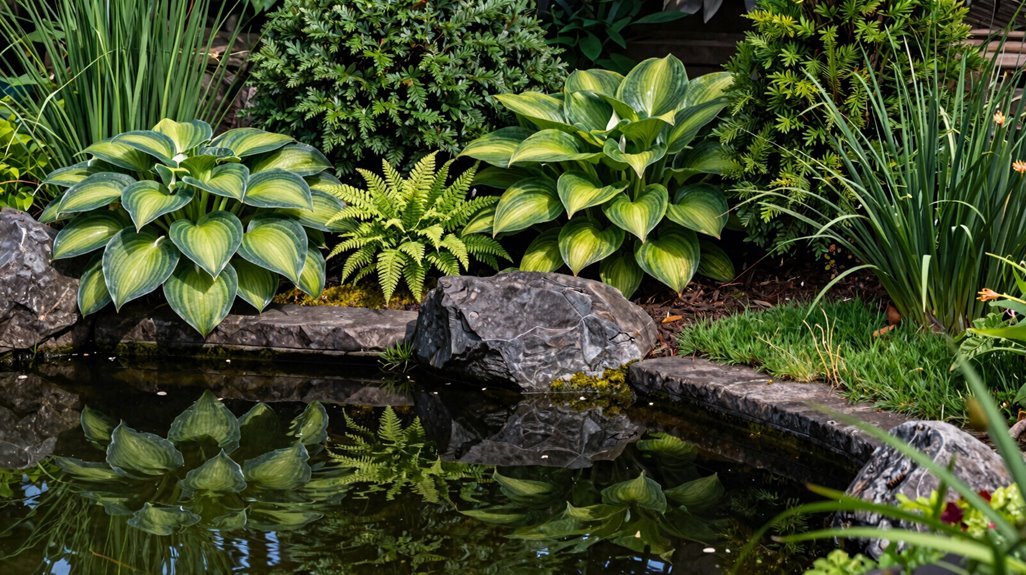
When I’m planning my pond border, one technique I keep returning to is pairing broad, dramatic leaves against wispy, delicate fronds. I’ll tuck Mojito colocasia, those striking elephant ears, beside the finely-cut foxtail fern, letting the contrast build visual depth that draws your eye inward toward the water.
Layering height matters here: I place tall iris, especially the LA varieties, toward the back pond edging, stack mid-height species through the center, and keep low growers forward to frame the view. Alternating broad-leaved specimens with finer textures, pervious root structures improve natural filtration while creating dimensional interest from waterline to bank.
I weave perennials like lilies and daylilies with evergreen anchors, then slip annuals between through the seasons, so your pond edging never fatigues, always offering something that makes you feel rooted in this living scene.