Installing a backyard pool means navigating price tags that swing wildly. I’ve seen vinyl liner setups start around $25,000 while custom gunite projects balloon past $200,000 with hexagon-tiled backdrops and stone pillar fountains. Your soil composition, local permit fees, and whether you want automated filtration systems all reshape that number before ground breaks.
Most homeowners I speak with underestimate the true investment by 20–30%, and that’s before considering the pervious surface requirements many counties now enforce. What actually drives these gaps between estimates and final invoices isn’t always obvious.
Average Backyard Pool Cost by Type (2026)

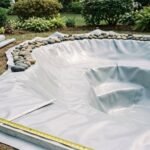
A 2026 pool installation demands careful budgeting, since I’m looking at three distinct paths with very different price tags. Vinyl liner pools offer the most accessible entry point, with installed costs running $25,000–$65,000 depending on pool size and site conditions.
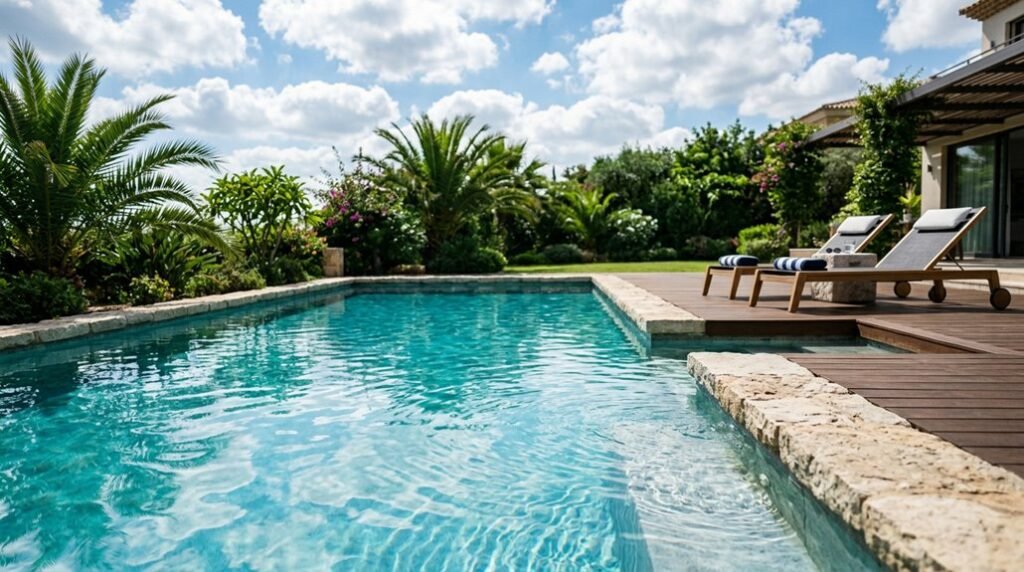
Fiberglass pools, featuring smooth pervious surfaces and efficient filtration systems, typically range $45,000–$100,000+ but reward me with faster installation and reduced maintenance costs. Gunite concrete pools command premium turnkey prices of $50,000–$225,000+, delivering that hexagon-tiled backdrop or stone pillar fountain I’ve envisioned through limitless customization.
Regional variation shifts these figures 10–30%, while add-ons, patios, heating, water features, layer another $5,000–$30,000+ onto my base investment. Weighing long-term value against upfront expenditure, I’m recognizing how each material choice shapes not just my backyard’s aesthetics, but my decade-long financial commitment.
What Drives Your Pool Cost Up or Down
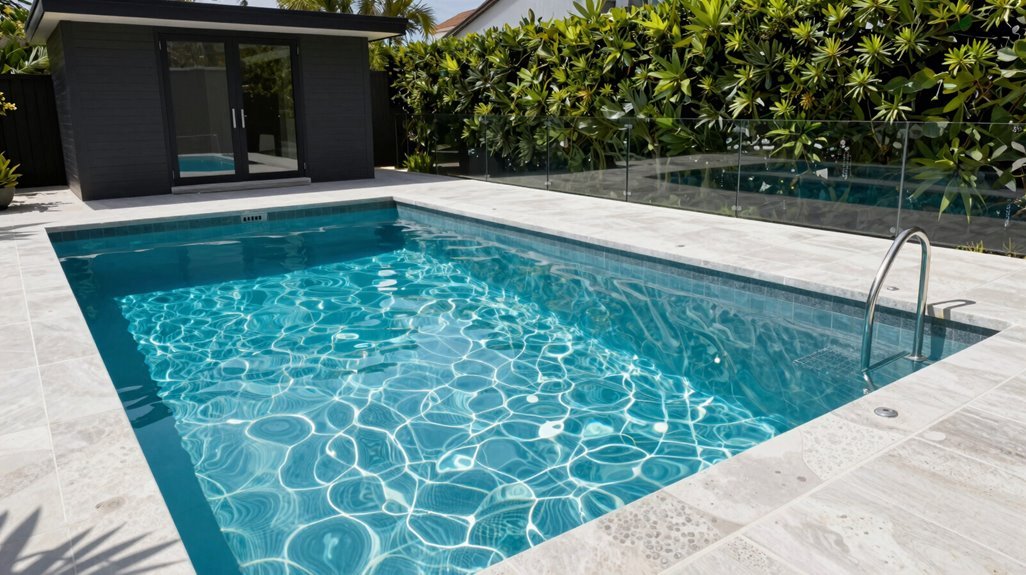
Understanding those base price ranges is only the starting point, since I’m quickly discovering how easily my final bill can swell or shrink depending on decisions I make. Choosing between vinyl liner, fiberglass, or concrete/gunite dramatically shifts my installation cost, with each material carrying distinct durability and aesthetic trade-offs. My pool’s size and shape directly dictate material volume and excavation scope, while stubborn site conditions, like Georgia red clay gripping my backhoe, can silently pile thousands onto my total project cost.
| Factor | My Potential Impact |
|---|---|
| Material type (vinyl liner/fiberglass/concrete) | $45K–$225K+ base range |
| Size and shape + site conditions | 10–25% cost swing |
| Add-ons (heaters, hexagon-tiled backdrop, stone pillar fountain) | Pervious budgets leak fast |
| Labor rates + regional price variation | California/Florida/Arizona runs 15–30% above national average |
Filtration decisions, automation systems, and that tempting stone pillar fountain each tug my final number upward, reminding me that regional price variation and local labor rates aren’t negotiable backdrop, they’re foundational truths I navigate alongside my community of fellow pool-builders, each of us weighing identical trade-offs in our own backyards.
What’s Included (and What’s Not) in Your Pool Quote
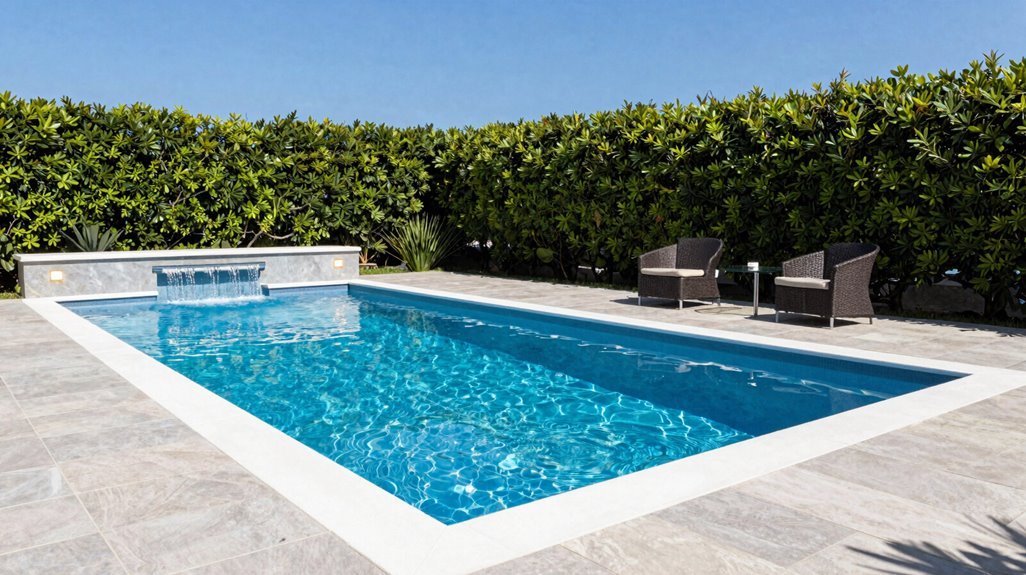
I’ll examine your quote’s standard inclusions, perhaps a hexagon-tiled backdrop and basic filtration, while noting common exclusions like that stone pillar fountain you’ve been imagining. Hidden costs, including permits and water fill, often surprise homeowners who assume turnkey means complete.
Understanding these boundaries now prevents the previous shock of a ballooning budget later.
Standard Inclusions
When you’re staring at a pool quote that spans three pages, what exactly are you paying for? I’ve learned that standard inclusions vary dramatically by pool type.
A fiberglass pool typically bundles the shell, delivery, and basic filtration equipment, while a vinyl liner pool starts lower, around $30,000 in Atlanta, but often leaves more gaps. Gunite/concrete commands higher initial cost, $50,000–$120,000+, with its hexagon-tiled backdrop and stone pillar fountain potential built into that premium.
Opting for a turnkey package brings permits, water fill, and project management under one roof. Yet fencing, decking, and landscaping usually sit outside that base figure, pervious pavers and irrigation systems quoted separately. Heaters and automation, those conveniences that make a pool your retreat, frequently appear as line-item upgrades rather than defaults.
Common Exclusions
Where exactly does your quoted price end and the actual spending begin? I’ve learned that exclusions lurk in the fine print, threatening to unravel even the most careful budget. Many seemingly complete offers omit permits, water fill, and electrical hookups, essentials you’ll pay separately.
A true turnkey package covers project management and finish work, though patio and fencing typically remain outside its scope. Scanning itemized quotes, I watch for what’s excluded: delivery might appear included, yet decking, landscape integration, and safety fencing often vanish from base pricing.
Hexagon-tiled backdrops and stone pillar fountains, beloved add-ons, inflate totals fast. Comparing proposals, I verify which components, filtration, heaters, automation, actually live within each figure. Clarity here saves you from previous surprises and that sinking feeling of costs cascading beyond your planned backyard sanctuary.
Hidden Costs
Why does the final invoice so often dwarf the initial quote I’ve pinned to my refrigerator? I’ve learned that in-ground pool costs rarely tell the whole story. Basic pool installation packages typically exclude permits, water fill, and electrical work, leaving homeowners blindsided by hidden costs that balloon budgets by $25,000–$50,000.
When I compare quotes, I now scrutinize what’s actually bundled. Turn-key fiberglass offers include project management and finish work, while basic shells leave me scrambling for contractors. Vinyl liner pools tempt with low upfront prices, but liner replacements every 5–9 years pile on maintenance costs I hadn’t anticipated.
Extra charges multiply fast: heaters, automatic covers, stone decking, wrought-iron fencing, waterline tiles framing the hexagon-tiled backdrop, tanning ledges for afternoon lounging. These upgrades, absent from base quotes, reshape my backyard vision into a financial reality I must plan for from day one.
Pool Cost Comparison: Fiberglass vs. Concrete vs. Vinyl
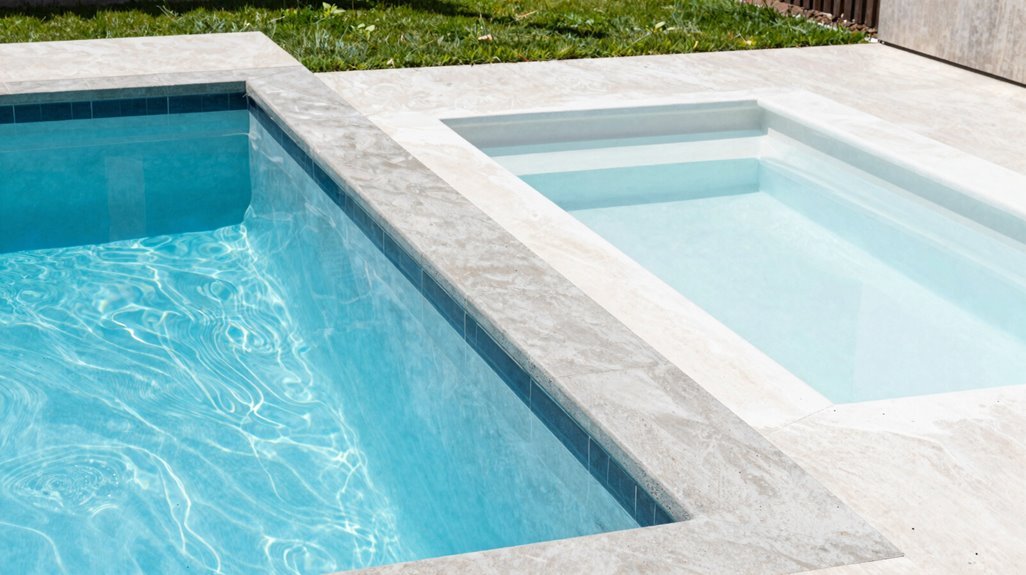
Standing before a sun-bleached hexagon-tiled backdrop, I’m weighing how a fiberglass shell at $45,000 to $100,000 stacks against a stone pillar fountain-framed concrete basin pushing past $120,000, knowing that liner replacement cycles will later drain a vinyl pool’s initial savings.
Considering filtration demands and pervious surface durability, you’ll want to map not just today’s price tag but the creeping cost of resurfacing, liner swaps, and chemical balancing across fifteen summers. Let’s unpack how installation speed, long-term maintenance, and that critical first payment together shape which pool type fits your yard.
Initial Investment Comparison
When you’re weighing which pool type fits your budget, I’ve found it helps to look past the sticker price and consider what you’re actually buying. In this pool material comparison, vinyl pool costs typically run $25,000–$65,000, making them the most accessible entry point for families seeking that hexagon-tiled backdrop without breaking the bank.
Fiberglass costs fall in the middle range, usually $45,000–$100,000, offering faster installation with a smooth, pervious surface that resists algae. Concrete pool costs demand the highest upfront cost, commonly $50,000–$120,000+, but reward you with limitless customization; imagine a stone pillar fountain cascading into midnight-blue depths.
Size and features dramatically shift the installation price: a small pool price for a 12’×24′ shell might start near $35,000, while a large pool price with integrated filtration and lighting can surge past $120,000. Regional price differences matter too; expect to pay 15–30% more in California or Arizona, while Midwest buyers often see 10–20% savings.
Lifetime Ownership Costs
Looking beyond that first invoice, I’m tracking what each pool type actually costs me across the years I’ll own it. Fiberglass starts higher than vinyl liners, but I’m avoiding the cyclical expense of liner replacement every 5 to 9 years. Concrete pools demand resurfacing every 10 to 15 years, their hexagon-tiled backdrop eroding despite my filtration vigilance. My maintenance costs stay manageable with fiberglass, where the gelcoat resists algae’s pervious grip.
| Pool Type | 10-Year Total Cost |
|---|---|
| Fiberglass | $55,000–$115,000 |
| Vinyl Liners | $45,000–$95,000 |
| Concrete Pools | $70,000–$150,000+ |
Calculating lifetime ownership, I’m seeing fiberglass’s long-term value emerge. The stone pillar fountain I want shouldn’t drain my reserves. Each pool type carries hidden math; my total cost reflects durability, not just desire.
Installation Timeline Differences
How quickly can I actually start swimming? Your fiberglass installation timeline moves fastest, weeks, not months, since the shell arrives pre-formed, ready to drop into your excavated pit.
I’m looking at gunite pool timelines stretching across seasons, with crews performing extensive on-site shaping, spraying concrete, then waiting through cure periods before that hexagon-tiled backdrop emerges. Vinyl liner schedules fall between, requiring panel assembly and custom membrane fitting.
I’ve learned that site conditions, steep soil and terrain, dense root systems, utility relocations, can stall any project. Permitting delays haunt us all; permit processes vary wildly by municipality, sometimes adding months. Construction timelines bend to these realities.
Yet understanding these variables helps me plan realistically, making certain my stone pillar fountain flows when summer arrives.
Common Exclusions That Inflate Your Final Pool Cost
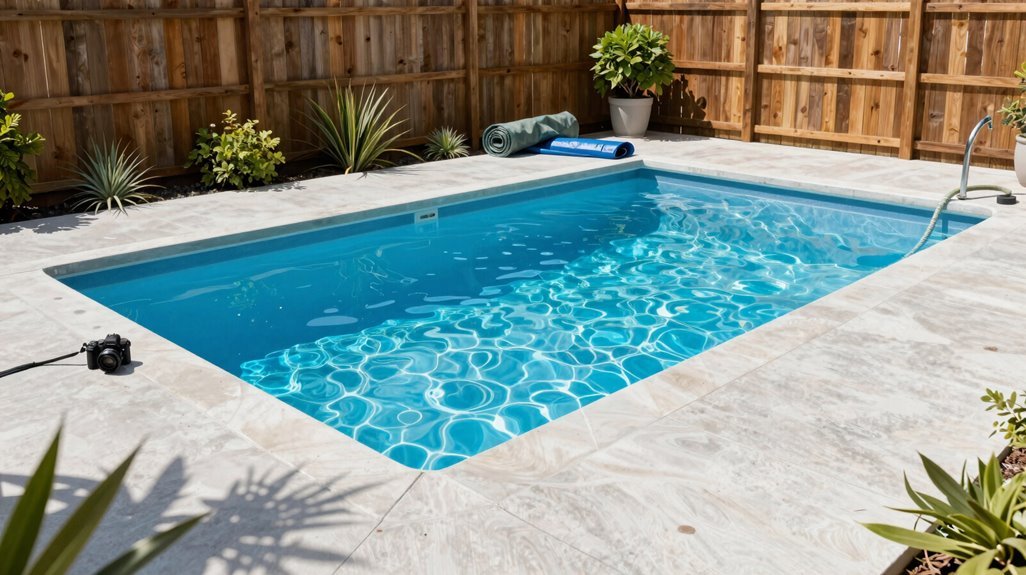
Why does that attractive fiberglass shell price suddenly balloon before you’ve even broken ground? I’ve learned that permits, delivery, and water fill rarely appear in base quotes, inflating upfront costs before the backhoe arrives.
Common exclusions hit harder than expected. Add-ons like a hexagon-tiled backdrop patio, stone pillar fountain fencing, and electrical work easily add $25,000–$50,000 beyond construction. I’ve watched neighbors stunned by these separated line items, realizing their “affordable” pool demands far more.
Vinyl liner pools tempt with low initial pricing, yet liner replacement every 5–9 years drains budgets long-term. Concrete demands resurfacing roughly every 10–15 years.
DIY covers merely shell and delivery, while turnkey packages streamline permits, water fill, and management, proving that understanding true costs keeps me, and my community, from drowning in surprise debt.
How to Build a Realistic Pool Budget
Where do I even begin with a pool budget that won’t crack open like a cheap vinyl liner? I start by accepting that realistic inground costs demand serious budget planning beyond sticker price alone. I know vinyl liner pools run $25,000–$65,000, fiberglass pools land at $45,000–$100,000, and concrete pool options stretch $50,000–$120,000-plus.
I never ignore pool pricing gaps across regions. My California quote runs 15–30% above national averages, while Midwest savings soften the blow. I build in add-ons: hexagon-tiled backdrop decking, stone pillar fountains, heaters, filtration systems, totaling $5,000–$30,000 beyond base costs. I brace for site prep surprises, because sloped terrain demands heavy excavation. Calculating regional factors alongside every contingency, I land prepared.