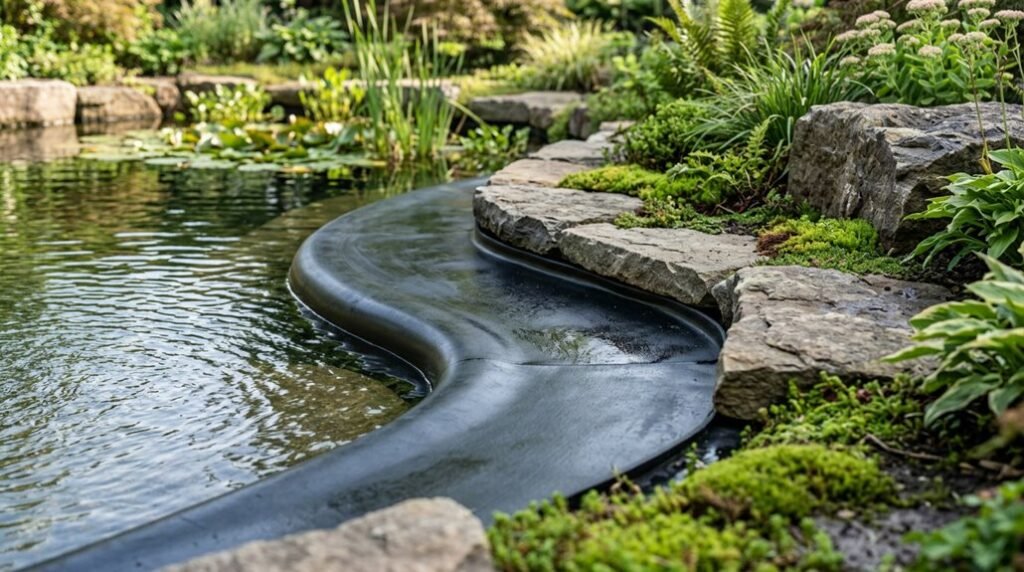
It isn’t a coincidence that I chose EPDM for my hexagon-tiled backdrop pond the same week my neighbor’s PVC liner cracked. I’m standing here, knee-deep in murky water, running my hand along a seam that’s held for twelve years through freeze and thaw.
You need to know what this material actually is before you bury something under three tons of river rock.
What Is EPDM: and Why Is It the Top Choice for Most Ponds?

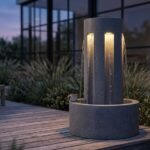
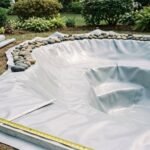
Why do so many pond builders reach for the same material when lining a water feature? I’ve found the answer in EPDM liners, a fish-safe rubber that’s become the quiet standard among serious water gardeners. EPDM stands for Ethylene Propylene Diene Monomer, a flexible material that drapes over curved shelves, hexagon-tiled backdrops, and stone pillar fountain bases without demanding dozens of seams.
I’ve wrestled with stiff alternatives; this lightweight sheet, available from 5 x 10 ft to 20 x 20 ft rolls, practically installed itself beneath my filtration zone. Its UV resistance and 20-year warranty potential mean I’m not rebuilding my koi haven next spring. For water gardens, pondless cascades, or decorative pools, fish-safe rubber simply belongs in your toolkit too.
How Does EPDM Compare to PVC, HDPE, and Rubber Roofing?
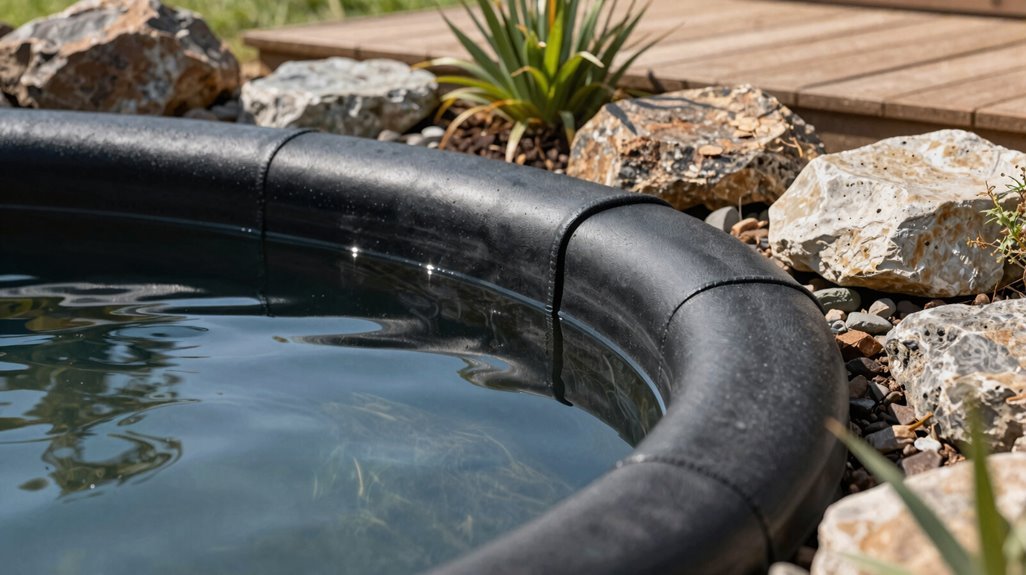
Most pond builders I’ve guided through material selection end up weighing four distinct options before breaking ground on their water feature. I always walk them through the trade-offs, knowing each material shapes the final result.
PVC attracts budget-conscious builders with its lower upfront cost and weldable seams, yet I’ve watched it stiffen in cold snaps, cracking against hexagon-tiled backdrops where flexibility matters. HDPE, rigid and pervious to root penetration, suits industrial reservoirs but fights custom contours; no graceful wrapping around a stone pillar fountain. Rubber roofing, deceptively similar, carries chemical additives that threaten filtration systems and koi health.
EPDM earns my trust through fish-safe composition, superior weather tolerance, and effortless conformity to irregular forms. For longevity in living water features, I consistently recommend EPDM over PVC alternatives.
How Long Will Your EPDM Liner Last?
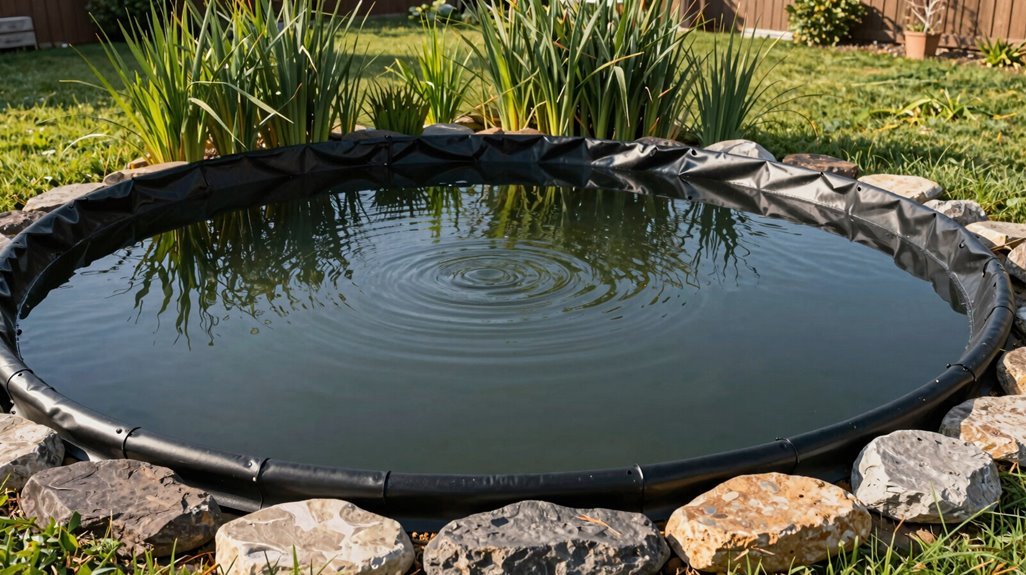
Standing beside your hexagon-tiled backdrop, watching koi glide beneath a stone pillar fountain, I’ve learned that your EPDM liner’s lifespan hinges on three critical elements: how you manage UV exposure, the care you invest in maintenance, and the environmental factors specific to your installation.
The sun’s relentless rays, while filtered by water and marginal plantings, still test the rubber’s molecular bonds over decades of seasonal cycling. I’ll walk you through what I’ve observed about maximizing durability, from proper underlayment placement to filtration practices that protect this flexible, fish-safe barrier.
Lifespan Expectancy Factors
How long can you realistically expect your EPDM pond liner to perform before replacement becomes necessary? I’ve found that EPDM lifespan stretches decades when I choose reputable brands with proven formulations.
Strength and flexibility matter immensely to our community of water gardeners. I install my liners over proper underlayment, preventing sharp rocks and air voids from compromising the membrane beneath a hexagon-tiled backdrop. The underlayment stabilizes the base, extending performance through seasonal shifts.
I verify temperature tolerance ratings, making certain my liner withstands -40°F to 175°F without cracking against a stone pillar fountain. Fish-safe certifications protect my koi, while pervious filtration zones maintain water clarity.
Pre-cut designs simplify transport, though I always mold carefully around irregular edges. Selecting UV-resistant grades, which we’ll examine further, preserves integrity. Together, we build ponds that endure.
UV Exposure Impact
Beyond lifespan expectancy factors, I want to examine how sunlight directly tests my EPDM liner’s endurance. I’m pleased to share that EPDM pond liners are UV-resistant, which helps me resist degradation from sunlight and extend my liner’s lifespan in outdoor ponds. My liner’s thickness and quality, plus proper installation and underlayment, determine how well it performs under UV exposure.
I’ve learned that UV exposure can cause some liners to age prematurely, but high-quality EPDM formulations maintain flexibility and resist cracking over decades. My liner endures wide temperature ranges, retaining performance despite repeated sun exposure against my hexagon-tiled backdrop.
Like others in our pond-building community, I protect my investment through strategic shading, covering, or underlayment, further mitigating UV-related wear. With proper care, my stone pillar fountain landscape continues to flourish, its filtration system supported by resilient, proven materials we all trust.
Maintenance and Care
With proper maintenance at the forefront of my routine, I’ve found that caring for my EPDM liner demands less effort than many assume, yet the payoff spans decades of reliable service. I inspect my liner seasonally, checking for debris accumulation against the hexagon-tiled backdrop of my water garden. Removing leaves, preventing filtration clogs, and maintaining water chemistry protect this fish-safe barrier from premature aging.
I installed an underlayment beneath my EPDM liner, shielding it from sharp stones and air voids that threaten its integrity. This simple step, combined with mindful maintenance, turns a standard installation into a lasting investment. Whether you’re crafting a stone pillar fountain or a koi sanctuary, your attention to these details joins you with countless others who’ve discovered that proper care yields twenty-plus years of pervious, reliable performance.
Is EPDM Safe for Fish, Plants, and Wildlife?
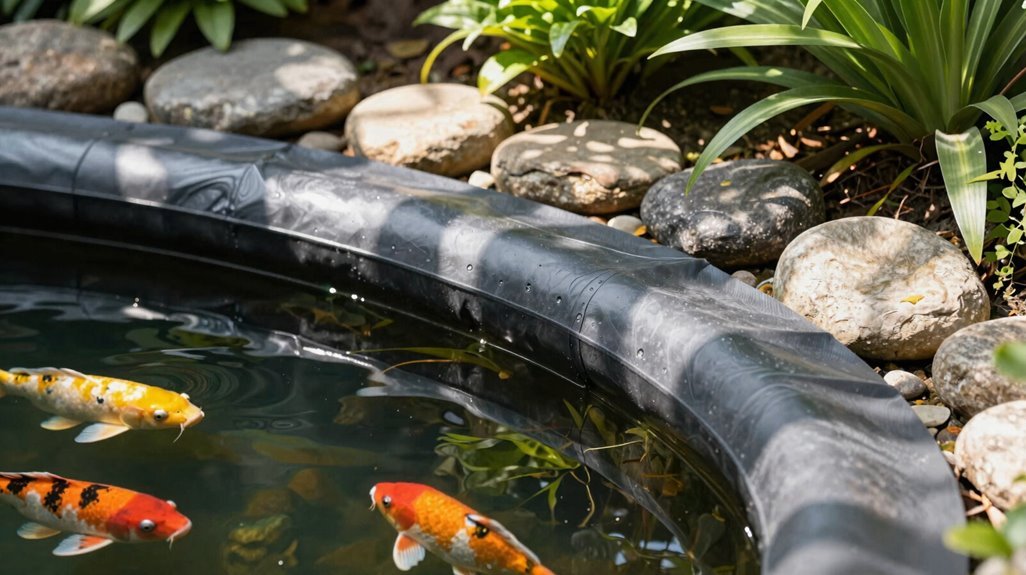
Why exactly should you trust EPDM with the living ecosystem you’re building? I’ve found that EPDM’s fish-safe formulation creates a sanctuary where koi glide through crystalline depths, their scales catching sunlight against a hexagon-tiled backdrop.
EPDM’s fish-safe formulation creates a sanctuary where koi glide through crystalline depths, their scales catching sunlight.
Consider what this means for your water garden:
- Native frogs bask on a stone pillar fountain, their porous skin untroubled by chemical leaching
- Water lilies spread pervious root systems across the liner’s dark, filtration-friendly surface
- Dragonflies, drawn from surrounding meadows, deposit eggs without encountering toxic barriers
The UV-resistant membrane withstands scorching summers. Decades pass without degradation when I source from reputable manufacturers. An optional underlayment beneath prevents sharp substrate from compromising this protective layer.
Whether I’m designing intimate water gardens or elaborate custom features, EPDM lets me build communities, aquatic, terrestrial, avian, where every creature finds belonging.
What Pond Shapes and Sizes Can EPDM Handle?
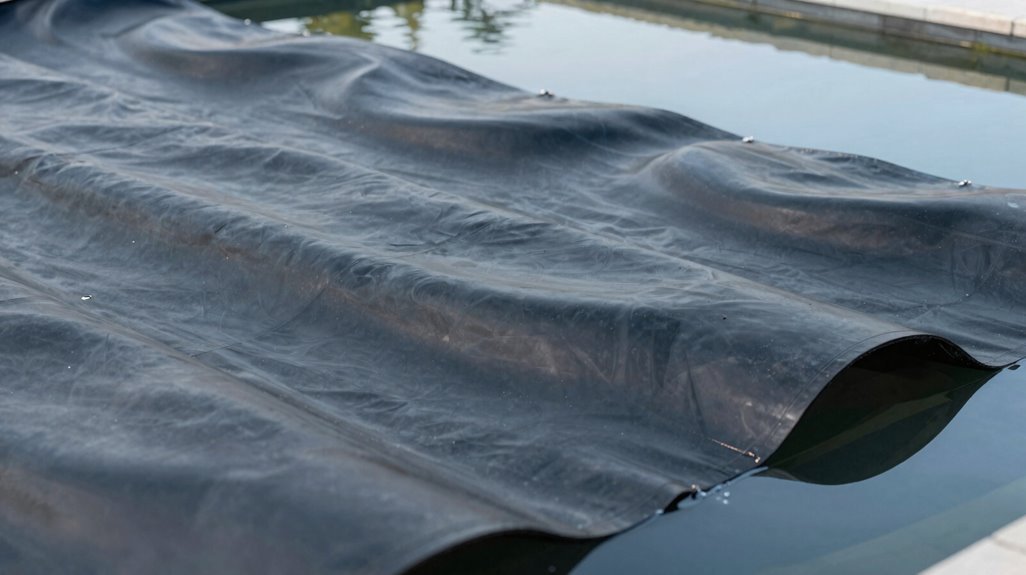
I’ve already established that EPDM protects the living communities within your pond, but the real question shaping your project is what forms this membrane can actually take. I’ll tell you straight: your imagination sets the boundary, not the material. EPDM liner, with its remarkable flexibility, conforms to kidney-shaped water gardens, angular koi havens, and cascading multi-tiered designs alike.
Pre-cut panels arrive ready for your specific vision, whether you’re crafting an intimate 4-foot meditation pool or an expansive 50-foot ecosystem. I’ve watched this material settle into hexagon-tiled backdrops and wrap stone pillar fountains without protest. Pond shapes that rigid liners reject, including serpentine edges, irregular depths, and sudden shelves, become achievable. You’re not fitting your dream into a factory mold; you’re stretching proven protection around whatever waterscape calls to you.
Do You Need Underlayment for Your EPDM Liner?
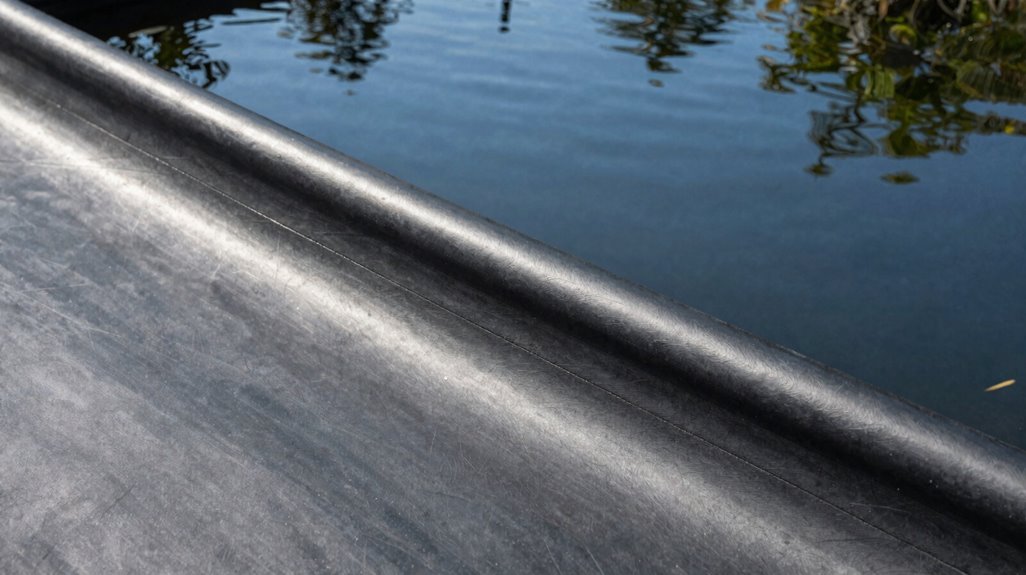
How exactly does a membrane that bends around stone pillar fountains and settles into hexagon-tiled backdrops meet the earth beneath it? I’ve learned that even the strongest EPDM liner craves protection from what lies below.
When I install my pond, underlayment becomes the pervious buffer, the quiet guardian between flexible rubber and rough soil. Without it, sharp stones threaten puncture, compromising filtration zones and fish-safe havens I’ve carefully planned.
Consider what proper underlayment achieves:
- Shielding against abrasive rocks and root systems that press upward through compacted dirt
- Eliminating air voids that shift and settle beneath waterfall cascades
- Extending decades of service by distributing weight across irregular terrain
I’m convinced: pairing quality underlayment with my EPDM liner isn’t optional luxury, but essential practice for builders like us seeking lasting water gardens that remain healthy for years to come.
What Does EPDM Pond Liner Cost?
Protecting your investment with proper underlayment naturally leads to questions about what you’ll actually spend. EPDM pond liner cost varies based on size, thickness, and brand reputation, but the long-term value justifies the initial expense for water gardeners.
| Size (feet) | Square Footage | Typical Cost Range |
|---|---|---|
| 5 x 10 | 50 sq ft | $50-$80 |
| 10 x 10 | 100 sq ft | $100-$160 |
| 10 x 15 | 150 sq ft | $150-$240 |
| 15 x 20 | 300 sq ft | $300-$480 |
| 20 x 20 | 400 sq ft | $400-$640 |
Choosing a quality EPDM pond liner means prioritizing durability over cheap alternatives. Budget for underlayment separately, typically adding 15-20% to your total project cost. Custom sizes, available at order time, accommodate hexagon-tiled backdrops or irregular stone pillar fountain configurations without seams.
How Do You Protect EPDM From UV, Punctures, and Groundwater?
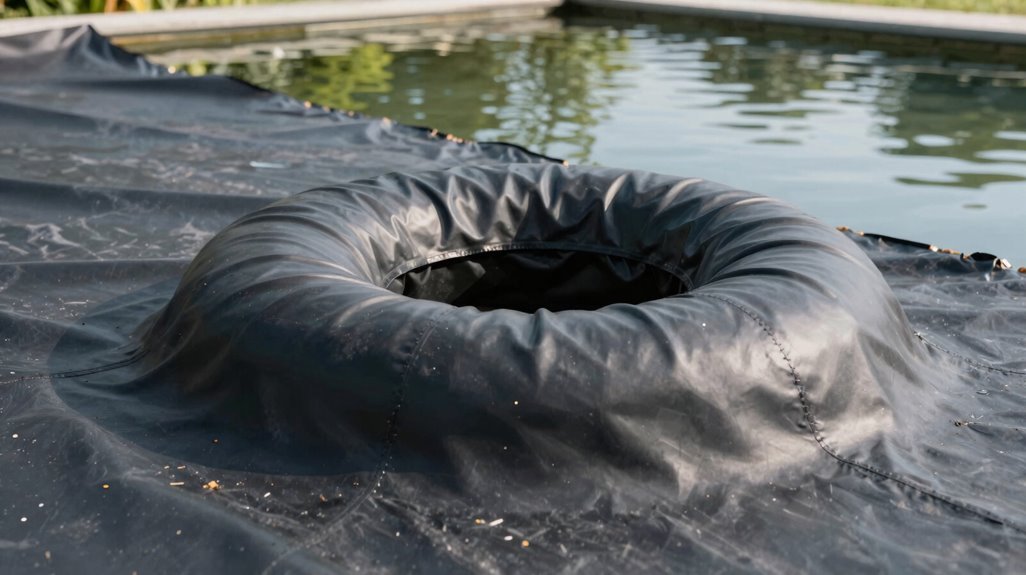
I’ll protect my EPDM investment by tackling UV exposure mitigation, physical damage prevention, and groundwater pressure control as interlinked challenges, not isolated fixes. Covering exposed edges with rounded river stones or a hexagon-tiled backdrop blocks degrading sunlight while anchoring the liner against shifting ground.
I always install a thick geotextile underlayment beneath the membrane, cushioning it from jagged substrate against a stone pillar fountain’s base. I also specify pervious backfill with integrated drainage to relieve hydrostatic pressure that would otherwise balloon the liner upward, compromising filtration zones and structural seams.
UV Exposure Mitigation
Wherever sunlight strikes an exposed surface, I know I’m looking at future weathering, so when I spec out a pond with a hexagon-tiled backdrop and a stone pillar fountain, I plan for UV exposure from day one. EPDM’s inherent UV resistance gives me confidence, but I never rely on it alone. I always add a protective layer where the liner meets daylight.
Burying edges under soil, mulch, or pervious rock creates natural filtration against photodegradation. Installing a geotextile buffer along margins, paired with 18–24 inches of water coverage, shields vulnerable perimeters. Positioning shade structures or aquatic plantings over exposed sections completes my defensive strategy.
This layered approach lets me build water features that endure, joining a community of installers who refuse to let sunlight steal years from their work.
Physical Damage Prevention
How do I keep a liner whole once it leaves the truck and meets the shovel? I start with underlayment, that pervious cushion between my EPDM and the earth’s hidden teeth, sharp rocks, frost-heaved gravel, air pockets waiting to betray me. Without this filtration layer, punctures find their way through like water through cracked mortar.
I choose thicker EPDM when my pond plans run deep, knowing millimeters translate to decades. At the edges, where my hexagon-tiled backdrop meets the stone pillar fountain, I layer protective geotextile like armor, ballasting slopes against wind and wandering boots.
Every fold, every buried seam, every inch of coverage matters. I don’t rush. I imagine roots growing, stones shifting, seasons turning. My liner stays whole because I planned for what I cannot see.
Groundwater Pressure Control
Beneath my EPDM, what waits when the earth itself pushes back? I’ve learned groundwater pressure threatens every pond I’ve built, especially when hidden springs surge beneath the liner during wet seasons.
Picture an underliner drain, its perforated plastic pipes threading through pervious gravel like veins, offering trapped water escape routes beneath your EPDM rubber before buoyant lift distorts the basin.
Imagine rounded river stone ballast resting atop geotextile filtration layers, weighting the membrane while drainage channels still function. Envision your excavation’s 18-to-24-inch depth ledge, a concrete collar anchoring edges against seasonal fluctuations.
I pair pressure-relief systems with UV-protective layering and diligent monitoring because groundwater pressure respects no single defense. Together, these measures change vulnerable EPDM rubber into resilient habitat; we’re building something that endures.
Can You Install EPDM Yourself: or Should You Hire a Pro?

Whether you’re envisioning a modest water garden tucked against a hexagon-tiled backdrop or an ambitious koi pond with a stone pillar fountain, installing EPDM yourself demands honest self-assessment. I can’t tell you which path fits your story, but I can share what I’ve learned about EPDM liner installation so we figure this out together.
| Your Situation | My Recommendation |
|---|---|
| Small pre-cut liner, level ground, patient weekend | Grab a friend, DIY this |
| Complex filtration, pervious soil concerns, tight deadline | Call a pro who knows pond ecosystems |
| Thick liner needing precise seaming | Rent proper equipment, or hire help |
| Underlayment prep over rocky terrain | Split the work; prep yourself, pro finishes |
I weigh my physical stamina, tool access, and whether I’ll sleep soundly knowing fish depend on my seams. Sometimes belonging means asking for backup.
When Won’t EPDM Work: and What’s the Alternative?
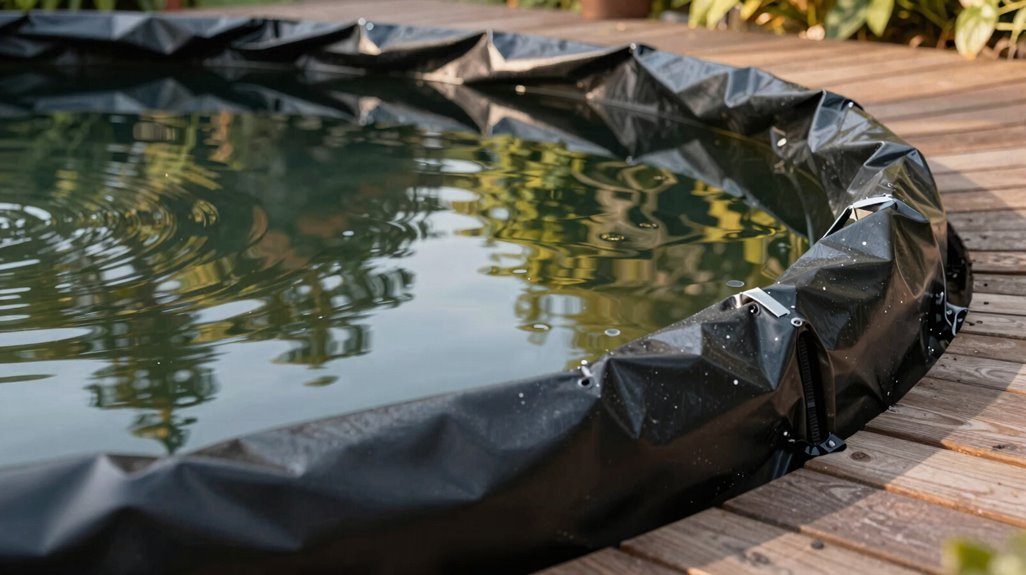
I love EPDM for its supple reliability, but I’ve learned it isn’t always the answer. When groundwater pressure surges against a pervious subgrade, lifting and ballooning the liner like a half-submerged balloon, the membrane fails despite its strength.
In those saturated conditions, I’ll specify a rigid, box-welded HDPE shell or a reinforced concrete basin with integrated filtration channels, confirming structural integrity where flexible rubber cannot hold.
Groundwater Pressure Risks
How often do we consider what’s pushing up from below? I’ve learned that groundwater pressure can quietly undermine even the most carefully installed EPDM rubber liner, creating forces that exceed the weight of water above and risking buoyant lift.
Picture your pond’s unseen struggles:
A natural spring beneath the liner, pulsing like a hidden heartbeat, filling and draining your water feature without warning; hexagon-tiled backdrop shifting as subsurface water seeks escape, compromising the seal you’ve worked to create; stone pillar fountain tilting slightly, betraying the pressure building beneath pervious substrate.
Without underliner drains and continuous escape paths, I’ve seen high groundwater pressure warp liner integrity and create leaks. In persistent pressure situations, EPDM may not serve you, requiring ballast and relief systems to prevent failure.
Alternative Liner Options
Groundwater pressure isn’t the only force that can push EPDM beyond its limits. Sometimes I’m working with pervious soil, rapid filtration demands, or a hexagon-tiled backdrop requiring rigid structure, and that’s when I step back from rubber pond liner solutions.
I’ve turned to reinforced polyethylene when budget drives every decision, though I sacrifice that fish-safe flexibility my koi deserve. PVC works for quick installs, but I’ve watched it stiffen, crack, surrendering to the very temperature swings my EPDM pond liner shrugs off.
Needing a stone pillar fountain with zero flex? I specify rigid fiberglass shells, pre-formed, unforgiving, locking me into fixed dimensions. Pre-cut dimensions, I mean: no custom contouring around that weathered boulder I’ve centered my whole design around.
Each alternative demands tradeoffs I’ve learned to calculate carefully.
How Do You Seam EPDM for Large or Custom Installations?
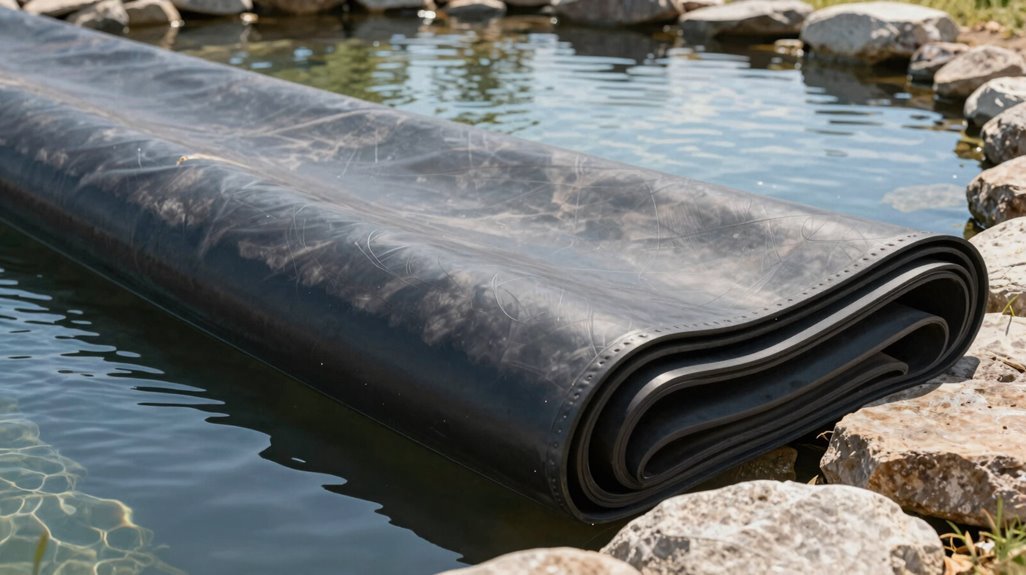
When I’m fitting a pond liner around an irregular excavation with stepped ledges, tiered plant shelves, or a stone pillar fountain anchoring one end, a single sheet of EPDM rarely covers every contour without waste or awkward tension. I join multiple panels using field seaming, creating a continuous, waterproof membrane that follows every curve.
My process relies on seam tape and primer, since EPDM cannot be heat-welded. I apply primer to both surfaces, press the seam tape firmly, and roll out air bubbles for a bond stronger than the liner itself.
Common applications include overlapping panels at the filtration zone, where hexagon-tiled backdrop meets pervious gravel; running a seam across a submerged plant shelf, hidden beneath river stone; and wrapping tape around the fountain base, making certain of zero leakage at the anchor point.
What Mistakes Ruin EPDM Liners (and How to Avoid Them)?
Seaming panels with tape and primer gives me confidence in the watertight integrity of my build, but that confidence evaporates fast if I mishandle the liner itself during installation or ignore its vulnerabilities over time. I’ve learned that EPDM, despite its remarkable flexibility and UV resistance, suffers from specific installation mistakes that compromise decades of potential service.
| Common Error | Prevention Strategy |
|---|---|
| Skipping underlayment over sharp substrate | Install protective geotextile beneath the EPDM sheet |
| Creating air voids behind waterfall stone | Ensure complete contact with compacted fill, no trapped pockets |
| Dragging pre-cut panels across rough terrain | Transport rolls properly, unroll carefully without abrasion |
Choosing reputable brands made in the USA helps, but proper technique matters more. I always check temperature tolerance ratings and secure stable positioning before backfilling around my hexagon-tiled backdrop features.