
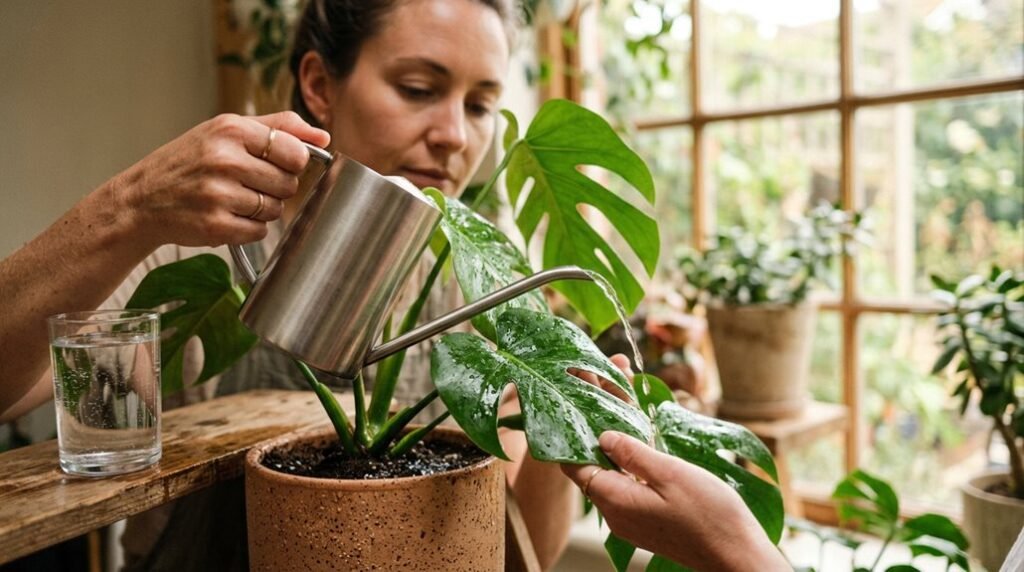
Watering a plant is like tuning a stringed instrument: too tight and it snaps, too loose and the music fades. I learned this the hard way, watching a fleshy-leaved succulent dissolve into translucence, its hexagon-tiled backdrop of a windowsill pooling with rot.
Now I press my knuckle into the soil, feeling for that precise moment when the top inch crumbles, pervious to air, signaling thirst. The real question isn’t when to water, but how to recognize your plant’s silent language before damage sets in.
How to Know When Your Indoor Plant Needs Water

How do I know when my plant actually needs a drink? I check the top inch or two of soil, feeling for dryness with my fingertip. If it’s still moist, I wait; if it’s dry and crumbly, it’s time. I never stick to a rigid watering schedule because my plants don’t care about my calendar. Instead, I read their soil moisture like a language they’re speaking.
When I do water, I pour slowly around the drip line, that invisible circle beneath the outer leaves where roots cluster like thirsty guests. I choose pots with proper drainage holes, watching water escape through pervious filtration layers until it pools in the saucer, which I promptly empty. No plant wants wet feet rotting in stagnant depths.
How to Adjust Watering for Your Home’s Light and Humidity
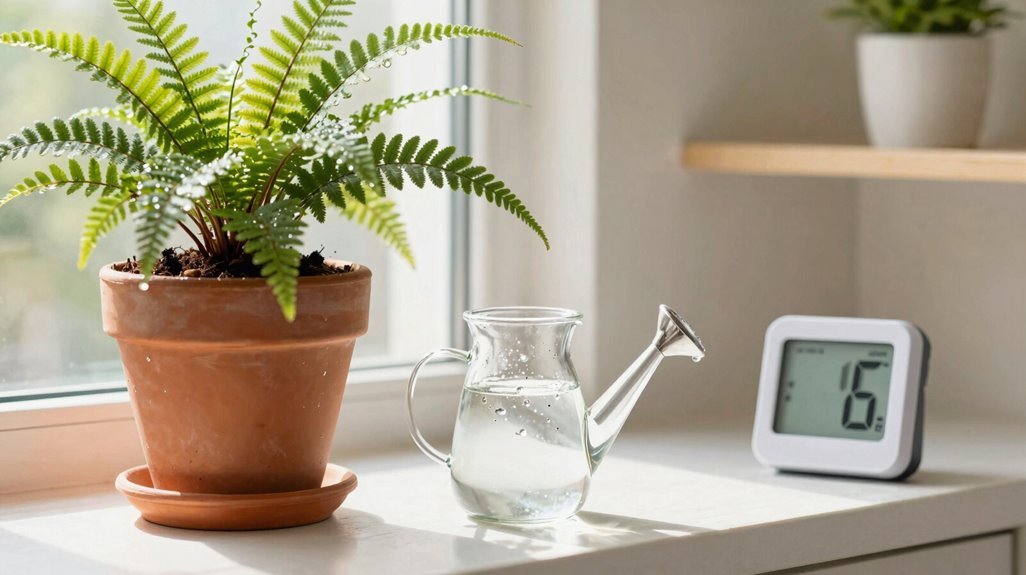
Knowing when to water is only half the equation; I’ve learned that where my plants live shapes how often I reach for the watering can. My southeast-facing bay window, flooded with morning sun, demands more frequent attention than my shaded bathroom niche. I’ve adjusted my rhythm: brighter light accelerates evaporation, while thicker humidity slows it dramatically.
I check soil moisture with my fingertip, pressing past the surface crust into the loamy heart. In my dry, radiator-heated bedroom, I’m watering twice as often as in my steamy kitchen. Smaller terracotta pots, perched on my hexagon-tiled windowsill, surrender moisture faster than glazed ceramics clustered near the stone pillar fountain.
Reading my home’s unique light and humidity patterns, I’ve stopped guessing. I watch, I test, I respond, building intuition that connects me to this patient, growing community we’ve cultivated together.
How to Water Thoroughly Without Overwatering
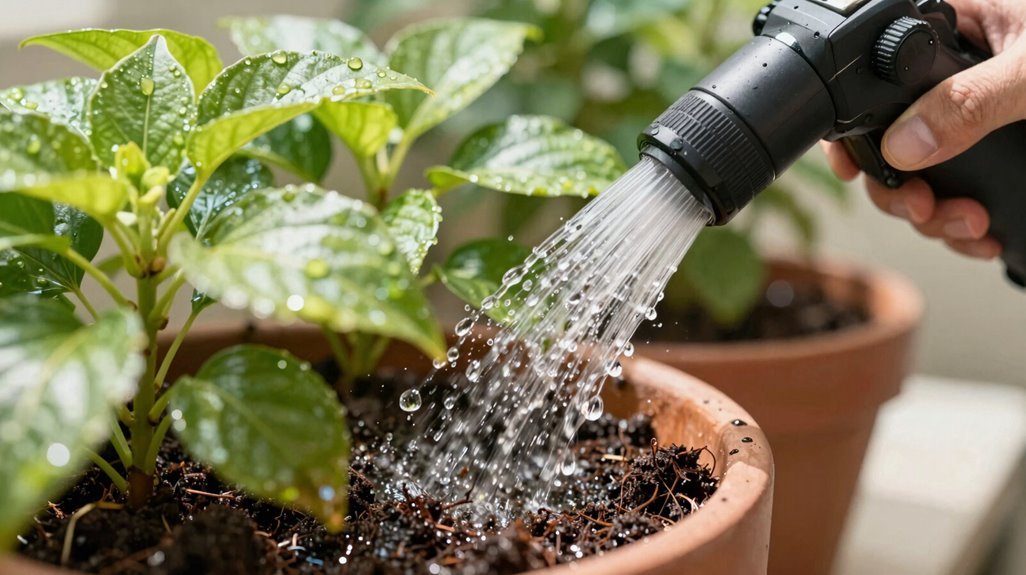
The sweet spot between drought stress and root rot demands a methodical hand, one I’ve developed through seasons of drowned seedlings and parched leaves. I check soil moisture before every watering, pressing my finger into the top two inches like I’m testing the resilience of a hexagon-tiled backdrop. If it’s dry, I water thoroughly; if moist, I wait.
I distribute water evenly across the soil surface, imagining roots spreading beneath like fingers through pervious earth. For established plants, I moisten five to six inches deep, avoiding splashy, surface-only filtration that breeds shallow roots.
Proper watering frequency isn’t a calendar date, it’s a conversation with your plant.
Drainage saves lives. I let excess water escape, discarding saucer pools promptly. Room-temperature water prevents shock. This rhythm, practiced consistently, builds the trust between gardener and green companion.
How to Spot and Fix Watering Mistakes Early

Before I learned to read the subtle dialect of stressed leaves, I’d watch plants collapse like a stone pillar fountain drained of its reservoir, mystified by what I’d missed. Now I check soil moisture with my finger, probing the top inch like testing a pervious membrane for hidden reserves.
Drooping leaves signal underwatering, their tissues deflating like filtration sacks emptied of pressure. Mushy stems and brown-spotted foliage scream overwatering, roots suffocating in saturated hexagon-tiled pockets of decay.
I water deeply when dryness hits that threshold, using room-temperature streams that penetrate to the drip line, then I wait. This rhythm, thorough, patient, observant, builds the deep root systems we both need to do well together.
Tools That Match Your Plant Size and Watering Needs
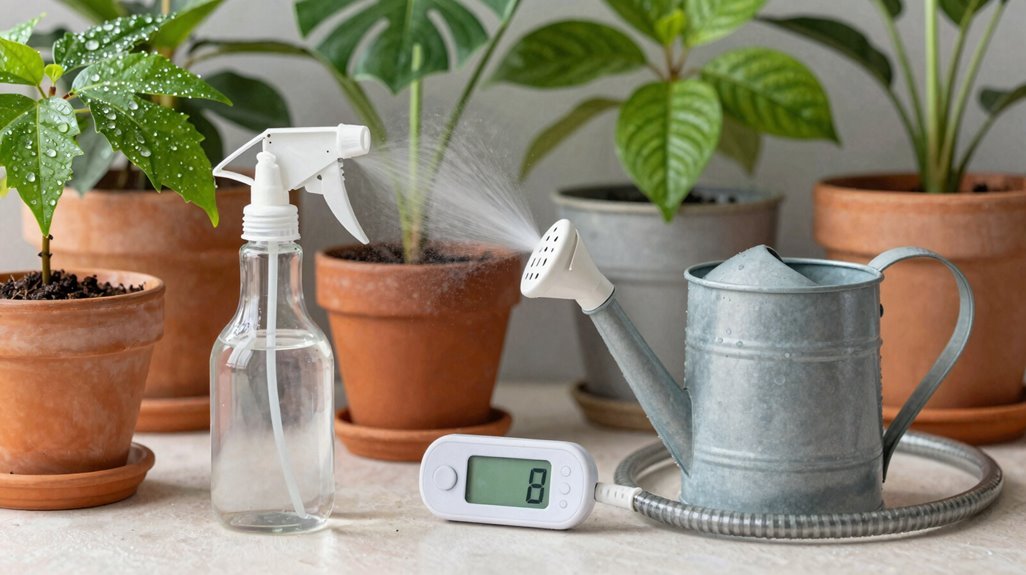
Spotting my own missteps taught me something I hadn’t expected: the right tool reshapes everything. For my trailing pothos suspended near the hexagon-tiled backdrop, I reach for a long-spouted watering can, its narrow stream preventing rapid runoff across my stone pillar fountain’s shadowed corner. Squeeze bottles serve my clustered containers of succulents, delivering pervious filtration directly to root zones without flooding.
My air plants, perched on driftwood, receive gentle misting from a spray bottle; no soil irrigation required. Self-watering spikes sustain my weekend absences, maintaining steady moisture through ceramic reservoirs. I always water until drainage flows freely from holes, then discard saucer remnants, protecting against root suffocation. Matching implements to scale reshapes anxious tending into confident ritual.