I’ve come to appreciate how a well-designed pond turns even modest outdoor spaces into deliberate, living compositions. Whether you’re working with a compact patio or a sprawling sloped yard, the challenge lies in matching your site’s constraints, drainage patterns, solar exposure, and pervious surface ratios, to a water feature that actually belongs there. Filtration methods, edging materials, and plant-palate choices will either refine your design or betray its artificiality.
Let me walk you through ten approaches I’ve refined, each scaled to specific conditions, each demanding different technical commitments. The first decision you’ll face, container versus inground, sets everything in motion.
Match Your Backyard Space to the Right Pond Type

Where do I even begin when every backyard demands something different? I’ve learned that matching your pond type to your backyard space starts with honest assessment of what you have. Small to midsize plots suit lilies and modest waterfalls, while expansive areas accommodate tall cascades and dramatic rock work.
Considering pond location, I balance sun exposure against tree cover; too much shade limits plants, but direct under-tree placement invites debris and algae blooms. Your edging materials shape the entire feel: deep, flat stones conceal liners for seamless formal boundaries, while irregular rocks suggest naturalistic edges. Oval or round shapes with flat stone surrounds create symmetry, neat defined viewing edges that draw the eye inward.
Planning demands you weigh budget, filtration needs, and whether natural, seminatural, or formal styles pervade your vision.
Container Ponds for Patios and Small Spaces
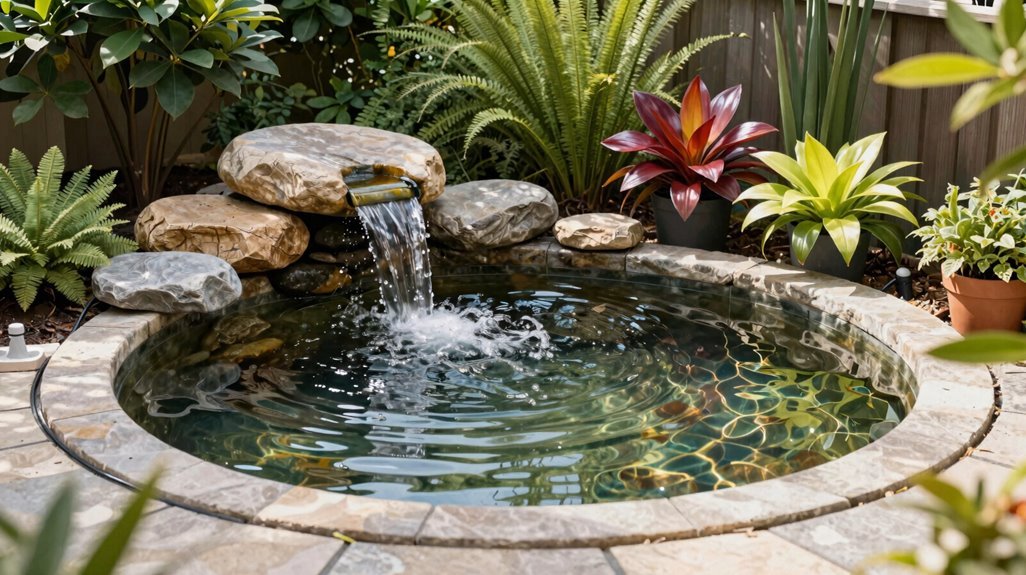
How does a full pond fit when you’re working with nothing but a balcony or courtyard? I’ve found container ponds transform patios into tranquil retreats without demanding excavation or permanent commitment. These portable water features suit small spaces where traditional digging isn’t practical, offering the sensory richness of moving water through compact, self-contained designs.
Boxed kits streamline installation dramatically, letting me position a preformed liner or wooden vessel against a hexagon-tiled backdrop, adding a stone pillar fountain for gentle sound. Sheltering from wind matters; I place mine near walls, selecting marginal plants like dwarf cattails that do well in shallow depths. Minimal filtration keeps maintenance manageable, while the contained volume supports ornamental fish or simply reflects sky and greenery. Container ponds prove water gardening belongs everywhere, not just sprawling lawns.
Small Inground Ponds With Hidden Stone Edges
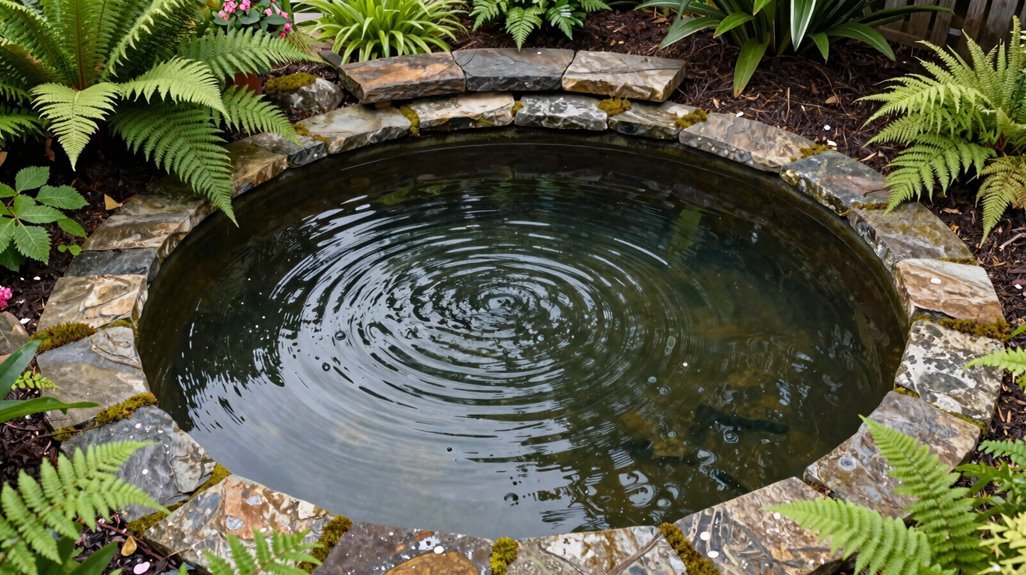
A handful of careful design choices can make even a modest basin read as something that emerged from the ground itself. For hidden edges that dissolve into your lawn, I lay deep, flat stones over the liner lip, letting stone edging disappear beneath creeping thyme or dwarf mondo grass.
These small inground ponds do well with shallow basins, sometimes mid-depth, where water sits still or carries the faintest ripple from a pervious spillway that masks the liner’s terminus. I stack weathered fieldstone around the perimeter, angling each piece so filtration tubing stays invisible, the natural look unbroken.
Planning edge concealment before digging saves you from retrofitting. Match your stone to existing hardscape: bluestone against a hexagon-tiled backdrop, limestone near weathered brick, so the pond feels inevitable, not installed.
Midsize Ponds With Integrated Waterfalls
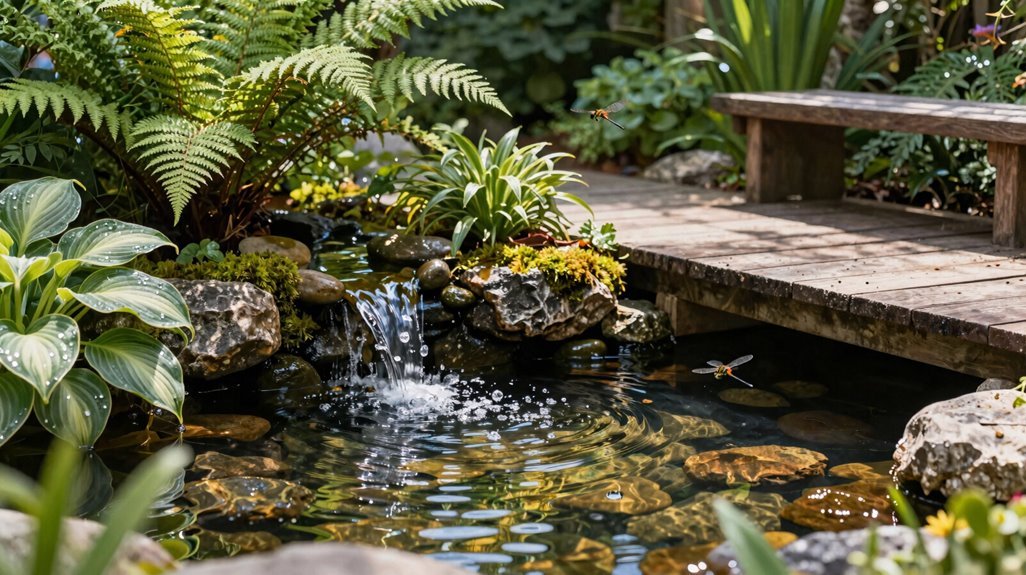
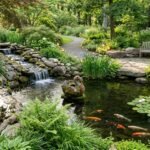
Most midsize ponds I build sit at that practical sweet spot, broad enough for water lilies to spread their pads, deep enough for a few koi to glide below, yet compact enough that a waterfall doesn’t dwarf the whole composition. I favor oval shapes with flat stone surrounds that mask the liner edges, creating seamless transitions into perennial borders.
| What You’ll Feel | How It Arrives |
|---|---|
| Morning calm | Water cascading over moss-covered stone accents |
| Evening peace | Koi surfacing as frogs begin their chorus |
| Quiet pride | Guests lingering, drawn to your waterfall’s murmur |
Stone accents frame the waterfall naturally, while balanced filtration keeps the pond pervious and clear. Pair with swaying grasses for vertical lift. This midsize approach invites you into a community of gardeners who’ve found their scale.
Midsize Ponds With Tall Waterfalls for Sloped Yards
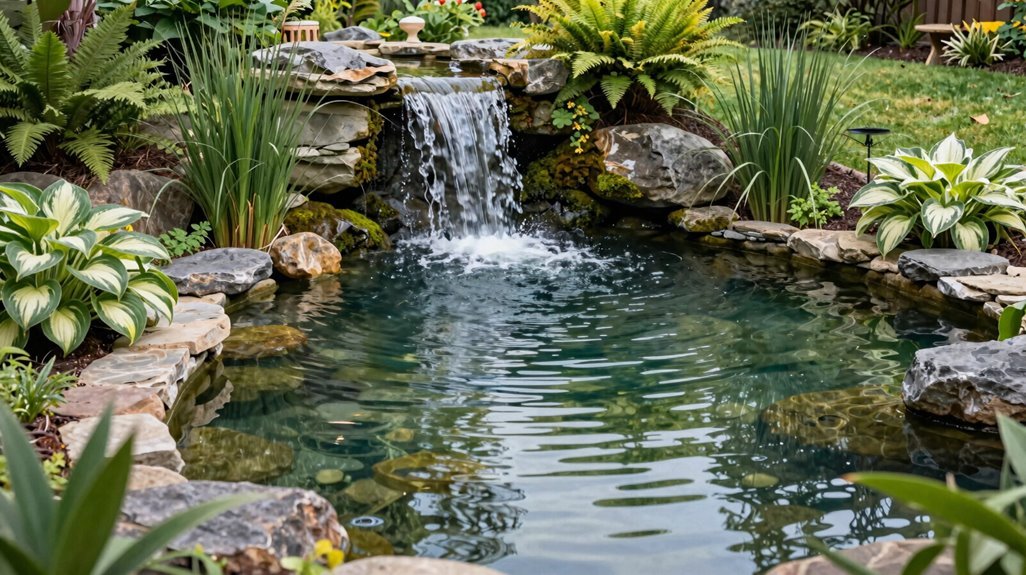
I start every sloped-yard project with a thorough site assessment, checking soil drainage and sun exposure before committing to any waterfall height. Balancing that vertical drop against your yard’s natural grade prevents the structure from overwhelming the space or looking artificially imposed.
Careful rock placement, using larger anchor stones at the base and smaller, pervious gravel behind the cascade, makes filtration-friendly water movement and a blend with the terrain that looks natural.
Site Assessment Essentials
Where exactly does the slope face throughout the day, I’d ask myself first, because that single angle determines whether I’m battling string algae in August or watching water lilies starve for light. Sun/shade patterns on your slope aren’t abstract concerns; they’re the difference between a healthy pond community and a maintenance burden.
Before breaking ground, I’d trace these essentials:
- Map sunlight arcs: note which hours hit the pond site, protecting water lilies from scorching midday glare while sparing them gloom.
- Plan edge concealment: nestling deep, flat stones into the incline, hiding every liner seam beneath weathered, moss-speckled rock.
- Position filtration placement uphill, where gravity assists flow and I avoid muddy treks down slick terrain for pump checks.
- Read the slope’s drainage: watching rainwater paths, ensuring pervious materials prevent erosion swallowing my hexagon-tiled backdrop vision.
Waterfall Height Balance
Having mapped where the sun strikes and positioned my filtration uphill, I’m now staring at the real prize of a sloped yard: height I don’t have to invent. A tall waterfall converts this natural grade into dramatic vertical theater, but I’m careful. Excessive height without proper balance risks overwhelming my midsize pond’s scale and stability.
| Element | Purpose | Implementation |
|---|---|---|
| Structural support | Prevents settling and liner stress | Concrete footings, compacted base |
| Water flow rate | Maintains visible cascade without evaporation | 1-2 gallons per inch width |
| Rock sizing | Natural appearance, edge concealment | 12-24 inch stones at base |
| Plant integration | Softens grade transition | Ferns, creeping jenny at rim |
I’m building deep, layered stonework at the base for stability, so my waterfall complements rather than dominates. The right structural support lets me enjoy the height without anxiety.
Rock Placement Strategy
How does a waterfall avoid looking like a stone pile dropped from above? I’ve learned that thoughtful rock placement transforms chaos into something that feels discovered, not constructed.
Plant your feet where water meets earth; stacking large, vertical rocks at the waterfall base creates height that breathes, not suffocates.
Hide what holds things together; deep, flat stones mask the liner, forging seamless transitions between pond and slope landscaping.
Build paths for belonging; arranging surrounding rocks into gradual slopes invites others to sit, step closer, share the space.
Anchor your wildness; boulders mimic natural hillsides, yet demand undersized support stones to stay steadfast through seasons.
I select contrasting textures, so this waterfall commands attention without screaming. Your garden becomes where people gather, pulled toward water that appears to have always belonged.
Formal Oval Ponds With Structured Borders
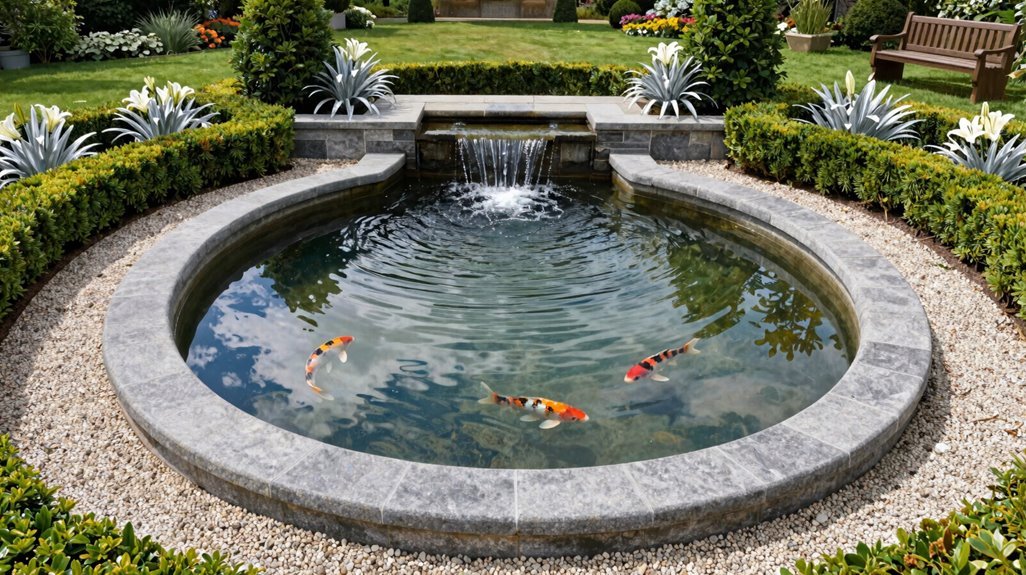
Why settle for an irregular water feature when I can shape my garden around something deliberate? I choose an oval pond with structured borders because it anchors my outdoor space with quiet authority. The smooth, elongated ellipse draws the eye toward a hexagon-tiled backdrop or stone pillar fountain, while flat stone surrounds achieve complete edge concealment.
I prefer minimal plant life here; water surface clarity matters more than dense growth. Mortared concrete or precision-cut stone creates that seamless, polished boundary I crave.
| Element | Purpose | Effect |
|---|---|---|
| Flat stone edging | Hides liner completely | Uninterrupted visual flow |
| Symmetrical placement | Aligns with patio sightlines | Cohesive garden composition |
| Sparse planting | Emphasizes geometric form | Refined, gallery-like atmosphere |
Formal ponds reward the gardener who values restraint. I find belonging in this groomed precision, where every edge serves the whole.
Pond-And-Bridge Designs With Flowering Borders
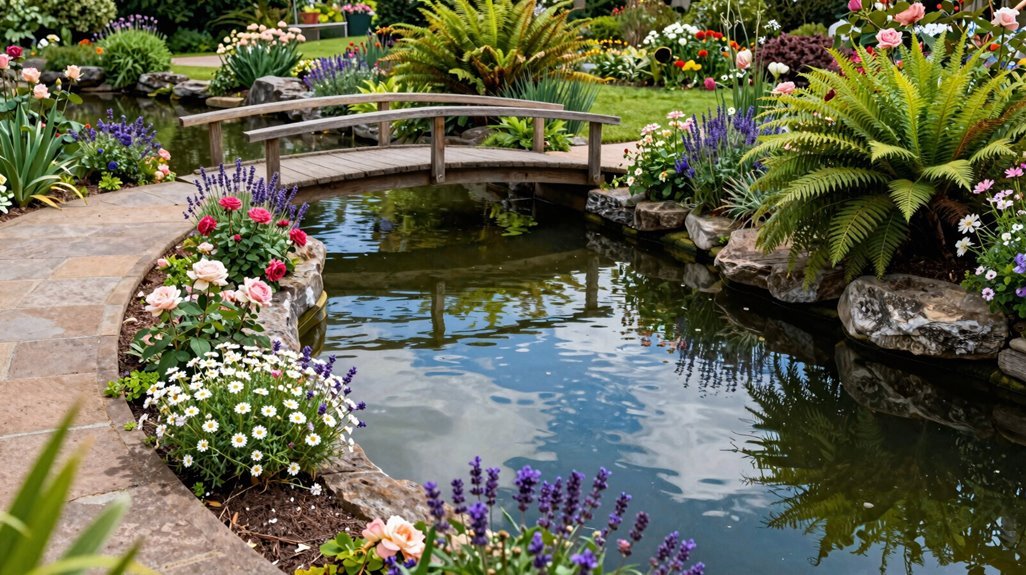
Where might I pause to watch a dragonfly skim the surface, if not from a wooden bridge arcing over my own midsize pond? I’ve found this design creates belonging through layered immersion. My pond-and-bridge arrangement pairs with flowing borders that soften edges into living tapestry.
The flowering borders wrap my water garden in seasonal sequence: iris clusters, Joe Pye weed towers, meadowsweet drifts. These plantings serve pervious filtration while concealing geomembrane seams.
I maintain dry bridge decking against rot, checking stone edging for frost heave.
- Morning light catches dew on Siberian iris petals beneath your cedar bridge rail
- Evening gatherings pause mid-span where water lilies reflect sunset through loosestrife stems
- Children discover tadpoles where flowering borders dip toward shallows
- Solitude finds you, finally present, among hovering damselflies
This bridge invites return.
Double Ponds for Layered Visual Depth
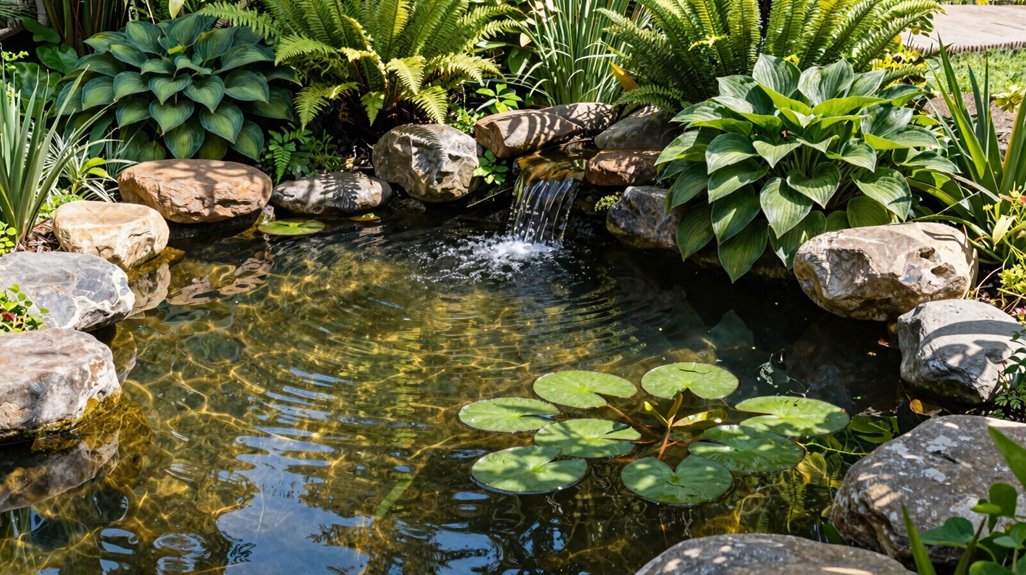
Moving past the single pond’s contained horizon, I’ve come to appreciate how two linked water bodies reshape what a garden can hold. I build these ponds as a layered design, pairing a deep, rounded main basin with a shallower auxiliary pool, connected by rock steps or a meandering stream.
Stacked stone terraces conceal liner edges, weaving the water feature into pervious soil and surrounding beds. I plant daylilies and marginal grasses between levels, letting vertical growth blur the boundary between water and land. Balanced flow prevents stagnation, pushing aeration through both ponds simultaneously.
For pond maintenance, I make sure accessible filtration sits at each basin, clear debris regularly, and inspect connecting channels for clogs or seepage. This dual structure invites closer inspection, rewarding those who linger.
Koi Ponds With Self-Sustaining Ecosystems
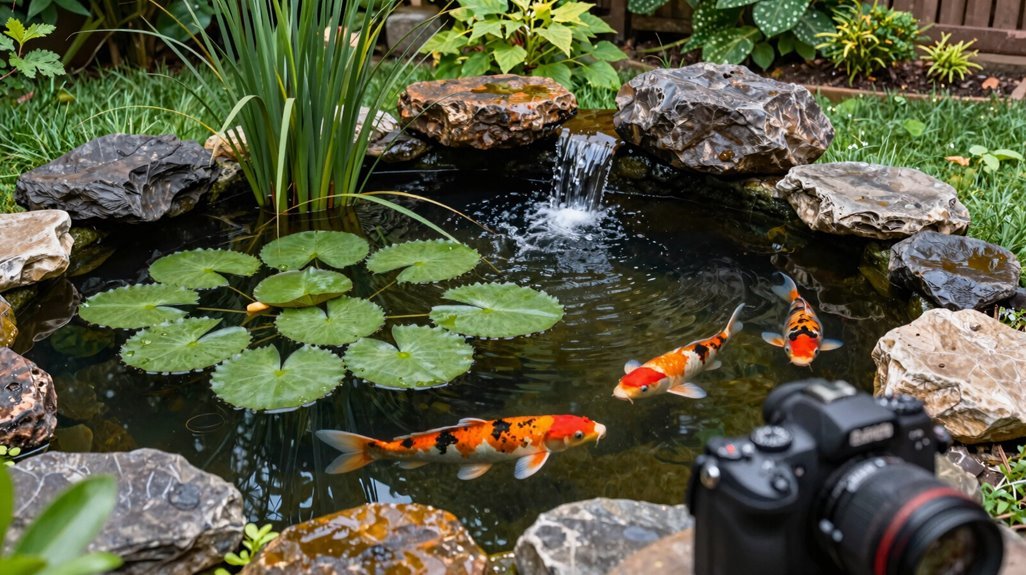
How do I keep koi thriving without constant intervention? I build a self-sustaining ecosystem that works while I watch.
Relying on Aquascape principles, I integrate pond filtration with lush plantings, water lilies, rushes, submerged oxygenators, creating pervious living architecture. Beneficial bacteria colonize biological filters, transforming fish waste into nutrients cycling toward verdant growth. My koi glide beneath lily pads, their golden scales flickering against a hexagon-tiled backdrop, while stone pillar fountains murmur at the margin.
Witnessing this balance, I feel rooted in something larger:
- Choosing native plants that enrich shared water
- Installing filtration that hums with collective purpose
- Welcoming dragonflies, frogs, fellow travelers into our refuge
- Trusting time’s patience as clarity emerges from chaos
This pond accepts me quietly. We’re belonging, together.
Pondless Waterfalls for Low-Maintenance Backyards
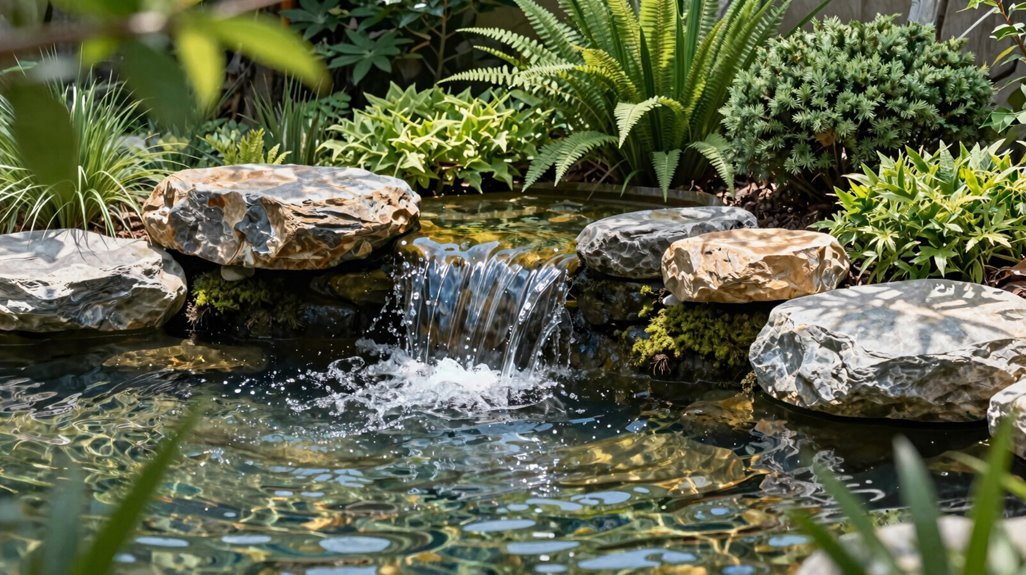
Why dedicate weekends to skimming leaves and balancing chemicals when I can have falling water without the standing pool beneath it? I’ve discovered that a pondless waterfall offers the perfect compromise; all the visual drama and soothing acoustics, none of the upkeep headaches.
This low-maintenance backyard water feature tucks a hidden reservoir beneath decorative stones, recirculating water through pervious filtration while keeping the mechanics invisible. Whether I’m working with a narrow side yard or a compact patio, I can scale the cascade to fit. The gentle murmur over moss-covered boulders changes my space into something intentional, something that feels like home.
| Element | Function |
|---|---|
| Hidden reservoir | Stores and recirculates water underground |
| Pervious rock layer | Allows drainage while masking the basin |
| Submersible pump | Drives flow rate for sound control |
| Stone accents | Creates naturalistic, textured cascades |
Building one becomes a manageable weekend project with kit components, letting me claim belonging in a community of hands-on homeowners who value both beauty and practicality.