

A garden, like a sentence, requires structure before it blooms. I’ve mapped my stone pillar fountain, my hexagon-tiled backdrop, my pervious gravel paths that let rain filter through to thirsty roots. I watch how October light falls across the beds, how summer drought shifts my irrigation zones.
You need to know your soil’s pH, your yard’s fixed limits, before you plant a single seed. The real question isn’t where to start; it’s whether you’re prepared to adjust when the map no longer matches the ground.
Set Your Garden Goals First
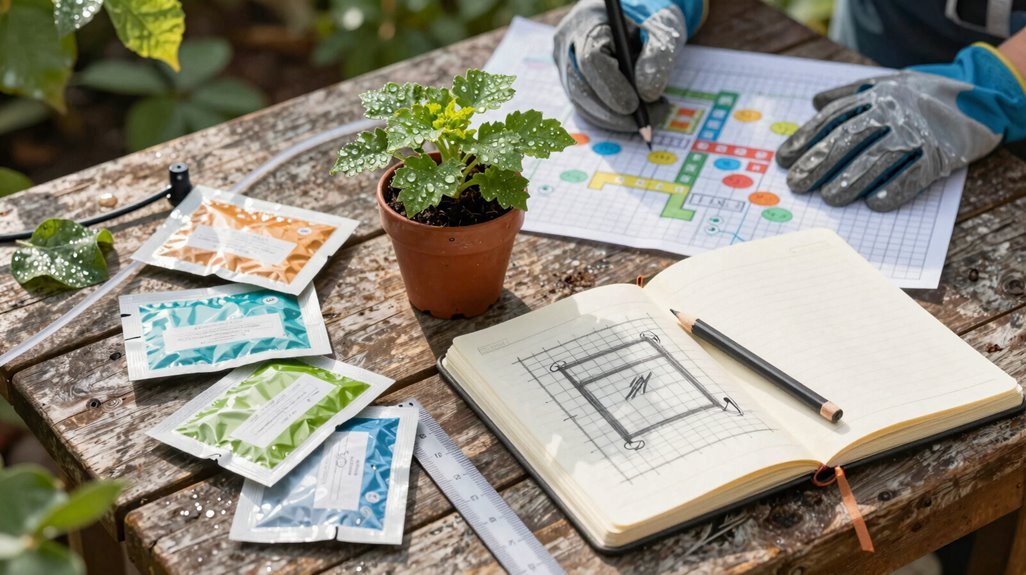
Why begin digging before I know what I’m building? I start my garden goals with honest questions: Do I crave tomatoes still warm from the vine, or a stone pillar fountain beneath a hexagon-tiled backdrop? Perhaps both. I write these aims down, anchoring my vision before soil meets shovel.
I conduct a space assessment next, measuring my commitment as carefully as my plot. Six hours weekly sustains a modest vegetable garden; thirty minutes demands drought-tolerant perennials.
I study sun exposure through a full day, noting where shadows fall at 4 PM. My microclimate, that frost pocket near the fence, the heat reflecting off my garage, shapes what does well. I check regional planting calendars, letting local wisdom ground my ambitions in reality.
Map Your Yard’s Fixed Features and Limits
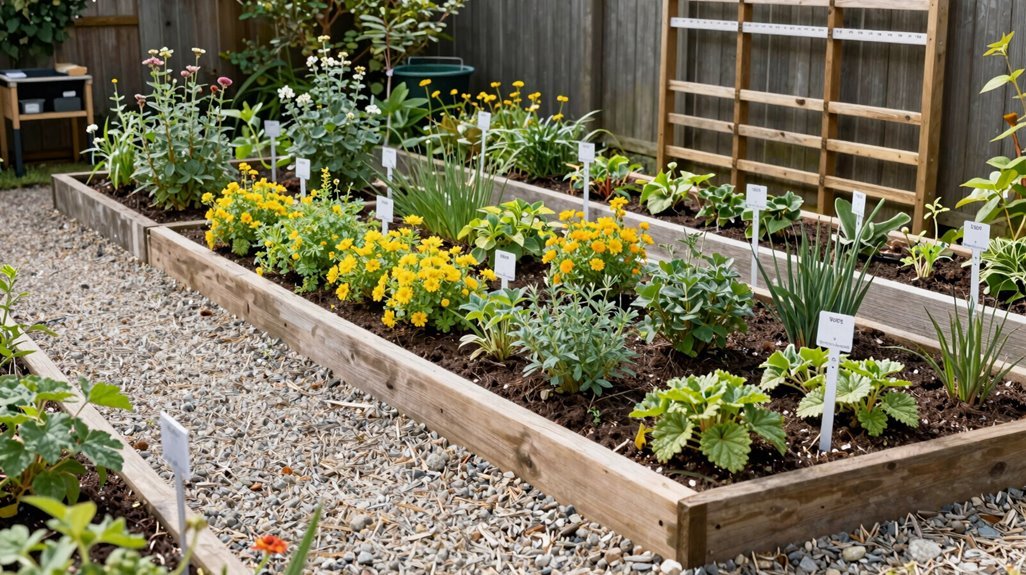
I’ll sketch a base map of my yard’s fixed features, marking the stone pillar fountain and hexagon-tiled patio as permanent anchors, then trace sun paths across the pervious gravel paths to locate prime growing zones.
Noting where neighboring oaks cast summer shade, I’ll position raised beds for accessibility, placing water-dependent staples near the filtration system’s spigot. Leaving deliberate gaps for future trellises, I’m building a framework that respects hard limits while maximizing every sun-rich corner.
Base Map Creation
A garden’s skeleton reveals itself through ink and measurement, not soil and seed. I start every project with a base map, sketching permanent structures: raised beds, stone pillar fountains, hexagon-tiled backdrops, alongside paths, fences, and gates. I add a compass rose, marking cardinal points to track sun exposure across seasons.
My garden layout emerges through three deliberate steps. First, I identify goals: vegetables, herbs, natives. I note space constraints, plant heights, and shading patterns. Second, I map proposed locations, prioritizing high-maintenance plants in sun-rich zones, tucking shade-lovers beneath spreading canopies. Third, I make sure accessibility is addressed, choosing two 4×8 beds over one cumbersome 8×8, placing irrigation connections within logical reach.
| Element | Purpose | Consideration |
|---|---|---|
| Compass rose | Sun tracking | Seasonal arc shifts |
| Raised beds | Soil control | Vertical growing needs |
| Path width | Movement | Wheelbarrow clearance |
| Gate placement | Entry flow | Equipment access |
| Bed dimensions | Maintenance | Arm’s reach from edges |
Sun and Water
The sun’s path across my yard dictates where life thrives and where it merely survives. I’ve learned to track its arc from morning east to afternoon south, noting which corners bask in six hours of light and which languish beneath oak canopies. This sun exposure mapping reveals microclimates invisible at first glance.
Water patterns matter equally. After rainfall, I walk my perimeter, marking where drainage fails and puddles form against the stone pillar fountain base. These saturated zones, hexagon-tiled backdrop glistening, host moisture-loving ferns while my driest slopes demand drought-tolerant specimens.
Proximity to my spigot shapes every decision. I’m placing thirsty tomatoes where sun converges near the hose, tucking hostas into shadowed, pervious pockets where filtration slows. Understanding these fixed features, I build a garden that belongs precisely here.
Accessibility Planning
Where exactly do my feet carry me most often, and what stops me cold? I grab graph paper and sketch my yard’s bones: the hexagon-tiled patio anchoring the southwest corner, the stone pillar fountain beneath the ancient oak, the fence lines that frame my territory. These fixed features dictate my garden zoning, carving natural districts before I plant a single seed.
I trace pathways between these anchors, making sure every entry point remains open. My spigot sits forty feet from the vegetable beds, too far, so I reroute my irrigation plan. I mark slopes that need retaining walls and level pockets perfect for raised beds. Reachability matters: I measure arm’s length from proposed paths, guaranteeing I can tend plants without trampling soil.
This map becomes my covenant with the land.
Watch How Sun and Water Move Through Your Space
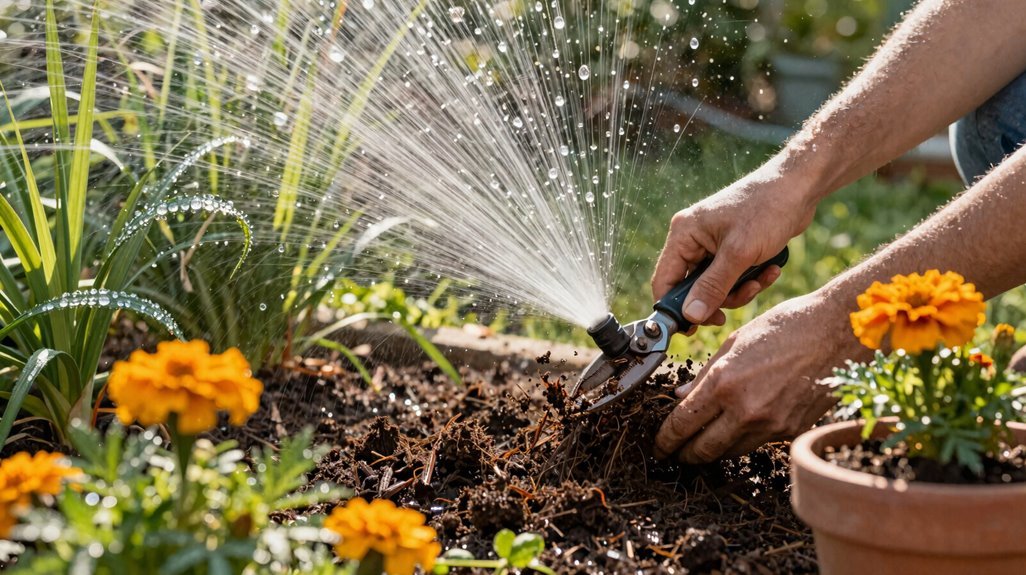
I track the sun’s arc across my garden from dawn to dusk, noting how its golden shafts strike the hexagon-tiled backdrop of my south-facing beds while morning shadows linger near the stone pillar fountain.
Puddles that persist after rain reveal pervious soil issues demanding attention, so I mark these drainage zones alongside shifting shade patterns cast by neighboring structures. Using a compass rose on my base map, I group thirsty plants in contiguous zones where irrigation lines can thread through sun-drenched corridors, making certain filtration and moisture reach roots without waste.
Mapping Sun Patterns Daily
Sunlight behaves like a guest who arrives early, shifts position throughout the day, and leaves without warning, so I’ve learned to track its movements with deliberate attention. I start my sun patterns observation by noting how east-origin light sweeps across my southern aspect garden, where hexagon-tiled backdrop patios catch morning rays before stone pillar fountain shadows lengthen westward. I sketch a compass rose on my base map, marking zones that glow amber at dawn, blaze white at midday, then soften to gold by afternoon.
My shading analysis reveals how neighboring fences and oak canopies create shifting pools of darkness. I document these obstructions with precise timestamps, understanding that sun exposure in March differs dramatically from July’s arc. This careful mapping means I’ll place my tomatoes where light lingers longest, while reserving dim corners for ferns and hostas that crave shelter.
Assessing Water Drainage Areas
How does water behave when it meets your soil after a storm? I watch where drainage fails, noting water pooling against the hexagon-tiled backdrop of my patio or the stone pillar fountain’s base. Mapping these patterns, I mark depressions where soil moisture lingers and slopes that shed rain too quickly.
Tracking sun exposure throughout seasons, I see how south-facing zones dry faster, demanding different plants than shaded, saturated corners. I probe for compacted earth, impervious as concrete, which blocks filtration and sends precious rainfall streaming away. Finding these obstacles, I plan interventions, perhaps breaking hardpan or creating swales.
My observations guide placement: thirsty vegetables claim well-drained, sunny beds, while ferns and sedges settle where water pools. Understanding your land’s hydrology, you’re joining generations of growers who read terrain like a second language.
Test Your Soil Before Choosing Plants

Before I even think about which rhododendrons or blueberries I’ll plant, I grab my soil testing kit and head to the garden bed, kneeling beside the dark, crumbly earth that will either welcome acid-loving species or reject them outright. I need to know my soil test results before committing to any plant selection, because guessing wastes time and money.
My pH determines everything. If it’s too alkaline, I’ll add sulfur amendments; too acidic, I’ll work in lime. I always test multiple spots, since microclimates shift across my yard.
- I plunge the probe into loamy soil, watching the dial settle between 4.5 and 6.0 for blueberries.
- I collect samples in hexagon-tiled backdrop containers, labeling each with weathered wooden stakes.
- I mix compost into clay-heavy patches, feeling the texture transform beneath my fingers.
- I record readings beside my stone pillar fountain, building a map of my garden’s hidden chemistry.
Testing first means my plants do well where they belong.
Sketch Your Garden Layout: Beds, Paths, and Zones
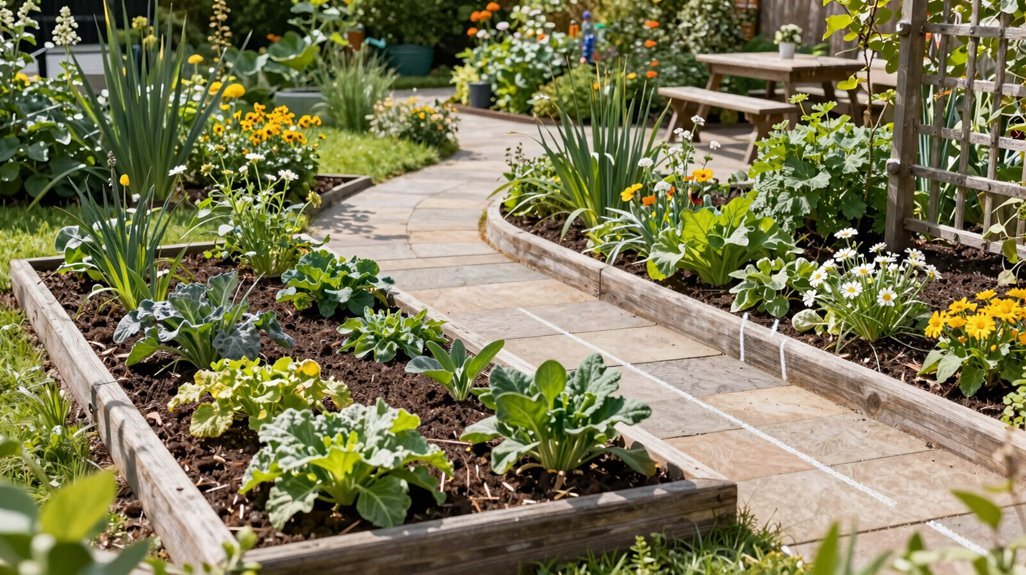
Where do I begin when the blank page of my notebook stares back, demanding order from the chaos of my yard? I start by mapping fixed elements: patios, large trees, the stone pillar fountain, letting them anchor my garden layout. Taking my compass, I note south-facing walls for sun exposure and fence orientation, knowing these guide every placement choice.
Carving zones comes next: a potting area near the shed, family seating with hexagon-tiled backdrop, and that sunny patio I’ve imagined for morning coffee. I sketch beds deliberately, keeping them 4×8 feet with 28–36 inch pathways between, ensuring I can reach every plant without stepping into soft soil.
Planning gates and entry points, I create flow for watering and maintenance, turning scattered space into coherent, accessible territory we can truly inhabit together.
Group Plants by Water and Care Needs
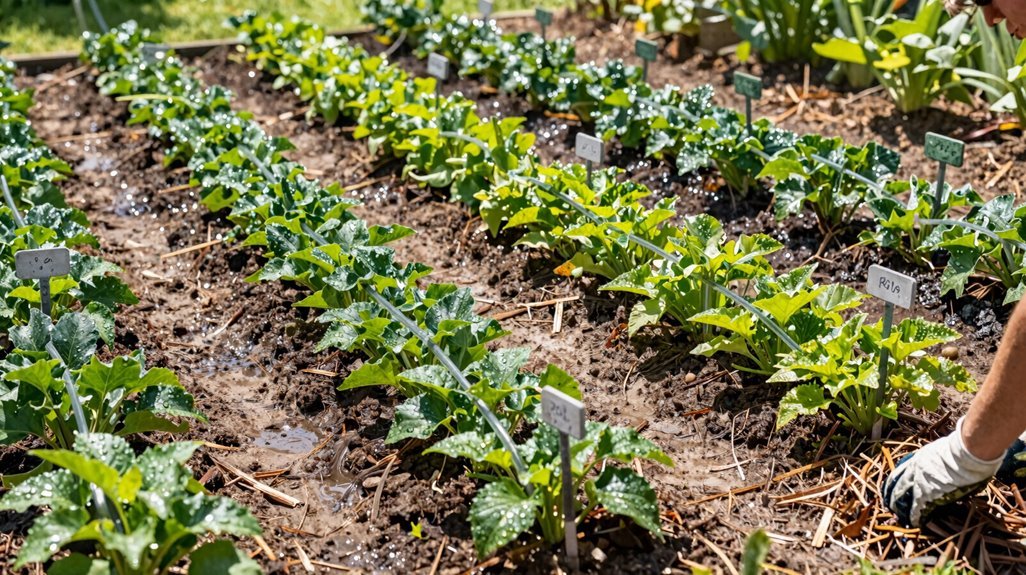
I group my tomatoes and cucumbers near the stone pillar fountain’s reliable drip lines, while tucking lavender and thyme against the hexagon-tiled backdrop where drainage runs swift and sun bakes hard. Clustering plants by their thirst, deep-rooted squash with shallow-lettuce neighbors, moisture-lovers shading drought-tolerant companions, lets me irrigate root zones collectively without wasting a drop on mismatched needs.
Planning these zones now, with pervious paths between beds and filtration-minded spacing, keeps my monitoring simple and my greens free from overhead splash that invites disease.
Water-Smart Plant Grouping
Why scatter thirsty tomatoes among parched succulents when I can arrange my garden like a well-orchestrated irrigation circuit, each plant clustered by its thirst? Water-smart grouping transforms my garden into a community where every plant belongs.
Through careful irrigation planning, I cluster heavy-water-dependent crops near faucets and rain-barrel irrigation systems. Drought-tolerant species occupy pervious, well-drained slopes beneath the hexagon-tiled backdrop of my potting shed. I employ root-zone watering via drip lines, delivering deep, infrequent moisture that builds resilient root systems.
- Tomatoes clustered near the stone pillar fountain, their leaves trembling with shared abundance
- Succulents baking on the gravel ridge, silver skins drinking spare dew
- Containers aligned beneath the filtration spout, catching every precious drop
- Raised beds tiered like amphitheater seating, each level receiving its measured share
High-Maintenance Plant Placement
Water-smart grouping sets the stage, yet some plants demand more than shared irrigation; they need prime positioning, constant attention, and soil that never forgets its purpose. I’ll place high-maintenance plants where sun exposure reaches prime angles, often against a hexagon-tiled backdrop that absorbs afternoon warmth.
Clustering heavy water-dependent specimens together, I streamline my watering routine. Monitoring soil moisture becomes efficient when these thirstier neighbors share root zones with similar filtration needs. Positioning vertical growers behind lower sun-loving species, I maximize light interception without blocking accessible airflow paths.
Shady characters and spreading groundcovers? I’ll relegate those to partial shade zones, preventing resource competition. Regular maintenance—tailored feeding, pruning, and pest surveillance—keeps my demanding specimens healthy. This deliberate arrangement makes demanding care into manageable rhythm.
Irrigation Zone Planning
Where should each plant live so I don’t waste a drop? I map my garden into irrigation zones, clustering thirsty tomatoes and cucumbers together while tucking lavender and sage into drier corners. This water management strategy means I’m not drowning drought-lovers or parching my heavy drinkers.
- The stone pillar fountain gurgles at my garden’s heart, its hexagon-tiled backdrop marking where I group my moisture-hungry crops.
- Pervious gravel paths wind between beds, letting me check soil moisture without compacting roots.
- Rainwater barrels, painted sage green, stand ready beside sun-rich zones where my deep-water plants stretch toward afternoon light.
- Morning mist rises from soaker hoses I’ve timed for dawn, my irrigation planning complete with seasonal valves and future connection points.
Through careful irrigation planning, I’ve built a system where every plant belongs.
Place Tall Plants Where They Won’t Shade Neighbors
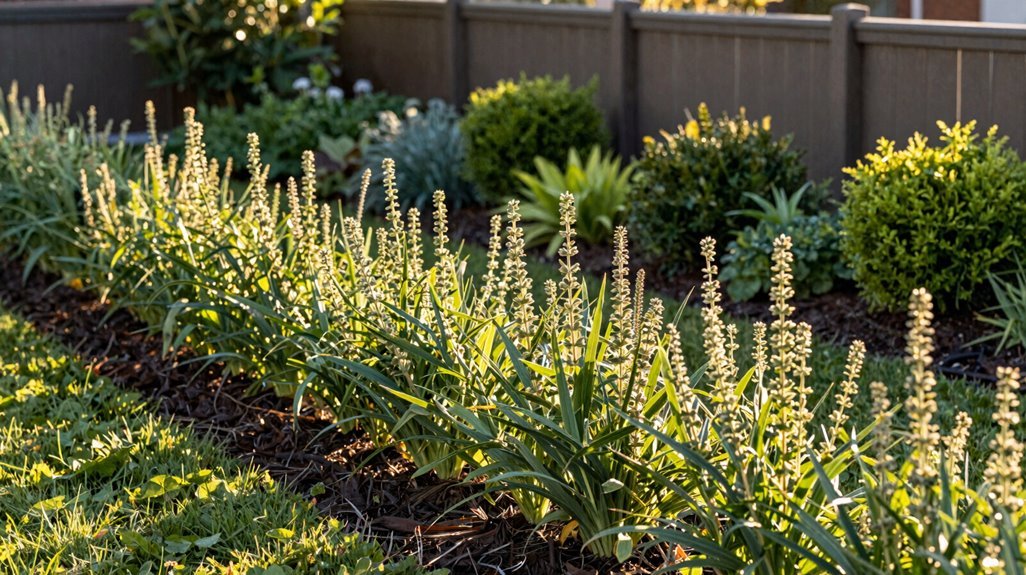
How often have I planted tomatoes against a south-facing fence, only to watch my lettuce wilt in their shadow by midsummer? I’ve learned that plant height management demands intention, not accident.
| Location | Tall Plant Strategy | Sun Exposure Outcome |
|---|---|---|
| South fence | Trellises with climbing beans | North bed receives 6+ hours |
| Mixed border center | Staggered heights, tall rear | Front row: unobstructed morning light |
| Patio edge | Dwarf varieties only | Seating area: pervious, filtered shade |
| Path intersection | Annual assessment, repositioning | All quadrants: balanced distribution |
Now I place towering perennials toward back boundaries, keeping their shading contained. I check sightlines from my hexagon-tiled backdrop to the stone pillar fountain, making certain nothing blocks the view. Regular adjustment of support structures maintains filtration of light where neighbors need it most.
Design Paths Wide Enough for Wheelbarrows
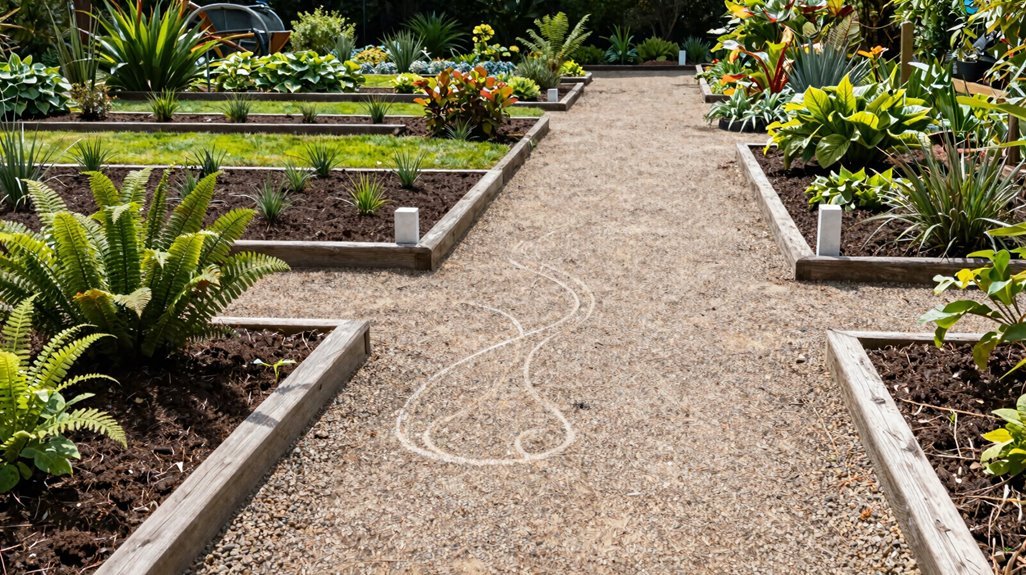
Why did I spend an entire afternoon wrestling a loaded wheelbarrow through a twenty-inch gap between my raised beds, soil spilling with every awkward turn? I’d ignored pathway width, and my garden access suffered. Now I design paths at least thirty inches wide, letting wheelbarrows glide between rows without crushing tender seedlings.
Your garden deserves better flow. Consider these elements:
- Gravel paths, two inches deep, crunching softly under rubber tires while permitting rainfall filtration
- Arched entry points, framed by weathered cedar, marking transitions between vegetable zones and perennial borders
- Stepping stone intervals, hexagon-tiled backdrops, preventing wheel ruts in heavy clay soil
- Stone pillar fountains, positioned peripherally, guiding movement without obstructing wheelbarrow turning radius
Pervious materials protect soil structure. You’ll work smarter, not harder, when every route welcomes your tools.
Reserve Space for Seasonal Changes and Additions
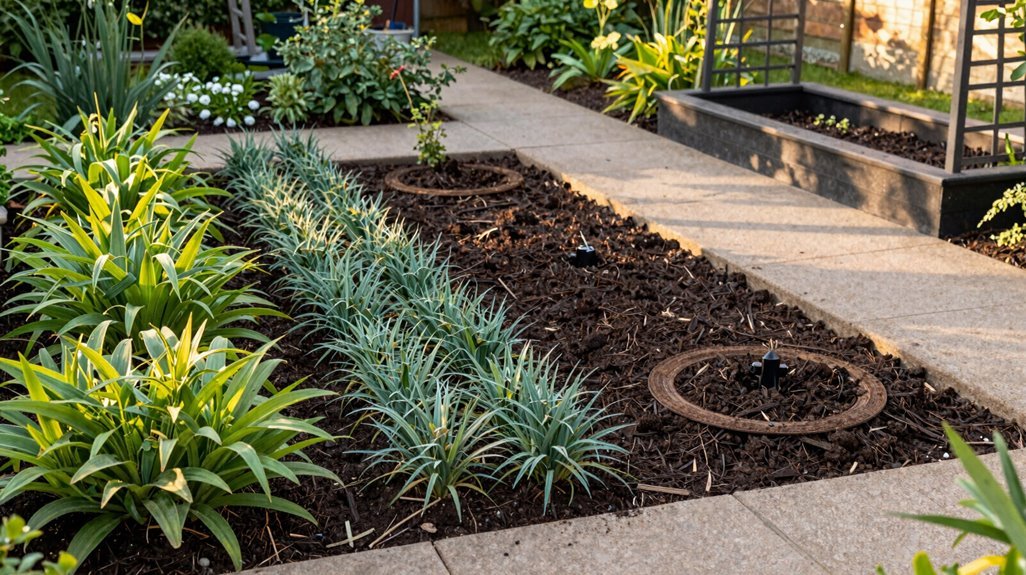
My wheelbarrow paths now flow smoothly, yet I’ve learned that rigid permanence invites its own frustrations. I reserve space in my hexagon-tiled backdrop beds, leaving deliberate gaps between stone pillar fountain zones and vegetable rows. These empty pockets breathe, awaiting future additions like espaliered fruit trees or pollinator strips I haven’t yet imagined.
Planning for seasonal changes, I rotate crops through allocated zones, shifting shade cloth and drip lines as summer heat intensifies. Modular elements anchor my approach: adjustable trellises tilt with shifting sun angles, while movable terracotta pots migrate across pervious gravel, chasing optimal filtration and light.
Marking transitional patches with winter rye or straw mulch, I simplify spring renovations. Come December, I’ll sketch expansions, letting dormant ground whisper possibilities.
Review and Adjust Your Plan Each Year
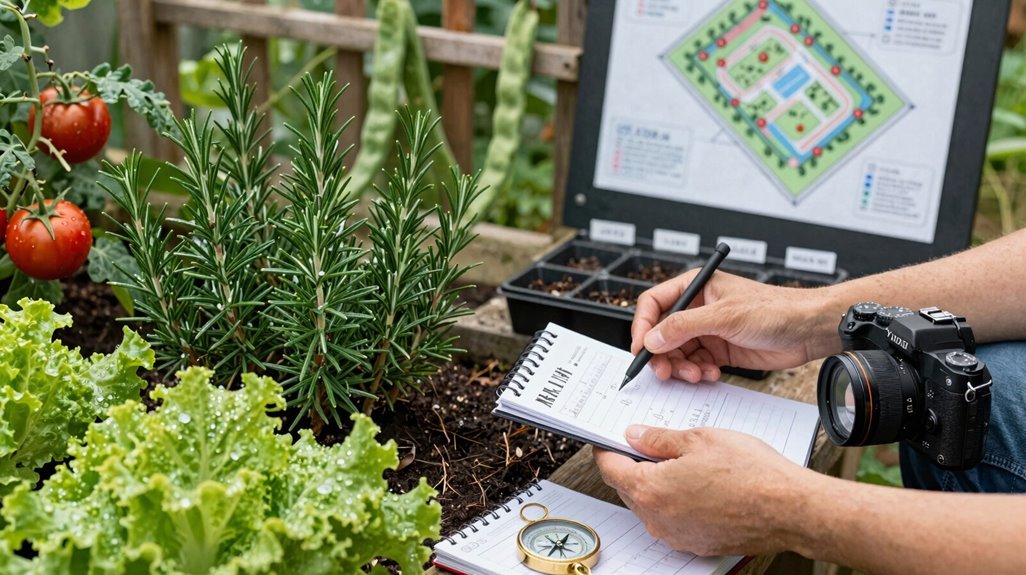
Annual garden review serves as my compass-check, a deliberate pause before the growing momentum returns. I examine whether my goals still balance beauty and harvest, adjusting for the time I can actually give. Sun exposure shifts as trees mature; I trace new shadows across the ground, revising bed placement where light now lingers or flees. Soil health reveals itself in roots I’ve pulled, compact, thriving, or starved, guiding my amendments before spring.
Morning coffee in hand, I walk the dormant beds, noting where frost pooled and where warmth collected against the stone wall. I sketch revised contours, relocating the asparagus patch to that sun-drenched corner the maple no longer shades. Comparing my harvest log against dreams, I accept that four tomato plants, not eight, match my July schedule. Winter evenings find me redrawing the base map, pencil tracing pervious paths between hexagon-tiled beds, planning filtration for the new rain barrel.
This yearly plan review binds me to the garden’s evolving truth.