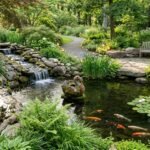

A backyard pond is a living mirror, catching sky and shadow in equal measure. I’m sharing five approaches I’ve refined:
tiered concrete construction, integrated filtration systems, equipment concealment strategies, thermal regulation through planting, and structural accents like bridges and lanterns.
These transform ordinary excavation into something engineered for both koi health and sustained visual impact.
Each method demands specific materials: rebar reinforcement, biofiltration media, pervious stonework, layered canopies.
The difference between adequate and exceptional lies in details I’ll unpack.
Excavate and Pour Concrete for a Tiered Koi Pond
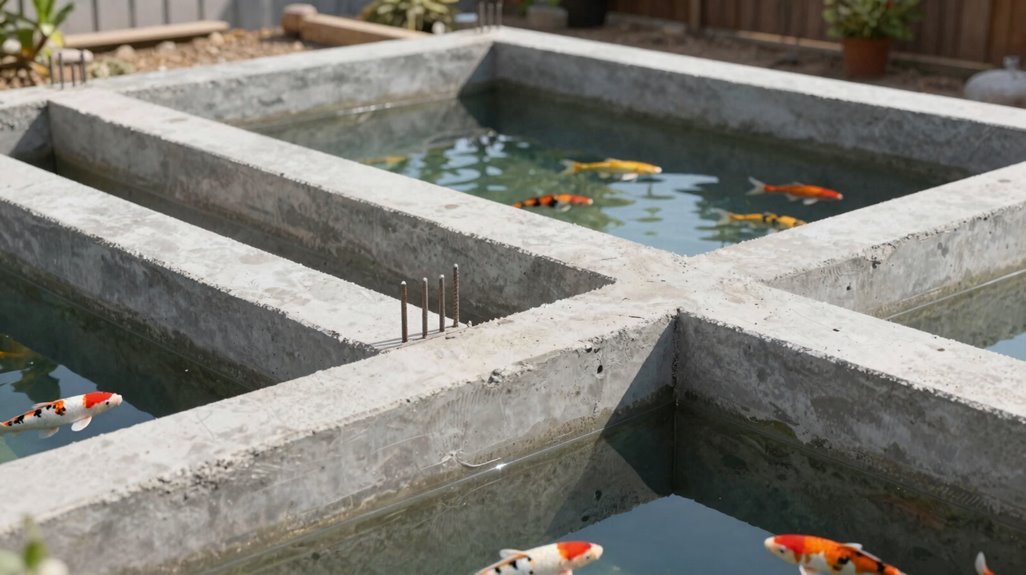
Why settle for a single-level water feature when I can build you something with architectural presence? Together, we’ll excavate your yard with precision, carving depth to 32 inches where your tiered koi pond will anchor your outdoor space.
I mark elevations with a laser level, set stone-filled footers, and assemble forms from 2×6 and 2×10 lumber. Curving walls rise from masonite and 2x4s, secured by cotter pins and metal plates, rebar threaded through for backbone strength. The concrete pours in stages, walls curing behind parallel forms I strip later, backfilling gaps with compacted care. I leave an overflow gap, foam-block ready.
Capping demands attention: level edges, trowel-smooth surfaces, base coat and color texture applied, then washed. The two-step grout mimics slate, your water features finished with restrained, lasting craft.
Install Filtration and Water Circulation Systems

Concrete cured and tiered walls standing, I move toward the systems that will keep your water alive. Koi pond filtration isn’t just equipment; it’s the quiet promise we’ve made to these fish.
I install bottom drains at the lowest points, drawing waste downward so it doesn’t linger. Skimmers glide the surface, catching leaves before they sink, while housing pumps that drive water circulation through hidden plumbing. Biofilters: settling chambers, static beds, moving beds, stack in sequence, each stage refining what passes through.
| Component | Function | Image in Your Pond |
|---|---|---|
| Bottom drains | Draw solids to filtration | Dark mouths, pebble-surrounded, silently pulling |
| Skimmers | Skim surface debris | Rectangular throats, water lipping over edges |
| Settling chamber | Drops heavy particulates | Murky capture, swirling then stilling |
| Moving bed | Bacteria colonize plastic media | Tumbling hexagons, frosted and alive |
| Air bubblers | Oxygenate depths | Silver pearls rising through green depths |
UV clarifiers polish what’s left. Your pond becomes pervious, clean, a place where koi belong and you belong with them.
Hide Equipment With Strategic Statue Placement
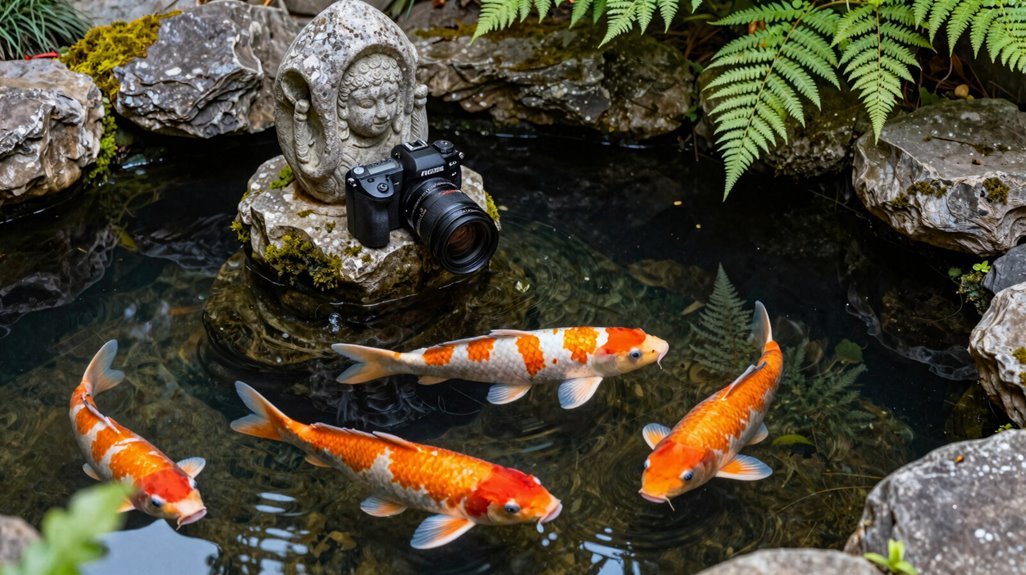
Where does the eye travel when it reaches your pond’s edge? I’ve learned that strategic statue placement turns unsightly pond equipment into seamless concealment within your water garden. Tall, multi-tiered statues positioned along the perimeter create natural visual barriers that obscure pumps, filtration units, and tubing from view.
Consider these approaches for your space:
- Select hollow-based statues that route hoses and electrical runs discreetly through their centers
- Match stone pillar fountains or ceramic figures to your landscape’s prevailing materials and tones
- Position each piece with safe moisture spacing, ensuring maintenance access remains unobstructed
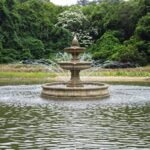
Aligning your concealment strategy with the garden’s aesthetic unifies the design. I’ve found that perforated planters paired with wall statues achieve this balance, hiding components while preserving the tranquil atmosphere we all seek in our backyard spaces.
Cool Your Koi Pond With Shade Planting
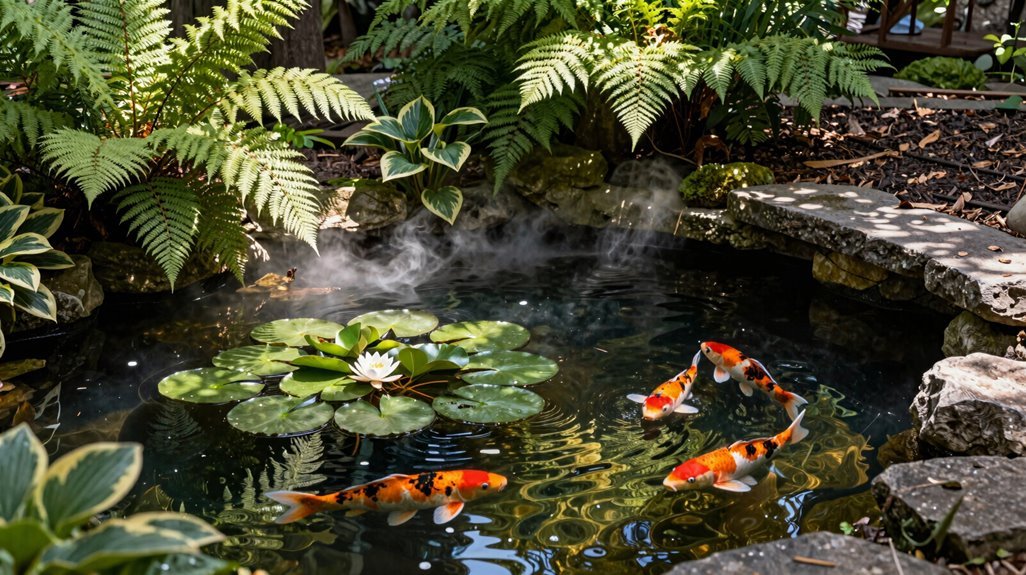
How dramatically does summer sun reshape a pond’s temperament? I’ve watched my own koi pond change from serene sanctuary to stressed ecosystem under relentless July rays. That’s why I embrace shade planting as essential temperature regulation for our shared backyard retreats.
Strategic shade protects koi from overheating, keeping their preferred 60–70°F range intact. Water plants; floating varieties, submerged vegetation, and broad-leafed lilies; create living canopies that filter harsh light while supporting algae control through natural competition. I position tall border grasses and small trees for partial coverage, balancing sun exposure so beneficial processes continue without scorching.
When placing these guardians, I check root depth against pond liner integrity and maintain clearance from filtration intakes. Together, we’re cultivating cooler waters where koi glide comfortably through dappled, green-filtered light.
Add a Bridge and Lanterns to Your Water Garden
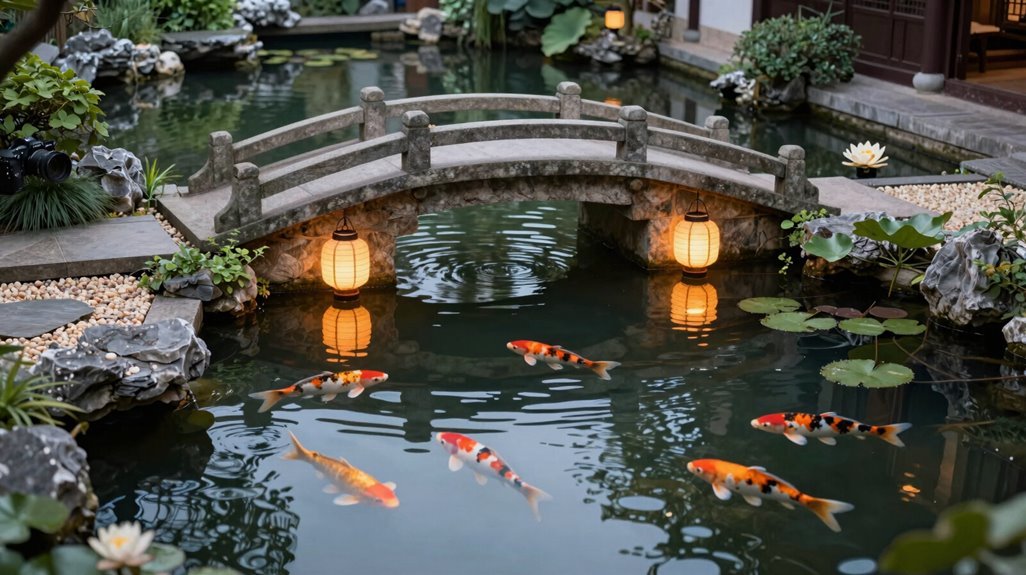
What transforms a simple pond into a living storybook scene? I’ve found that adding a bridge and lanterns to your water garden works magic.
A wooden bridge arches gracefully over my koi pond, its flagstone-finished walls rising like something from a children’s book. When I installed soft lanterns along the edges, the evening glow changed the space completely.
Here’s how I approach this design:
- Position your bridge where it frames the best viewing window into crystal depths
- Select lanterns that cast warm, pervious light without disturbing aquatic filtration
- Layer plant life around stone pillars, balancing partial shade with open sky
My water garden now houses hundreds of koi beneath that wooden span. The hexagon-tiled backdrop catches lantern light after dusk, and I belong to something truly living.