Most turtle ponds fail because owners prioritize aesthetics over thermoregulation needs, forcing reptiles into constant stress. I’ve rebuilt three ponds after learning this, and the difference between survival and thriving comes down to specific structural choices most builders overlook.
The solutions aren’t complicated, but they require abandoning conventional water-garden assumptions. Here’s what actually works.
Build a Turtle Pond Your Neighbor’s Turtle Returns To Every Summer
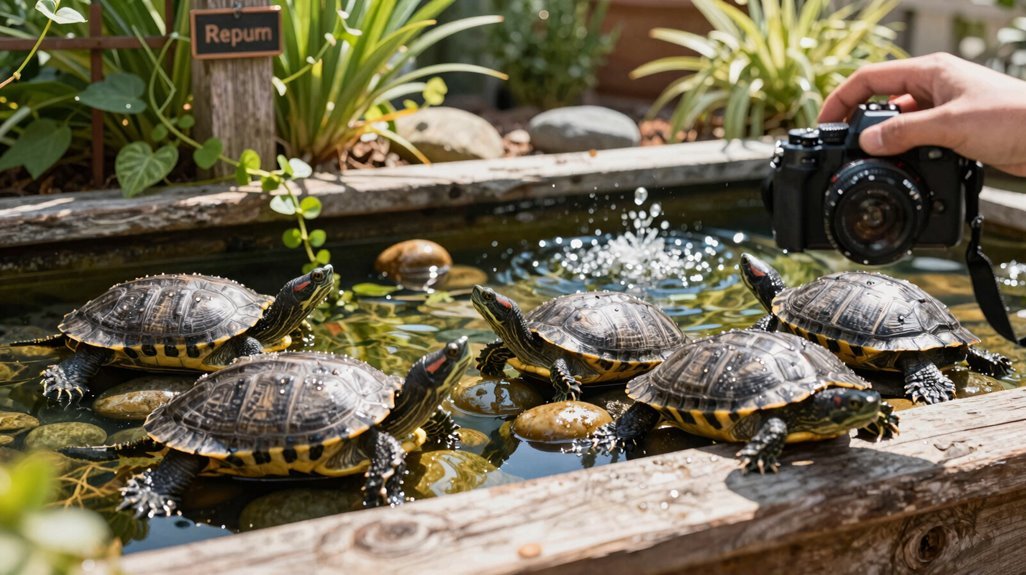
Some summers, I watch from my kitchen window as a painted turtle, not mine, hauls herself onto the same sun-warmed driftwood I’ve wedged between two brick ledges. She’s claimed this turtle pond as her own, returning each June like clockwork.
The key? I’ve built what she needs. The driftwood shelter, hollowed and stable, offers a predator-protected hiding spot where she vanishes when crows circle overhead. I keep the water shallow, calm shallow water with pervious edges where she hunts without struggle.
Basking areas, flat stones, that driftwood, let her thermoregulate in morning light. I skipped the skimmer. Instead, I use in-pond filtration, a submerged wet well that circulates water without trapping limbs. No mechanical hum disturbs her. The hexagon-tiled backdrop, the stone pillar fountain’s trickle, this habitat works because I watched what she wanted, then built it.
Add Driftwood Hiding Spots and Brick Walls That Stop Predators and Escapes
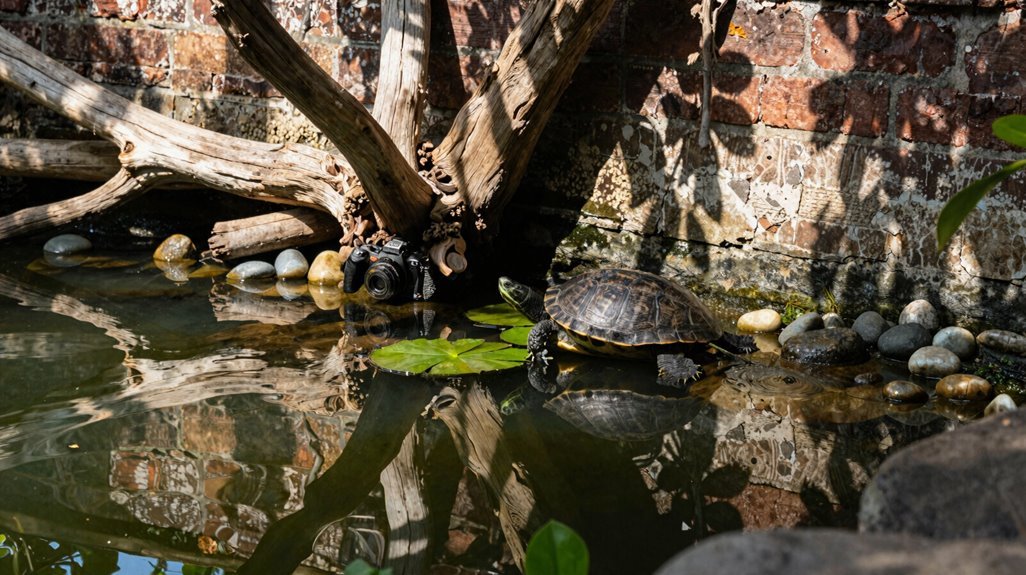
Why do turtles thrive where they can vanish? I’ve found that driftwood transforms my pond into a sanctuary. I place hollowed pieces strategically, creating hiding spots where my turtles retreat when herons shadow the water. These natural refuges reduce stress and complete their habitat needs.
For turtle pond safety, I pair organic elements with structural defense. My raised pond design incorporates brick walls with overhanging ledges; this dual-purpose barrier stops determined climbers while blocking raccoons. The bricks slope inward, securing predator deterrence without compromising drainage.
| Feature | Function | Installation Tip |
|---|---|---|
| Driftwood | Concealment from aerial threats | Secure firmly; sand sharp edges |
| Brick walls | Escape prevention, predator blocking | Build with 6-inch overhang minimum |
| Combined design | Natural aesthetic plus security | Position driftwood near wall bases |
I verify each driftwood piece stays pervious to water flow, preventing filtration dead zones. My turtles bask freely, knowing sanctuary waits below.
Set Up Outdoor Turtle Ponds for Safe Winter Brumation or Indoor Relocation
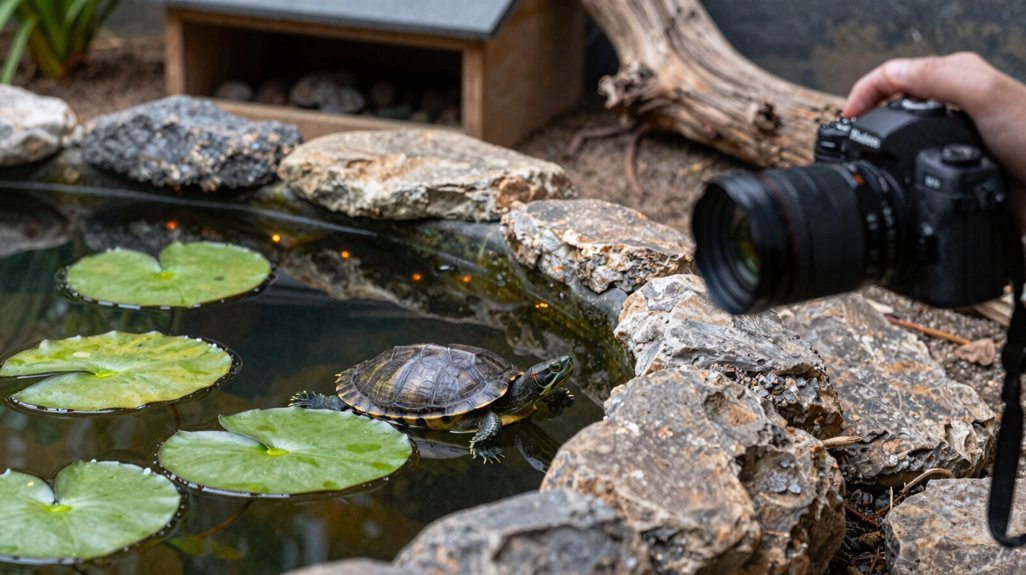
Where does my pond’s life go when frost seals the surface? I’ve learned that safe brumation in turtle ponds demands at least twelve inches of unfrozen water beneath the ice. I disconnect my filtration system, install an aerator, and add a submersible heater to maintain that critical liquid layer. My outdoor pond features sloped brick edges and raised walls, hexagon-tiled backdrop against stone pillar fountain, creating secure retreat zones where my turtles rest without escaping or facing predation.
When winters turn brutal, I choose indoor relocation. I prepare a shallow terrarium with stable heat, basking platforms, and water chemistry mimicking outdoor conditions. Gradual acclimation prevents shock. Whether brumating outside or relocating within, predator protection remains essential: secure edges, locked covers, vigilant monitoring. Our shared commitment to these cold-weather protocols keeps our shelled companions healthy through every frozen dawn.