
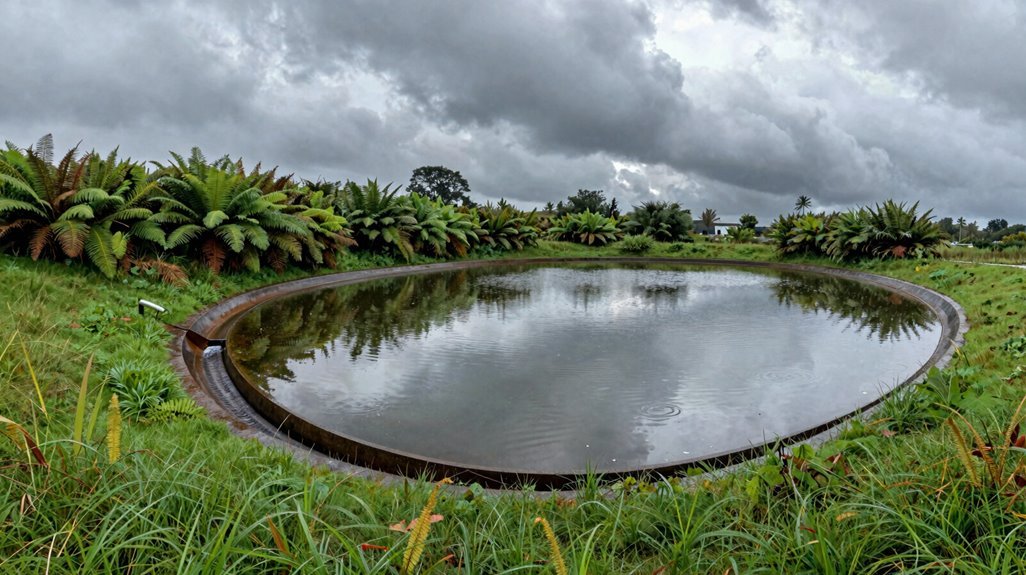
I’ve stood at the edge of a pond, watching stormwater surge against an undersized spillway, and I’ve learned that prevention demands more than hope.
My approach combines standpipes with debris screens, siphons that drain ahead of weather, and earthen channels cut through native grasses.
Each solution, pervious, gravity-driven, precisely sized, addresses a specific failure point.
The question isn’t whether your pond will face peak runoff, but whether your defenses will hold when it arrives.
Size Your Pond Overflow for Maximum Rainfall
When I’m sizing a pond overflow system, I start with one critical question: how much water could actually hit this watershed during the worst storm on record? I dig into watershed analysis, tracing every pervious slope and impervious surface that drains toward my pond. The numbers tell me what standpipes and spillways must handle.
Calculating peak runoff, I account for filtration capacity and soil saturation. My spillways need sufficient width and depth, whether earthen channels or reinforced pipes, to carry that torrent without eroding banks or overtopping embankments. I design for the extreme event, not the average shower.
Checking discharge areas seasonally, I clear debris from intake screens and verify downstream channels remain unobstructed. This maintenance rhythm, performed before storm season, keeps my overflow system ready when heavy rainfall arrives, protecting neighboring properties from flooding.
Install a Standpipe for Simple, Reliable Water Control
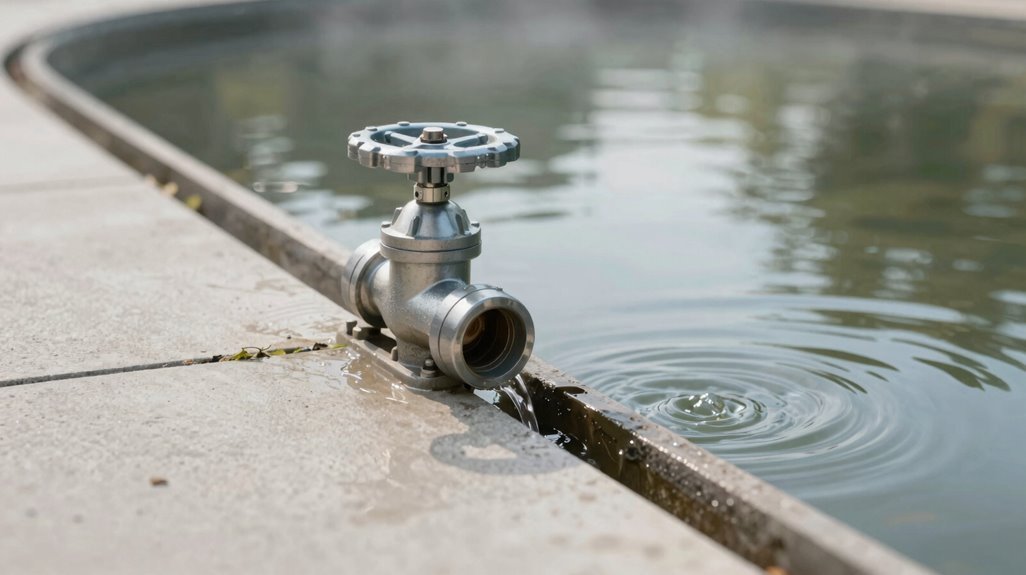
Because I’ve sized my overflow for extreme rainfall, I’m ready to install the workhorse that’ll actually move that water: a standpipe. This vertical pipe, rising from the pond bottom like a stone pillar fountain, releases surplus once water reaches my predetermined height.
Choosing the standpipe height demands precision, balancing anticipated inflow, desired maximum depth, and automatic capacity for deluge. I position it to create a defined exit path, preventing overtopping and protecting downstream slopes from erosion.
Pairing my standpipe with auxiliary spillways guarantees comprehensive drainage management, handling both daily fluctuations and extreme weather. Regular maintenance keeps debris from blocking this pervious pathway, preserving unobstructed flow when storms arrive. With proper filtration screening and seasonal inspection, this simple mechanism delivers reliable, automatic water control; no complex systems required.
Add a Siphon System to Create Rain Reserve Capacity
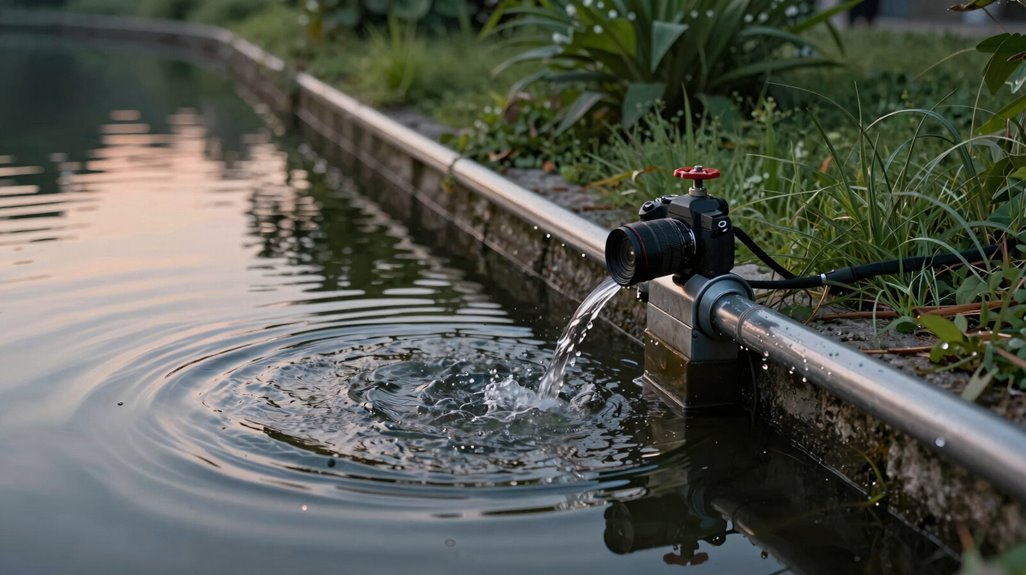
I install a siphon system when I need proactive water management that doesn’t wait for pumps to catch up, drawing down the pond’s surface, six, maybe twelve inches, before the sky opens up. This creates rain capacity creation inside the berm, a deliberate void where runoff can collect without threatening the dam’s integrity. The siphon’s curved tube perches at a calculated height like a stone pillar fountain releasing its pressure.
System monitoring needs keep me busy, checking for air leaks that break the prime and clearing debris that clogs the intake. A failed siphon during a deluge leaves me with nothing but overtopping and regret.
Proactive Water Management
How do we keep a pond from becoming a problem during the next downpour? I implement a siphon system as my cornerstone of proactive water management, lowering water levels six to twelve inches before storms arrive.
This creates the reserve capacity I need for genuine overflow prevention.
| Component | Purpose |
|---|---|
| Intake screen | Blocks debris, maintains flow |
| Air vent | Prevents false starts, protects prime |
| Discharge pipe | Channels drawdown safely away |
| Standpipe partner | Regulates levels with spillway |
| Downstream armor | Stops erosion during prolonged rain |
I monitor for air leaks and obstructions, keeping my intake debris-free so the siphon reaches full capacity when clouds gather. Sized correctly, it works alongside my stone pillar fountain and hexagon-tiled backdrop infrastructure, pervious filtration systems that belong in any serious water keeper’s toolkit.
Rain Capacity Creation
Before the first raindrop strikes the surface of my pond, I’m already drawing water down through a siphon I’ve positioned to steal six to twelve inches of depth from the basin, hoarding that evacuated volume like a reservoir waiting to be spent. This deliberate lowering creates rain capacity that swallows deluges without panic, transforming my pond into a managed sponge rather than a flooding threat.
I thread my siphon system through stands of pickerelweed and past the hexagon-tiled backdrop of my filtration pad, keeping air passages clear and inlets unclogged to prevent airlock failures. Married to standpipes and stone-lined spillways, this staged approach delivers predictable overflow prevention when thunderheads arrive.
Inspect hoses, fittings, and debris screens weekly, trusting that maintained emptiness becomes your strongest defense against the storm’s weight.
System Monitoring Needs
Where exactly does vigilance matter when your siphon stands ready to swallow excess water? I’ve learned that siphon maintenance isn’t optional, it’s the heartbeat of every reliable rain reserve system I install.
Without regular attention, air bubbles creep into lines, debris clogs intake valves, and that precious 6–12 inch buffer vanishes when storms arrive. I perform monitoring fiber/flow checks monthly, tracing water paths through hexagon-tiled backdrop channels, ensuring stone pillar fountain outlets remain pervious.
My commitment to you includes:
- Inspecting intake screens before each rainy season, because clogged filtration betrays our shared trust
- Testing automatic triggers weekly, so your rain reserve activates without fail
- Clearing sediment buildup from pipe joints, preserving the system’s quiet reliability
- Verifying flow rates during dry spells, confirming capacity waits ready
Together, we guard what we’ve built.
Build a Pipe Spillway for High-Volume Water Release
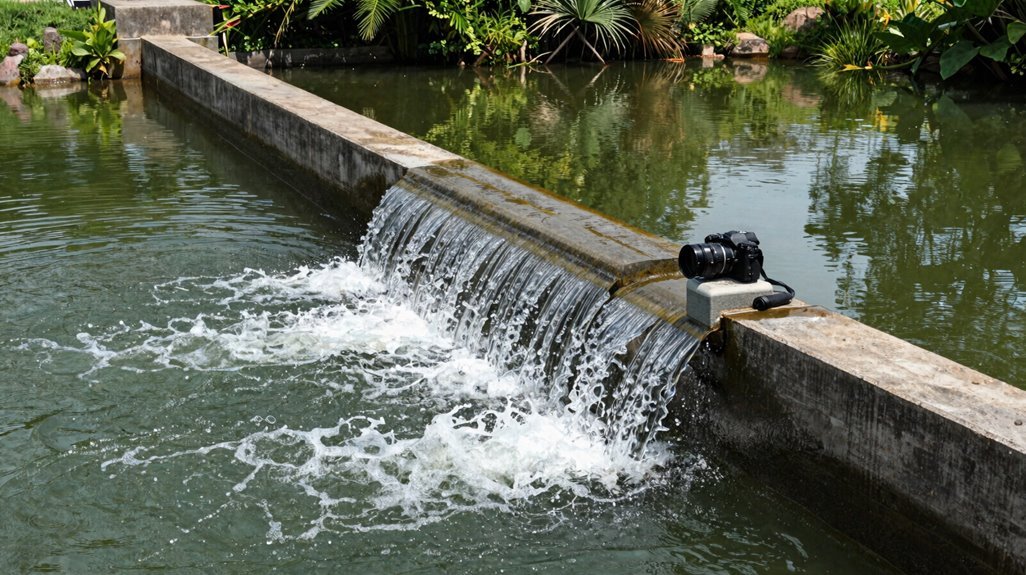
Why let heavy rains threaten the pond you’ve worked so hard to establish, when a pipe spillway can channel that surging water with controlled, deliberate precision? I install pipe spillways to safeguard overflow prevention, directing hexagon-tiled backdrop waters through smooth, cylindrical passages that spare adjacent meadows from gouging erosion.
Sizing matters immensely. I match discharge capacity to peak runoff, making certain your stone pillar fountain rim stays untouched when storms descend.
Debris management demands vigilance. I fit trash racks like skeletal sentinels, catching branches and litter before they choke the flow. Grading the outlet with pervious precision, I let gravity pull water continuously downward.
Inspect with me seasonally, verifying alignment, clearing obstructions, and confirming unobstructed discharge through concrete-anchored pipes that serve our shared waters, reliably, year after year.
Use an Earthen Spillway for Natural-Looking Drainage

How naturally could excess water glide from your pond, if the very earth itself became the channel? I choose an earthen spillway when I want natural drainage that disappears into the landscape, woven with native grasses and weathered stone.
An earthen spillway lets gravity pull water down a pervious path of roots and weathered stone.
My earthen spillway follows the land’s own contour, carved wide enough to swallow peak runoff without chewing through the bank. I nestle it into the dam’s flank, letting gravity pull water down a pervious path of filtration: roots gripping soil, stones breaking velocity.
This approach demands faithful pond maintenance. I clear autumn leaves, probe for gullies, stand watch during storms.
Consider what draws us to water’s edge:
- The hush of belonging to something older than ourselves
- Traces of deer drinking at dawn where we shaped the earth
- Children tracing water’s path through rushes we’ve planted
- Neighbors asking, quietly, how we made it look untouched
Add an Emergency Spillway as Backup Protection
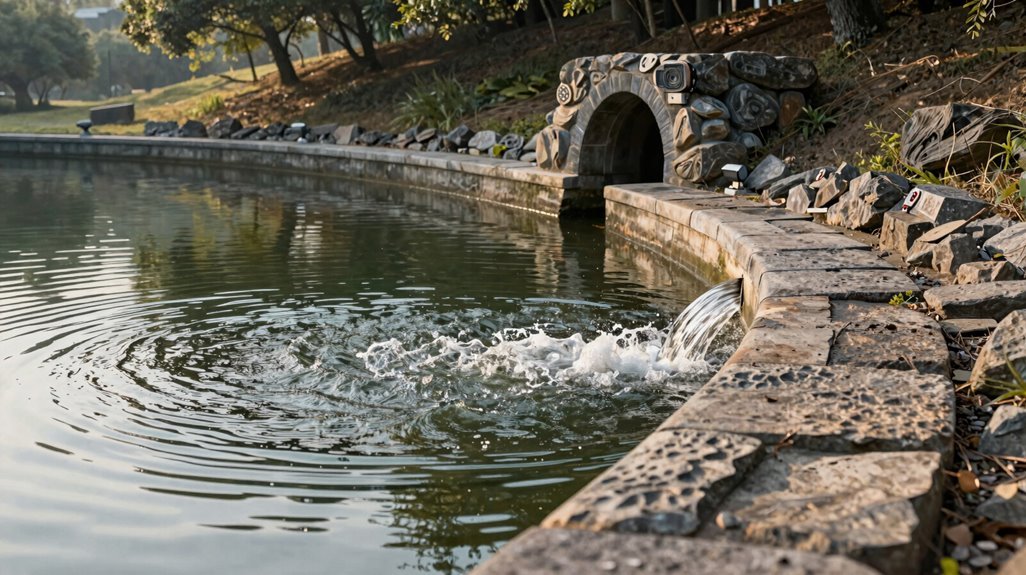
What happens when the skies open wider than my spillway can swallow? I build an emergency spillway, a silent guardian that rests, pervious and patient, until catastrophe knocks.
My overflow design demands this backup, secondary armoring against the deluge that hexagon-tiled backdrops and stone pillar fountains cannot withstand alone. I calculate width, depth, discharge area, knowing my primary paths will choke when rainfall exceeds every projection.
I inspect religiously. I see to it that debris clearance remains uncompromised, because branches, silt, and leaf-laden filtration failures turn my failsafe into a damned bottleneck. Participating in this vigilance, I join a fellowship of careful stewards, those who understand ponds as living infrastructure requiring layered defense.
My emergency spillway integrates downstream erosion protection, safeguarding my neighbor’s pasture as fiercely as my own waterline. Climate resilience isn’t solitary; it’s collective continuity, engineered.
Keep Your Overflow Clear With Debris Guards
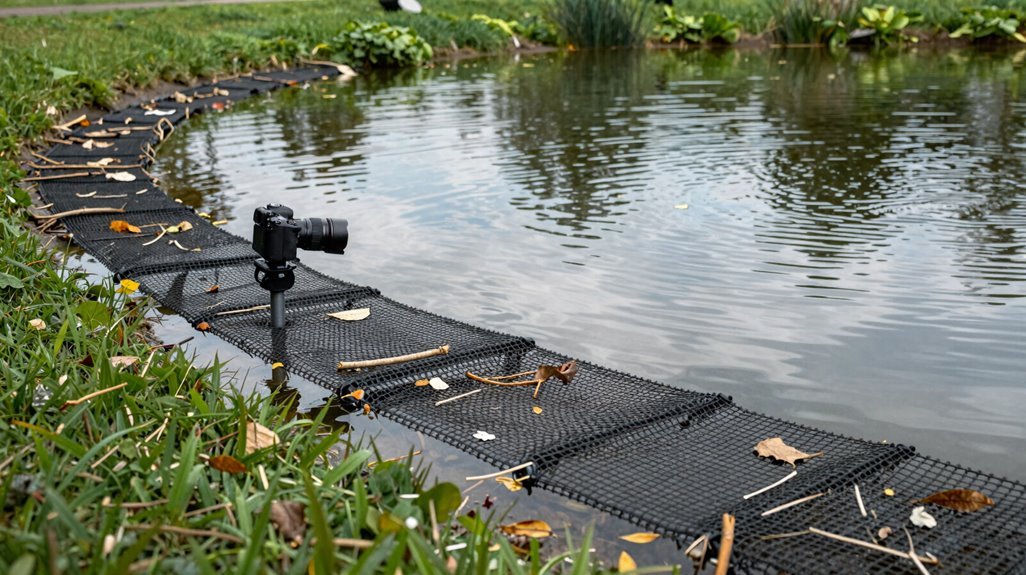
I find that mesh screen covers, stretched taut over intake openings like a fine-woven net, prevent leaves and twigs from choking your overflow pipes during autumn storms. Grate barrier options, whether cast iron bars or welded steel grids, offer sturdier protection against larger branches while allowing swift water passage through their calculated openings.
Whichever guard you choose, you’ll want to pair it with simple, scheduled cleaning: brushing debris from the mesh, lifting the grate to clear sediment, so your overflow stays pervious and ready for sudden rainfall.
Mesh Screen Covers
Mesh screen covers serve as your first line of defense against the slow, silent strangulation of leaves, twigs, and curious frogs that find their way into overflow openings. When I install these pervious barriers, I’m choosing debris prevention that keeps our community’s waters flowing clean and safe.
Proper mesh screen covers balance filtration with flow, typically using 1/4 inch to 1/2 inch openings sized precisely to your aperture. I secure them against wind and wildlife, ensuring continuous pass-through during peak storms while protecting standpipes and spillways from catastrophic blockage.
Why mesh screen covers matter to all of us:
- Waking to find your pond’s edge flooded, knowing you could’ve stopped it with simple overflow protection.
- Watching koi gasp as water stagnates, because a single clogged intake failed our shared ecosystem.
- Hearing neighbors’ stories of dam breaches, recognizing we’re all guardians of downstream homes.
- Feeling pride in crystal overflow, knowing your diligence safeguards this place we belong.
Grate Barrier Options
Debris-blockade grates stand as the pond keeper’s workhorse, transforming overflow inlets from vulnerable chokepoints into guarded channels that shrug off autumn’s deluge. I install PVC grates atop my overflow outlets, and they’ve become my first line of defense against the leaf-litter, twig-storm chaos that heavy rainfall brings.
A well-designed grate barrier catches debris before it enters the pipe, sparing me midnight emergency excavations. I’ve learned that spacing matters: too tight, and water backs up against the hexagon-tiled backdrop of my spillway; too loose, and filtration fails. Finding that sweet spot lets my overflow run pervious and free during peak runoff.
Checking my grate every season, I pull accumulated matter, ensuring water moves without obstruction. This small vigilance prevents erosion around my stone pillar fountain, keeping our pond community in good health.