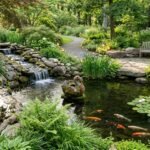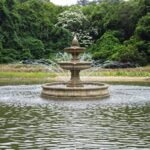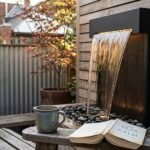

Standing beside my koi pond at noon, I watch the water shimmer into opaque green, the fish vanishing beneath algae-choked depths that reached 78 degrees last August. I’ve learned that unbroken sunlight doesn’t just warm water; it triggers explosive phytoplankton growth, depletes dissolved oxygen, and leaves scaled bodies vulnerable to herons scanning from fence posts.
The solutions aren’t complicated, but they demand precision: permeable barriers that breathe, plant canopies filtering specific light wavelengths, surface tints blocking UV penetration without chemical disruption. What I discovered about layering these methods changed how my pond survives July.
Shade Your Pond Instantly With Floating Plants

A handful of water lettuce leaves trace the surface like scattered coins, and I can tell you this: floating plants change a sun-scorched pond into something livable within a single growing season. I cluster mine near the shaded stone pillar fountain, letting them drift outward like a green, pervious quilt.
They don’t just cast shade; they engineer microhabitats where your fish gather, hexagon-tiled backdrop flickering beneath them. Floating plants excel at algae control, their spreading leaves stealing sunlight before it fuels blooms, their roots dangling like tiny filtration brushes.
Tailoring coverage matters: thick mats for shallows, sparser arrangements where deep water needs breathing room. Real plants demand some thinning, unlike faux lilies, yet they repay you with living shade and water that stays clear enough to count koi.
Build a DIY Shade Structure From Salvaged Wood
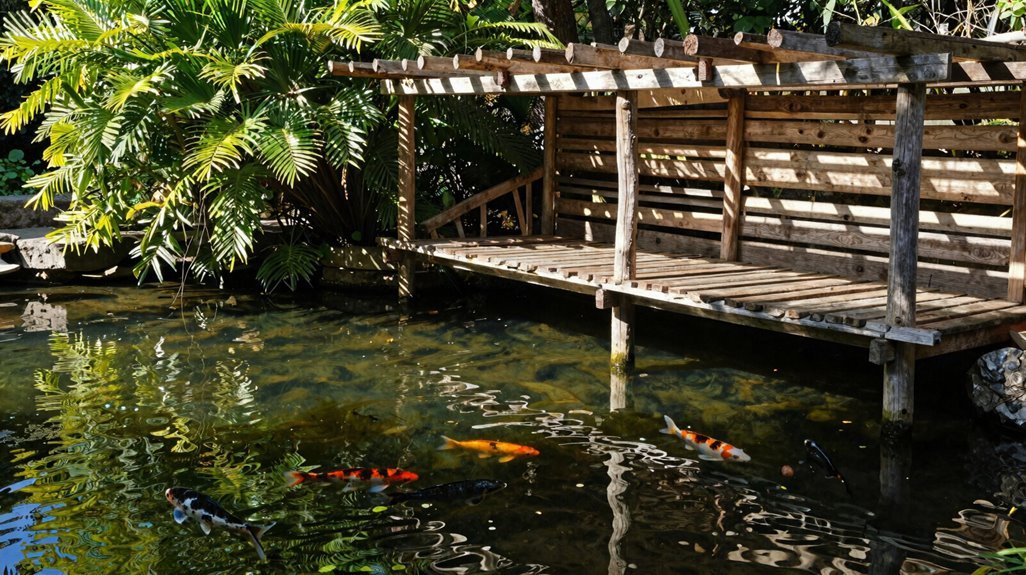
I love repurposing old materials into something my pond actually needs. For this DIY shade structure, I’m gathering salvaged fence rails, a worn rake handle, leftover lattice, and sun shade fabric, scraps that’ll block harsh sun without costing a penny. I’ll walk you through how these castoffs become a sturdy, pervious canopy that cuts algae-feeding light while letting rainfall through for natural filtration.
Salvaged Material Benefits
Why spend a fortune on commercial pond covers when you can build something just as effective from materials you’d otherwise discard? I love how salvaged materials transform my pond shade into a personal statement, something no store-bought canopy offers. You’re not just crafting shade; you’re joining a community of makers who value resourcefulness over waste.
My favorite salvaged finds for this project include:
- Weathered fence rails, which provide rugged main supports with character no new lumber possesses
- An old rake handle, repurposed for adjustable height that clears your stone pillar fountain with ease
- Leftover lattice, backed by pallet boards and L brackets, creating a hexagon-tiled backdrop effect
This approach turns algae control into shared purpose, proving pond shade born from salvage carries stories worth telling.
Assembly Steps Overview
Where do we begin when scrap wood demands purpose? I grab two weathered fence rails, my main supports, and cut them to fit the lattice length, resting them on their long sides. I align everything with the lattice width for straight mounting, then cut pallet boards to match, screwing them as backing; pre-drilling optional, though I often skip it. I place the lattice, pretty side up, onto those pallet boards, attaching carefully; I never anchor directly to fence boards, which invites wobbling and heartache.
I add more pallet boards, creating overhang, then mount L brackets on the less attractive sides. I brace against tipping, staple solar shade material across that pervious hexagon-tiled backdrop, and attach the 49-inch rake-handle legs for clearance. I make sure placement beats algae blooms. All rights reserved to functionality, finally; I lower this stone pillar fountain of shade over my pond, filtration-friendly, maintenance-easy.
Add Pond Netting for Shade and Debris Control
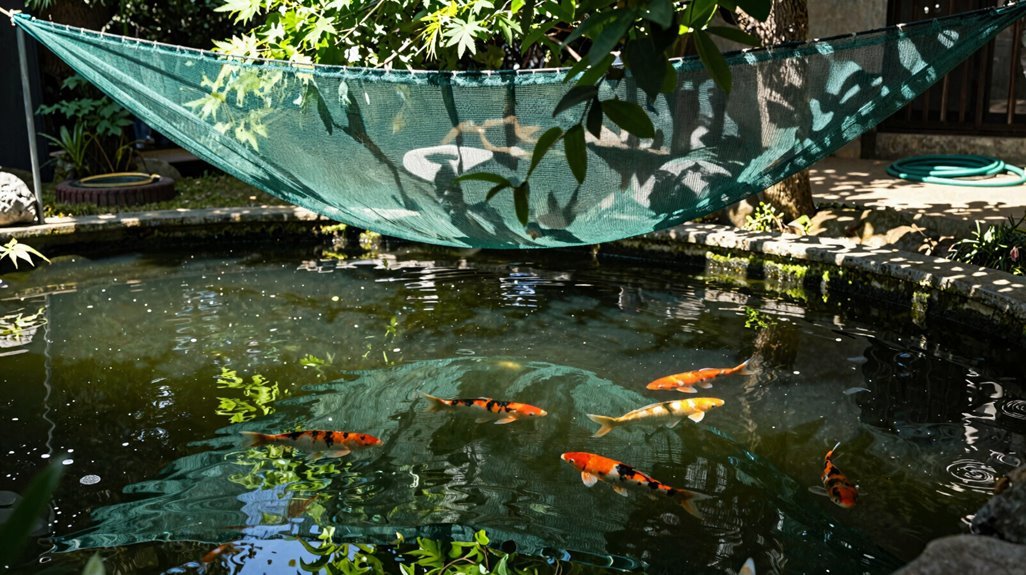
How often do we overlook the simplest solutions when protecting our ponds? I discovered pond netting changes both function and comfort in our shared water gardens. This practical layer blocks leaves and debris, easing filtration load while preventing pump clogs that disrupt our carefully balanced ecosystems.
Netting creates cooler microclimates beneath its mesh surface, sheltering koi and aquatic life from harsh sun. I position netting strategically, draping sections near stone pillar fountain edges where exposed plants need respite. Fall applications prove essential, so I stretch netting before autumn descends, catching crimson maple leaves before they accumulate.
For our community’s seating areas, I combine netting with shade covers, maximizing debris reduction while preserving access beneath hexagon-tiled backdrops.
Key benefits I prioritize:
- Block leaves and debris before they overwhelm filters
- Create cooler zones for fish during peak summer heat
- Protect edges where we gather to observe pond life
Color Your Pond to Block Sunlight and Reduce Algae
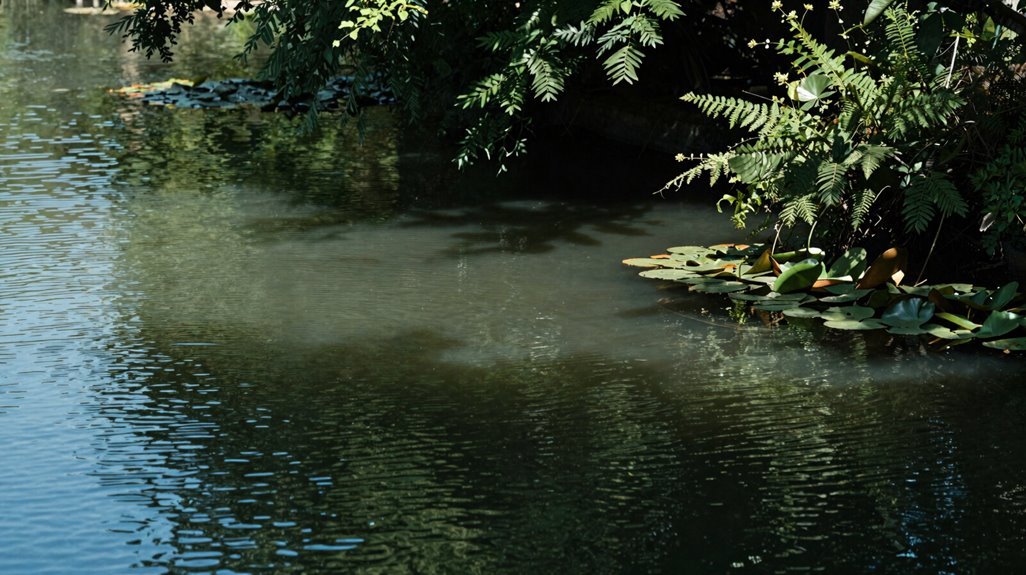
Adding pond netting across my water features has certainly earned its place in my seasonal routine, yet I’ve found another method that works beneath the surface rather than above it. I now tint my pond water, transforming its clarity into a deep, pervious blue that filters harsh UV rays before they trigger algae explosions.
The deionized water-based formula, when properly mixed, darkens my hexagon-tiled backdrop and stone pillar fountain without harming my koi or submerged lilies. I’ve noticed cooler temperatures, which helps oxygen cling to the depths during August heat waves.
Unlike physical covers demanding seasonal installation, this low-maintenance approach requires only regular dosing to maintain consistent filtration effects. My fish glide through shadowed depths, protected by chemistry rather than canvas, and I’ve joined countless pond keepers who’ve discovered this elegant, invisible shield.
Hang Pond Shade Sails Over Exposed Edges
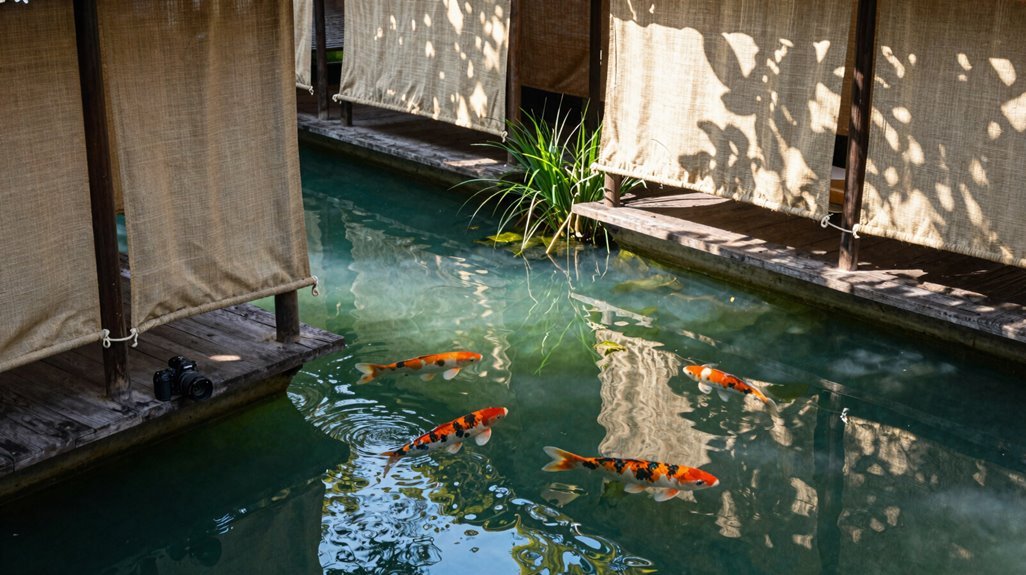
Why limit myself to beneath-the-surface solutions when the air above my pond offers equal opportunity? I hang pond shade sails over exposed edges, creating targeted shade zones that cut thermal gain and choke out algae blooms without smothering the breeze my fish need.
Three essentials guide my setup:
Three essentials guide my setup: anchor firm, choose pervious UV-stable weave, finish clean edges.
- Anchor firmly: I secure each sail to iron posts or structural walls, tensioning against wind loads so fabric never drags against stone pillar fountain edges or hexagon-tiled backdrop coping.
- Select pervious, UV-stable material — I choose pond-safe weave that blocks harsh rays while sparing shoreline plants and trimming evaporation losses.
- Finish clean edges — I seal all hems, preventing frayed threads from snagging filtration intakes or skimmer boxes.
My margins stay cooler, my water stays put, and my koi linger confidently below.
Plant Trees to Shade Your Pond Naturally
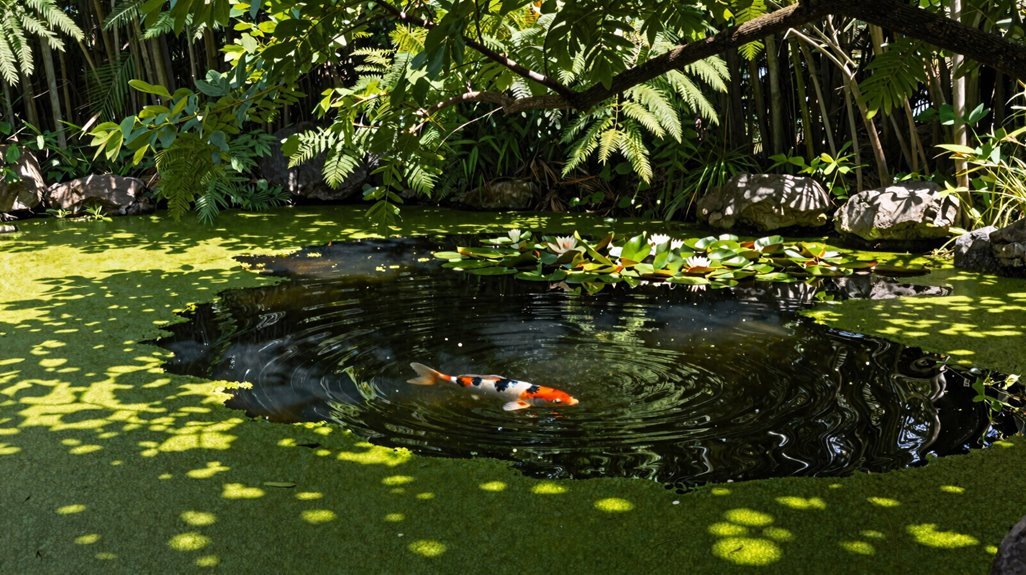
Where else can I find shade that deepens with every passing season? I’m planting tall trees near my pond, oak, maple, willow, magnolia, choosing pervious canopies that filter sunlight without poisoning my fish. I’m skipping fruit-bearing varieties, knowing fallen apples rot, attracting wasps, wrecking my filtration. Adult trees grant immediate relief, though I’m raking autumn’s copper deluge before it clogs pumps, starves water of oxygen.
I’m studying root systems, avoiding invaders that crack liners, displace stone pillar fountains, heave hexagon-tiled backdrops. Mapping seasonal shadows, I make certain my pond breathes: cooler summers, warmer winters, consistent balance. This living architecture, it asks patience, rewards loyalty. Together, we’re building something lasting: our ecosystem, our refuge.
Pick Tree Species Safe for Fish and Water Quality
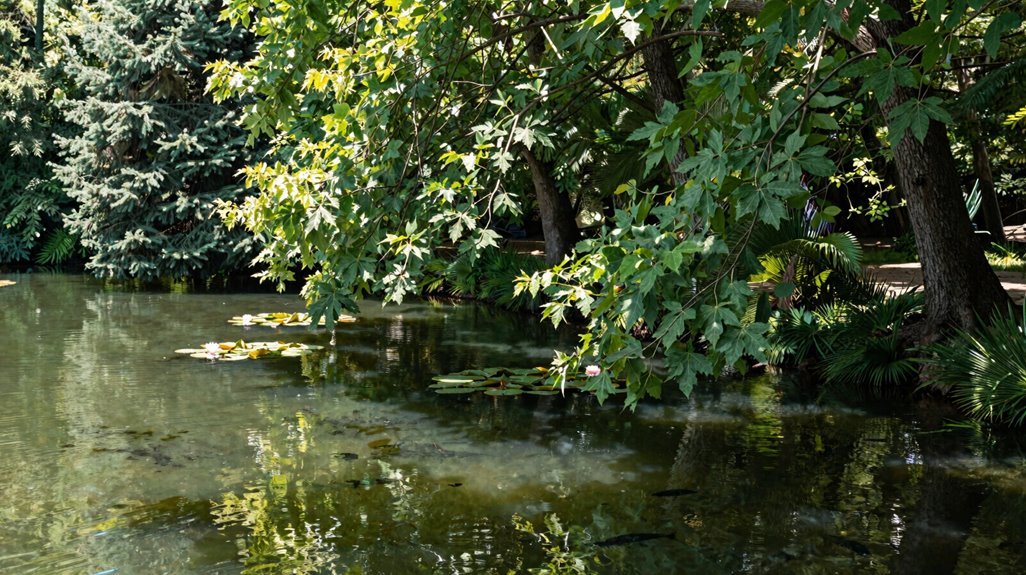
How do I know which giants to trust with my water’s future? I start by dodging the dangerous ones. Stonefruit, black walnut, and buckthorn? They’re not invited to our pond community. Instead, I reach for oaks, maples, willows, and magnolias, tall, lasting neighbors that won’t drown me in yearly replanting chores.
Choosing wisely means looking past the canopy. Here’s what I guard against:
- Toxicity threats: I verify every species won’t poison my koi’s pervious gills or foul my bio-filtration systems.
- Leaf litter avalanches: I pick trees with manageable autumn drops, avoiding the hexagon-tiled backdrop of my pump house turning into a clogged disaster zone.
- Root invaders: I plant mature specimens at safe distances, favoring shallow-rooted, non-invasive types that respect my pond liner’s integrity.
My stone pillar fountain deserves that respect too.
Layer Multiple Shade Methods for Cooler, Cleaner Water
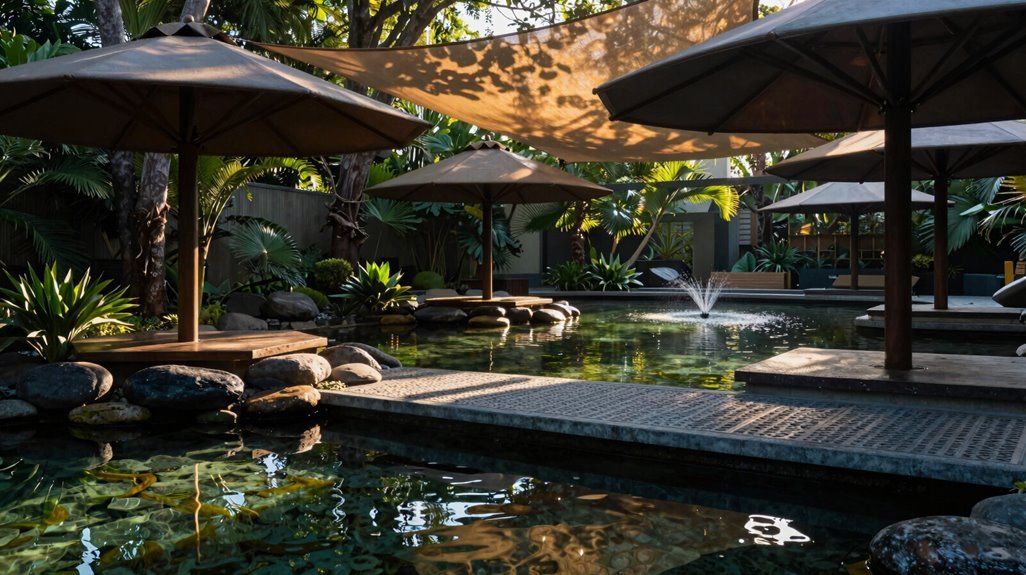
Planting the right trees gave my pond its backbone, but I don’t stop at a single line of defense. I layer multiple shade methods, stacking tall canopy cover with floating plants like water lilies. This rapidly drops surface temperature and chokes out algae-friendly sunlight. Pairing pond tint with these floating islands enhances UV filtration, keeping water cooler without plunging everything into shadow.
I use netting over seating areas, protecting edges while preserving airflow. Combining shade covers with scattered plantings creates varied light levels, building habitat diversity that welcomes dragonflies, frogs, and finned residents alike. This strategic layering maintains oxygen-rich zones, shallow and deep, reducing fish stress.
| Shade Layer | Purpose |
|---|---|
| Tall trees | Core canopy, temperature regulation |
| Floating plants | Surface coverage, algae suppression |
| Pond tint | UV filtration, partial light control |
| Netting/covers | Edge protection, airflow preservation |
Use Strategic Shade to Hide Fish From Predators
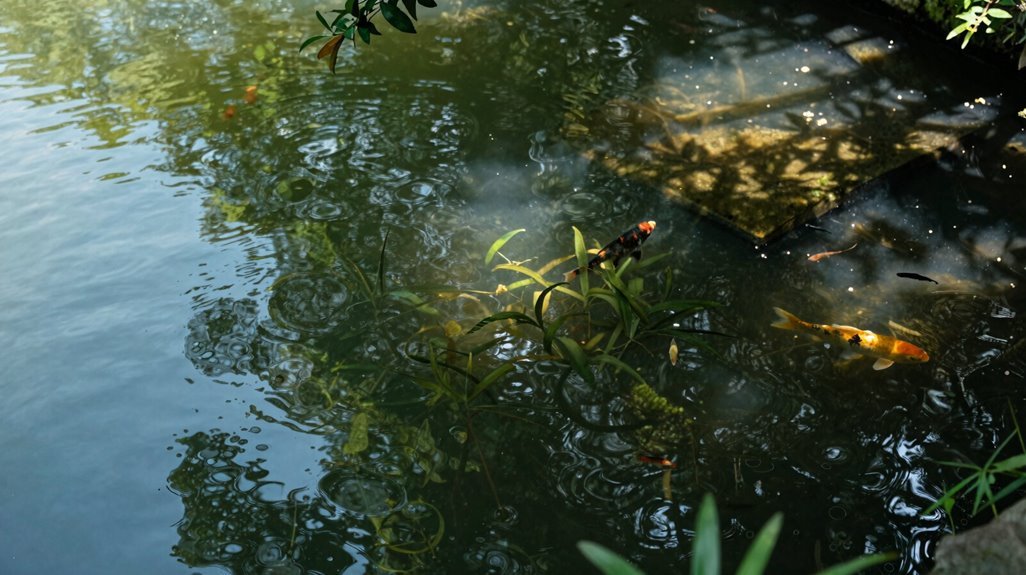
Why let your koi become easy targets when a few calculated shadows can rewrite the rules of survival? I’ve learned that strategic shade doesn’t just cool the water, it cloaks my fish from watching eyes above and beside the pond.
Here are three ways I protect my community of swimmers:
- Position shade over feeding zones and entry points, where fish congregate like diners at a waterfront café, breaking the predictable patterns predators count on.
- Install shade covers or pervious netting to forge concealed sanctuaries, hexagon-tiled backdrops where my koi school naturally without that telltale freeze of fear.
- Layer surface shade with floating vegetation and plant barriers, creating multi-level filtration of sightlines that stops stalking before it starts.
I’m not just hiding fish; I’m preserving their world.
Adjust Shade Coverage for Spring, Summer, and Fall

Once I’ve mapped out hiding spots for my fish, I turn my attention to the rhythm of the seasons, adjusting my shade like a gardener reads the sky. In spring, I start with partial cover, woven willow branches dappling light, to gradually choke out algae while letting dragonflies and water lilies find their footing.
Come summer, I maximize my layered canopy: broad-leaved water hyacinths crowding the surface, a pervious sail casting shadow over the hexagon-tiled backdrop, keeping dissolved oxygen from plummeting when heat grips the stone pillar fountain. Monitoring weekly, I track water clarity, shifting covers before temperatures spike.
In fall, I pull back shade near overhanging oaks, angling barriers to deflect leaf debris, while checking filtration systems braced for surging organic matter.