Last spring, I watched a hedgehog struggle against the sheer plastic lip of my neighbor’s ornamental pond, its paws scrabbling for purchase on the slick, hexagon-tiled backdrop until I lifted it free. That moment reshaped how I think about boundaries between water and land.
I’m learning that the edge, pervious, layered, alive, determines whether a pond becomes a trap or a corridor that supports life.
Avoid These Harmful Edging Styles That Trap Wildlife
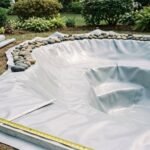
I’m longing to create a pond ecosystem where wildlife can flourish. I’ve learned that my edging choices can either invite wildlife or inadvertently create deadly traps. I’ve abandoned rigid, hexagon-tiled backdrops and stone pillar fountains that form steep vertical walls without sloping edge transitions. These abrupt barriers drown amphibians, which exhaust themselves seeking escape.
I’m replacing artificial perfection with natural edging: loose stones, soil, and native plants that form crevices and microhabitats. Exposed, litter-free liner creates killing zones where predators spot vulnerable frogs; I’m burying edges under vegetation instead. Heavy masonry eliminates the gaps where toads shelter from heat.
I’m prioritizing habitat connectivity, making certain my pond’s ramped access links to surrounding gardens. Without these escape routes, my water feature becomes isolated, reducing wildlife resilience during drought or pollution events.
Build a Pebble Beach for Safe Hedgehog Access
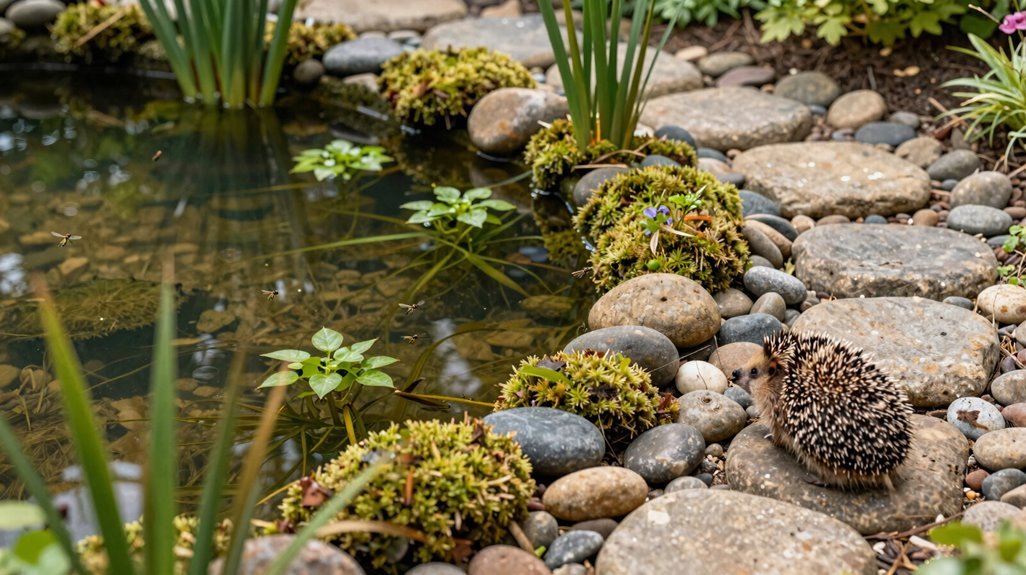
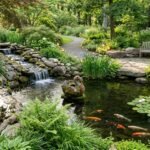
Building a pebble beach means crafting a pervious, gently sloping shelf that lets hedgehogs wade in and out without drowning. I’m choosing this wildlife pond edging because it welcomes our spiny neighbors, not excludes them. I layer fine pea gravel at the waterline, graduating to larger cobbles uphill, creating a walkable gentle slope that supports natural filtration. I nestle plant pockets between the stones, tucking common rushes and carex into damp crevices where they shelter insects and offer foraging cover.
Hedgehog access stays open, unobstructed by steep walls or slick liner. I scatter a few larger rocks along the margin, building microhabitats for beetles and amphibians. Keeping the edge informal, crinkled, irregular, I mirror nature’s own hand. This pebble beach belongs here, and so do we.
Edge With Natural Stone to Hide Liners and Anchor Banks
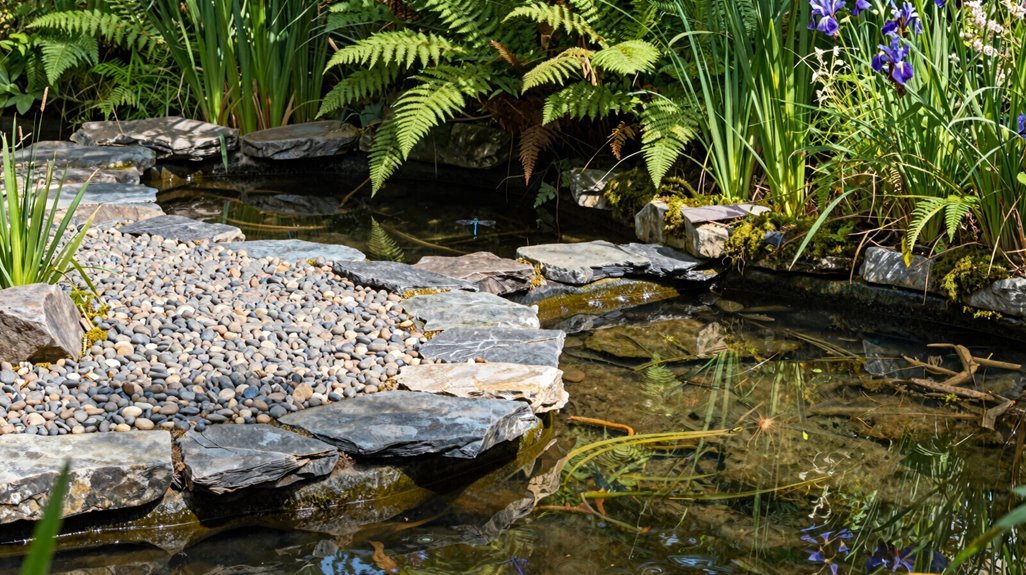
Three or four courses of natural stone, dry-laid and overlapping the liner’s edge, anchor my pond’s banks while hiding every trace of black rubber from view. This stone edging turns my pond liner into something that feels ancient, inevitable, like it belongs here. I choose Surrey sandstone, tawny and fissured, because local stone carries the geology of home.
My dry-laid edge leaves no mortar barrier, so rainwater pervades these gaps, filtering through to roots below. The insulation/anchoring keeps soil from crumbling when hedgehogs pass or blackbirds bathe. Stacked rocks, moss-flecked and rain-darkened, create a naturalistic edge where beetles navigate crevices, slow worms linger, and the whole assembly breathes. It’s wildlife-friendly engineering dressed as accident, and that is exactly the point.
Stack Stones With Gaps for Hibernating Frogs and Newts
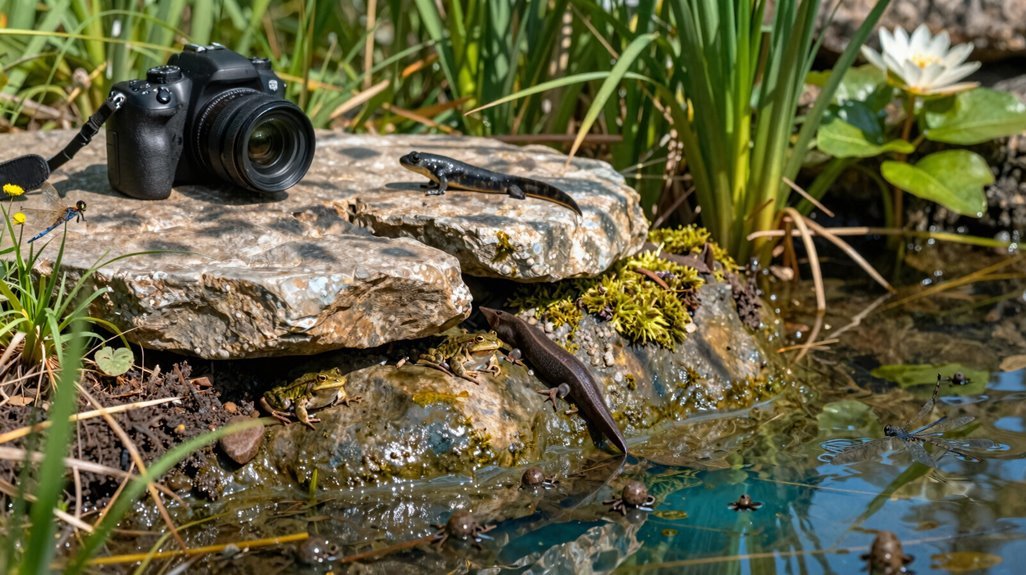
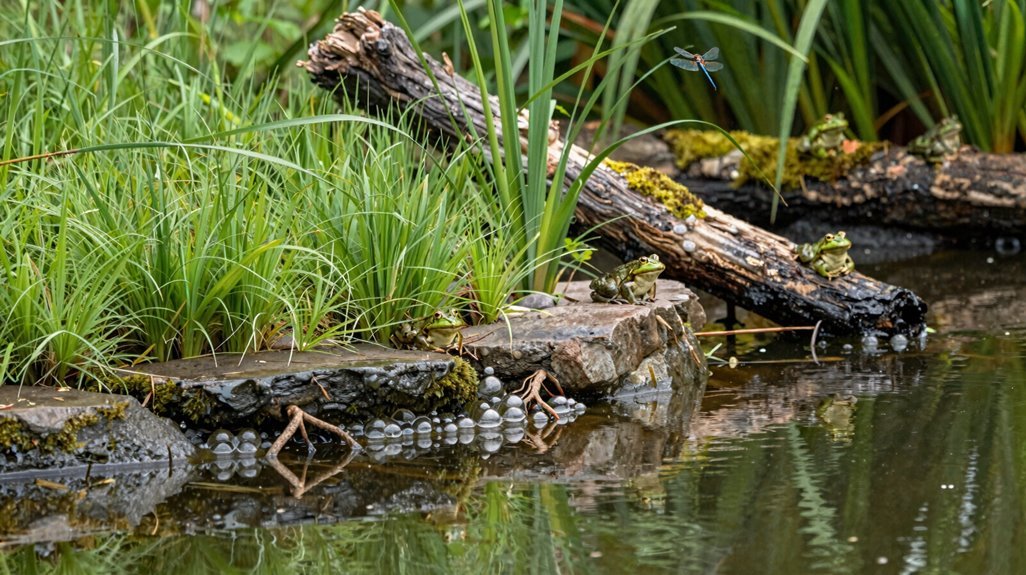
Where the waterline meets the bank, I stack stones with deliberate irregularity, leaving thumb-wide gaps and shadowed crevices that descend into cool, damp darkness. These stacked stones form a stone edge that breathes, pervious to moisture and life.
I vary each crevice’s width and depth, knowing frogs and newts seek precise conditions for winter survival. Some gaps narrow to finger-width slits; others widen into chambers where amphibians curl, dormant and safe. I bury stones partially in compacted subsoil, ensuring stability without rigidity.
Around this structure, I weave vegetation—loosestrife, sedges—so the boundary dissolves into landscape. This habitat complexity rewards patience. Come spring, you’ll find movement in the shadows: hibernation refuges emptied, their occupants returned to water and song.
Add Log Edging for Beetles, Stag Beetles, and Amphibians
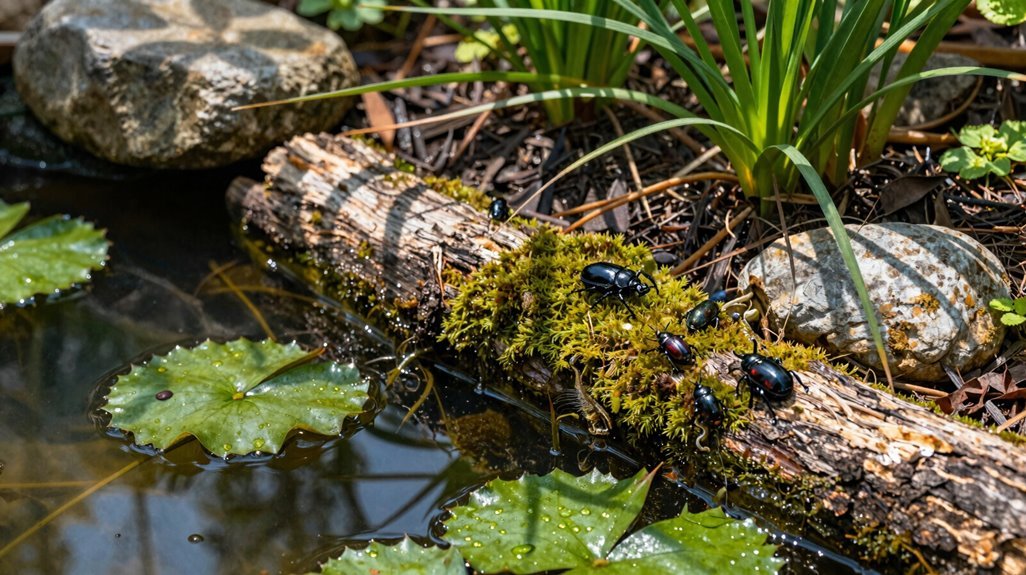
I like placing logs along my pond’s edge because they create a pervious, filtration-friendly boundary that slowly transforms into a habitat pile, supporting fungi, mosses, and ground beetles while offering overwintering chambers for stag beetle larvae. Partially burying these logs prevents rolling and establishes sheltered microhabitats where amphibians can retreat, effectively stacking function upon function in a single, informal structure.
Combining this approach with other edging styles, I’ve found, maximizes wildlife access and builds the kind of structural complexity that keeps a garden habitat active through every season.
Habitat Value
Why settle for a sterile concrete rim when you could invite an entire ecosystem to your water’s edge? I choose log edging because it changes my wildlife pond into a living corridor where fungi, mosses, and invertebrates colonize every crevice. The decaying wood hosts stag beetle eggs, deepening habitat complexity through layered microhabitats. Partially buried logs prevent rolling while creating stable refuges for amphibians and slow-worms.
I notice how moisture retention improves beneath the timber, sustaining grazing invertebrates and basking frogs. Combining logs with other edge materials generates varied microhabitats: shaded pockets, overhangs, and crevices that amplify overall wildlife richness. My pond’s perimeter becomes a woodland threshold, where beetles forage and amphibians shelter. This isn’t just edging; it’s belonging, woven from bark and biology.
Installation Tips
Three steps into my garden, I’ve already mapped where each log will rest. I’ll install log edging along the pond’s eastern bank, where morning light filters through hazel branches, creating a dappled, hexagon-tiled backdrop of moss and fern.
I’ll sink each timber into the damp soil using partial burial, angling the bark-surface toward the water. This prevents rolling, yet preserves accessibility for wildlife. Stacking some logs, I build a low retaining wall with crevices; damp chambers where amphibians shelter, and stag beetles deposit eggs in decaying heartwood.
The log edging becomes a living habitat, fungi threading through fissures, woodlice aggregating beneath. I’m connecting water to woodland, enhancing biodiversity through deliberate microhabitats. Gradual, gradual transitions let frogs forage, newts escape, ground beetles patrol. My pond’s edge breathes with integrated life.
Plant Native Marginals Like Marsh Marigold and Purple Loosestrife
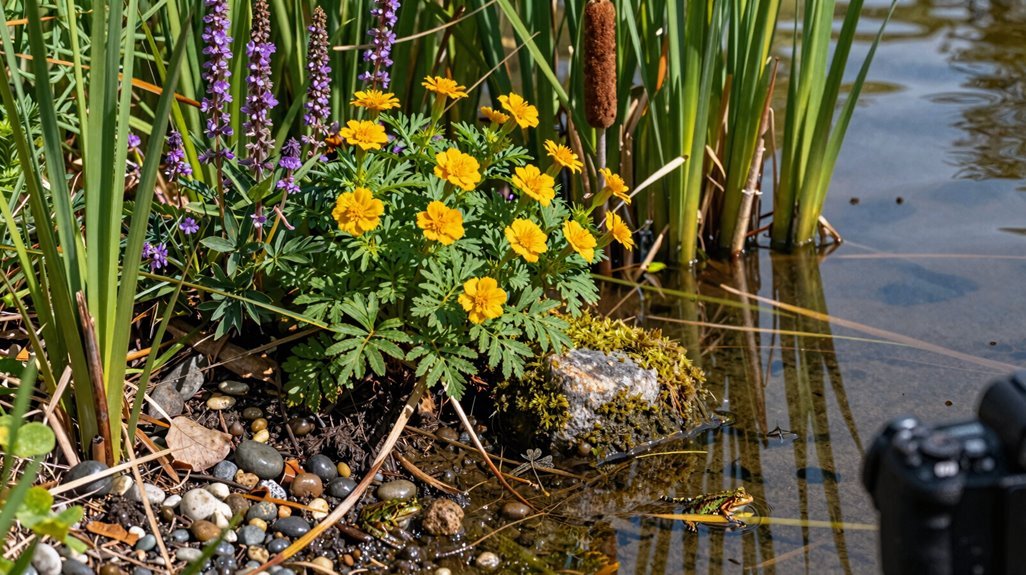
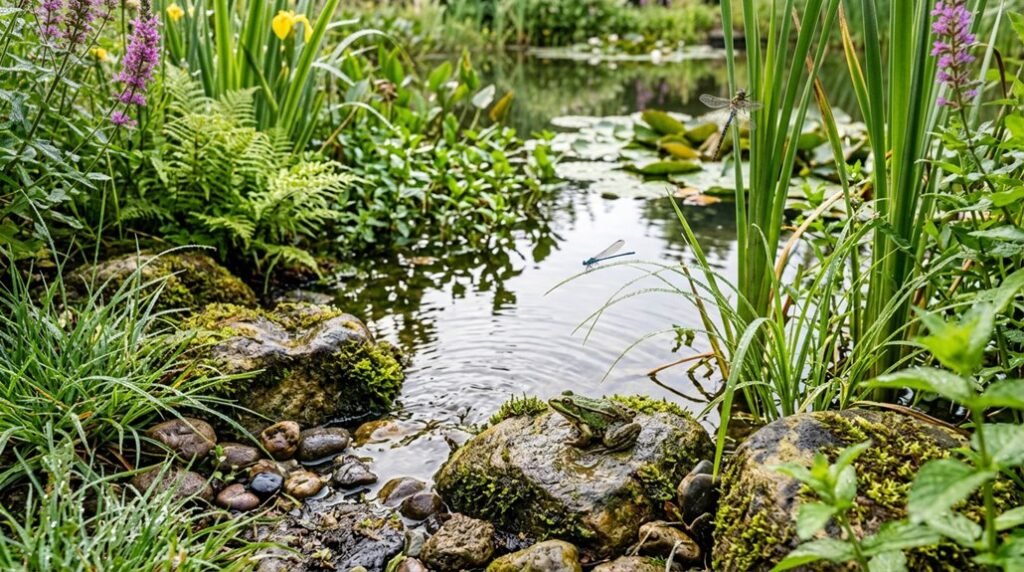
I choose marsh marigold and purple loosestrife for their pervious root systems, which create natural filtration along my pond’s stone-edged margin. Filtering excess nutrients through dense mats of vegetation, these natives change murky runoff into clear water while buffering the shoreline with a honey-tiled backdrop of golden March blooms and magenta spires. Their layered stems, interwoven with half-submerged river stones and a bark-mulched bog garden line, offer labyrinthine shelter where dragonfly nymphs climb toward emergence, and nesting wrens vanish into the damp thicket.
Plant Selection Basics
Where might we begin when building a living edge for our pond? I start with native pond plants, selecting marginal plants that root in saturated soil while their crowns breathe air. Marsh marigold claims my attention first, its butter-yellow blooms erupting March through April against the hexagon-tiled backdrop of awakening stone. I tuck these water plants into shallow shelves, creating layered edge habitat where amphibians shelter and insects emerge.
Purple loosestrife follows, its magenta spires drawing bees and butterflies through summer’s haze. I plant densely, mixing heights and textures, knowing that pervious root systems drive filtration while woven stems slow erosion. Together, these selections form living architecture, stone pillar fountains of green, that welcomes us into a community of belonging, where our garden breathes with wild purpose.
Water Quality Benefits
Planting native marginals along my pond’s edge does more than soften the boundary between water and land. I’m building a living filtration system that protects what matters most.
Marsh marigold anchors my early spring habitat margin with fist-sized, buttery blooms that catch morning light while trapping runoff sediments. Purple loosestrife follows, its magenta wands drawing clouded sulphur butterflies to a bog garden I’ve sunk at the waterline. Together, these marginal plants form a pervious barrier, their knotted root masses absorbing nitrogen, phosphorous, and lawn chemicals before they cloud the depths.
I’ve watched water quality change through successive seasons. Where bare soil once slumped, dense stems now slow rainfall, allowing particles to settle. A constructed bog garden extends this benefit, its saturated peat and gravel layers polishing overflow like charcoal filters.
This planted margin demands patience, but I’ve traded clarity for something richer: water that breathes, supporting what lives beneath.
Wildlife Shelter Value
How does a pond’s edge become a living refuge? I plant native marginal plants like marsh marigold and purple loosestrife along the waterline, converting bare perimeter into teeming habitat. Margin planting creates sheltered corridors where damselflies hover, dragonflies alight on serrated leaves, and frogs slip between shaded roots.
These marginal plants do more than beautify. Their stems filter runoff, roots permeable to water, offering cover for amphibians transitioning between pond and garden. I position moisture-loving natives in damp zones, building connected shelter that supports biodiversity. A bog garden line, shallow liner draining beneath, extends continuous edge cover.
Selecting the right marginals balances habitat complexity with water quality. Through deliberate margin planting at the pond edge, I’m weaving refuge into every layer, inviting you into vigorous shelter we build together.
Create a Bog Garden for Damp Transition Zones
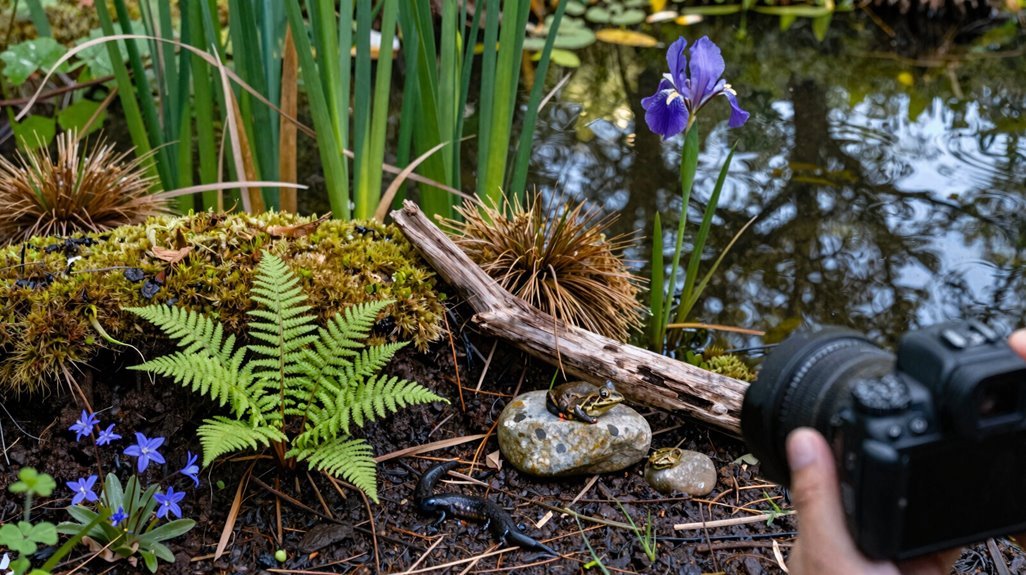
Why settle for a hard edge when I can weave a living buffer between water and land? I’m building a bog garden, a permanently damp transition zone that softens my wildlife pond edging into something breathing and pervious. I line a shallow excavation with perforated liner, then layer topsoil and compost to create saturated planting pockets.
Native marginal plants root here, their dense filtration systems cleansing water while offering cover. In early spring, marsh marigold erupts in yellow blooms along these habitat margins, signaling the season’s turn. My damp transition supports frogs, newts, and countless invertebrates seeking refuge in constantly moist soil.
Together, we’re crafting edges that belong, where Surrey clay meets living root, and garden becomes genuine sanctuary.
Grow Wildflowers and Long Grass Right to the Waterline
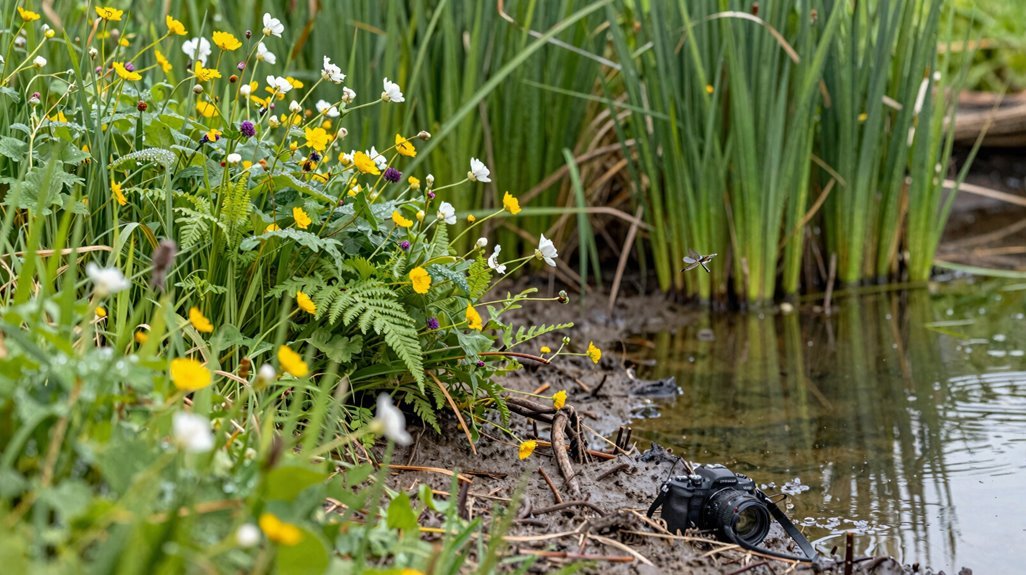
Where hardscaping fails, I let meadow take hold, allowing wildflowers and native grasses to colonise the bank right to the water’s edge. I stop mowing a metre-wide strip, inviting golden buttercups and purple knapweed to soften the waterline edge into living filtration.
For quicker establishment, I roll out wildflower turf or sow native seed mixes directly into sloping banks, creating meadow margins that hum with bees and hoverflies. These pond edge planting zones offer pervious ground cover where grass snakes bask and damselflies emerge from nymph to wing.
I blend this approach with pebble beaches or marsh pockets, balancing unmanaged beauty with deliberate structure. Together, these layers weave a biodiversity habitat that welcomes you into something wild, generous, and quietly alive.
Add Ramps to Small Ponds and Container Features
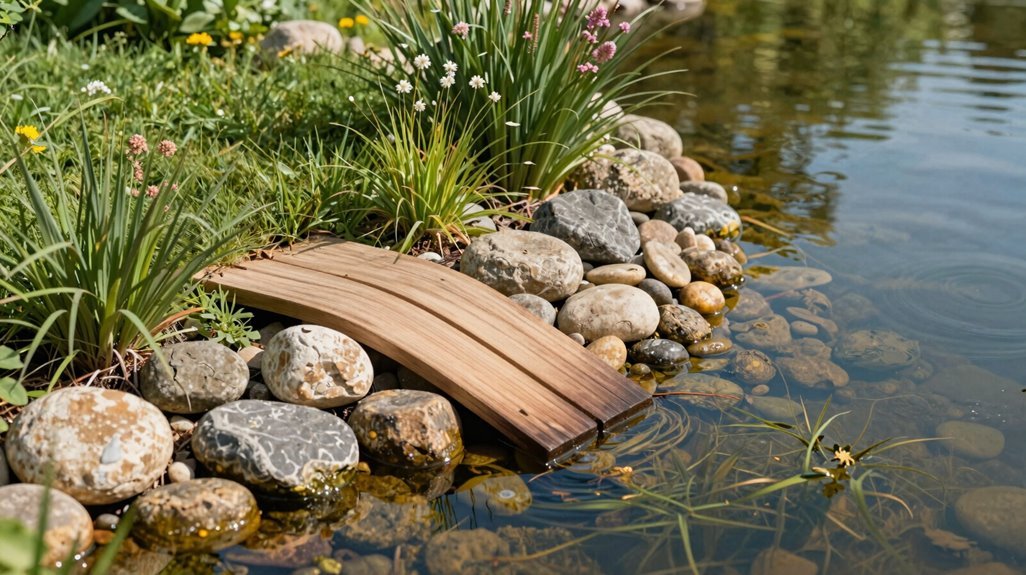
A ramp transforms the smallest container pond into a rescue station for wildlife that might otherwise drown on steep plastic sides. I choose grooved wood for my ramps, ensuring grip-friendly passage for hedgehogs and thirsty amphibians seeking small pond access.
Designing wildlife pond edging with a gentle slope, I integrate submerged logs and flat stones alongside, creating pond-edge shelter for invertebrates during vulnerable entry and exit moments. This habitat integration feels complete when I nestle the ramp against pebble fringe, allowing pervious drainage between bank and water.
Striving for seamless transitions, I bury stone margins slightly, mimicking natural filtration zones. Come cooler months, I clear autumn debris carefully, preserving nearby refuge while maintaining unobstructed ramps. Together, we’re building something deliberate: a garden where even modest vessels welcome creatures home.
Time Your Edging Work for Autumn and Winter
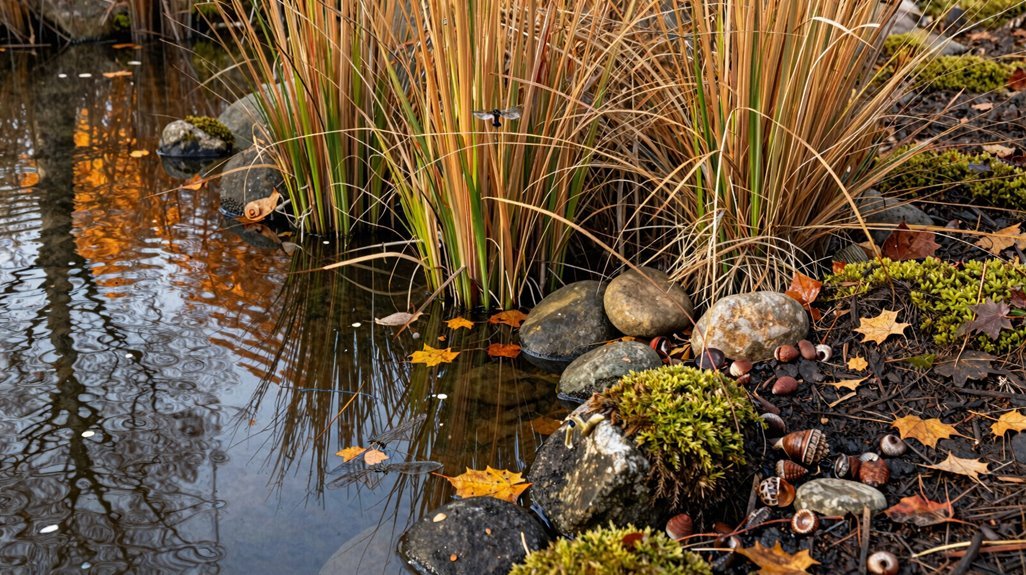
How do I carve out time for pond edging when the garden quiets down? I turn to autumn and winter, when breeding cycles slow and my presence disrupts less.
During these dormant months, I reshape edges with a wildlife-friendly approach, layering pebbles and larger stones into sloping banks that hedgehogs and frogs navigate easily. I leave patches of marginal vegetation standing, maintaining corridors through the natural habitat I’ve cultivated.
Selecting local stone, I avoid rigid, formal lines that feel imposed rather than grown. The mixed pebble edge, pervious and uneven, supports groundwater filtration while preventing drowning. Working now, when the pond sleeps, I honor the rhythm of the place I share.