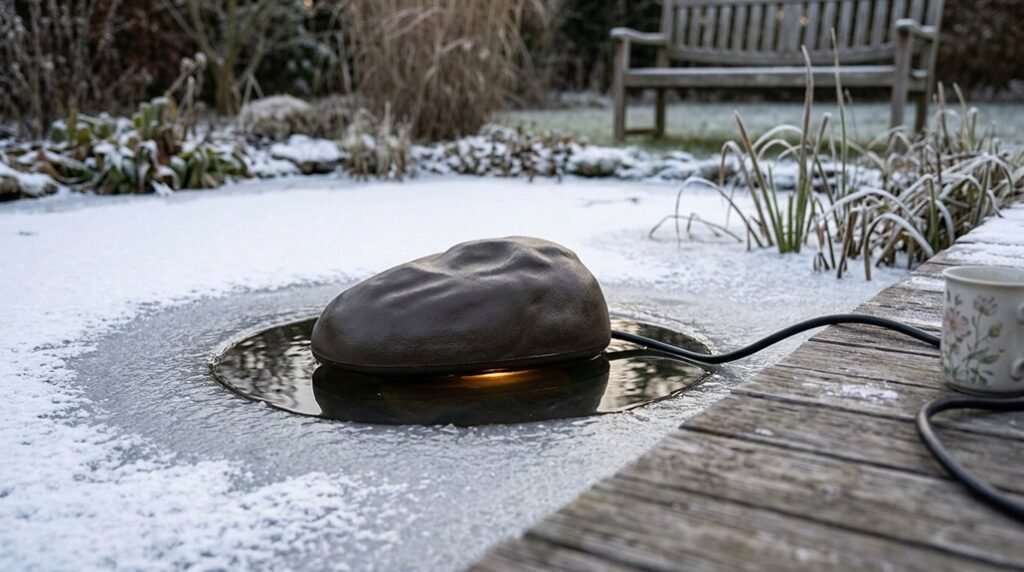
I’ve spent winters watching small ponds turn into ice traps, and the right de-icer makes all the difference between healthy fish and a spring cleanup.
This year’s top models pack smarter thermostats, tougher casings, and cords long enough to actually reach your outlet.
You’ll find 150W units for modest water gardens and 600W beasts for stubborn freeze zones.
But wattage alone won’t save your koi.
The real game changers are water-sensing activation, GFCI protection, and casings that won’t corrode after one season.
I’ve narrowed the field to five standouts that balance safety, efficiency, and installation simplicity.
Here’s what separates the lifesavers from the energy wasters.
| Tetra Pond De-Icer Winter Survival Solution for Fish | Best for Deep Freezes | Wattage: 300W | Cord Length: 15 ft | Design Type: Floating de-icer | VIEW LATEST PRICE | Read My Analysis | |
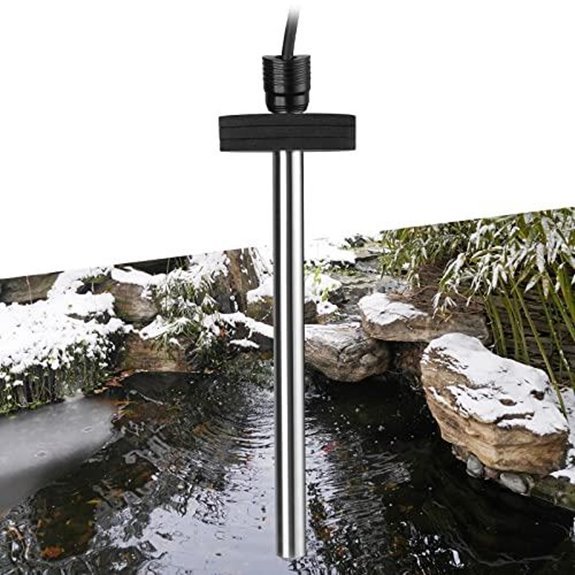
| HITOP Outdoor Pond Heater 150W-600W with De-icer | Best Budget Option | Wattage: 300W | Cord Length: 16.4 ft (5m) | Design Type: Floatable stainless steel heater | VIEW LATEST PRICE | Read My Analysis | |
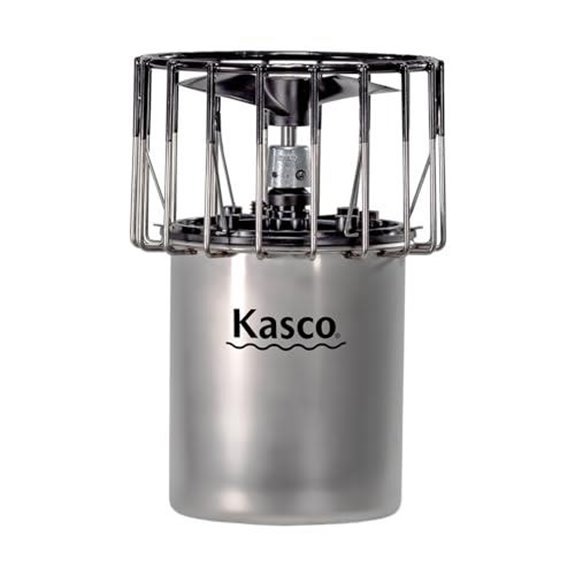
| Kasco 1/2HP Lake & Pond De-icer 120V 25ft Power Cord | Best for Large Ponds | Wattage: 1/2 HP (~373W equivalent) | Cord Length: 25 ft | Design Type: Submersible motor/propeller unit | VIEW LATEST PRICE | Read My Analysis | |
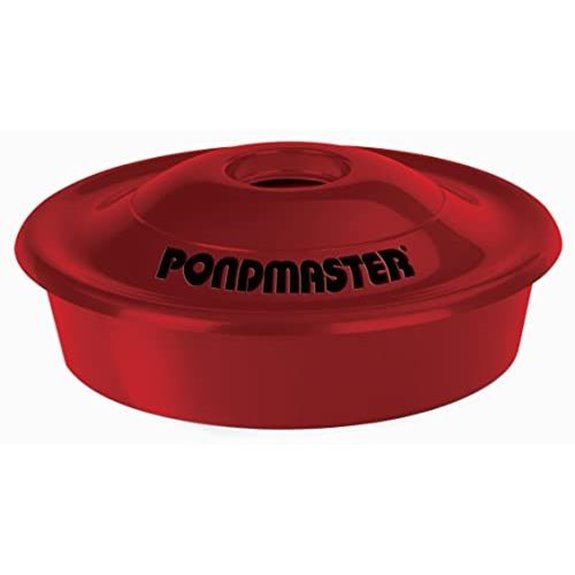
| Danner Manufacturing Inc. Pondmaster Pond De-icer Red 02175 | Best for Small Ponds | Wattage: 120W | Cord Length: 18 ft | Design Type: Floating de-icer | VIEW LATEST PRICE | Read My Analysis | |
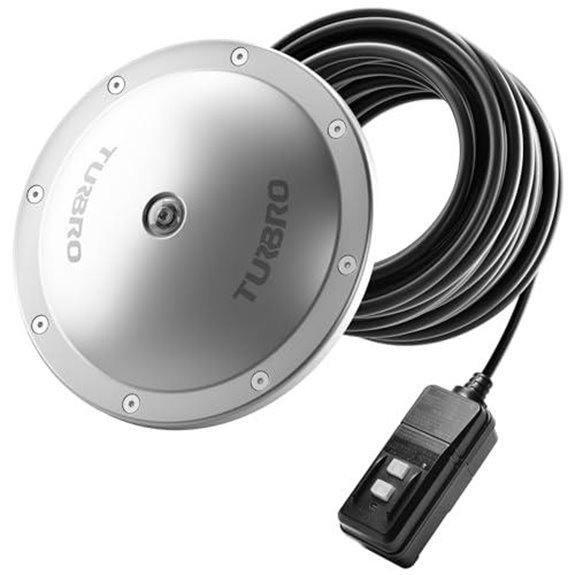
| TURBRO Floating Pond De-icer 400W (PD400A) | Best Safety Features | Wattage: 400W | Cord Length: 32.8 ft | Design Type: Floating de-icer | VIEW LATEST PRICE | Read My Analysis |
More Details on Our Top Picks
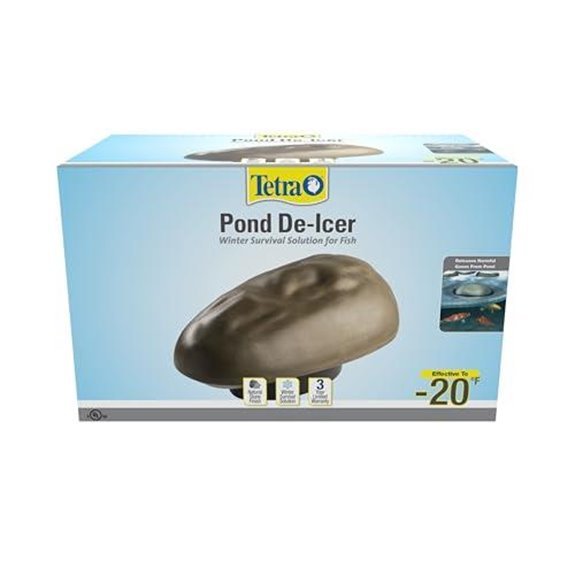
Tetra Pond De-Icer Winter Survival Solution for Fish
Living where winter bites hard, I think you’ll find the Tetra Pond De-Icer an ideal companion for deep freezes and frozen-over ponds. I’ve researched countless options, and this 300-watt unit from TetraPond consistently stands out for reliable ice management.
Here’s what makes it worth your consideration:
- Thermostatic control – shuts off automatically when not needed, saving energy and extending lifespan
- 15-foot cord – provides flexible placement without extension cord hassles
- Stone finish – blends naturally with your pond’s aesthetic rather than screaming “machinery”
The core benefit? Gas exchange. When organic matter decomposes under ice, toxic gases build up fast. This de-icer maintains an open water patch, letting those gases escape so your fish don’t suffocate in their own home.
It handles temperatures down to -20 degrees, which covers most continental winters.
And yes, it’s specifically designed for smaller ponds where precision matters more than brute force. The 300-watt output hits that sweet spot: powerful enough to work, gentle enough not to cook your ecosystem.
- Wattage:300W
- Cord Length:15 ft
- Design Type:Floating de-icer
- Temperature Control:Thermostatically controlled shutoff
- Primary Function:Maintains ice-free area for gas exchange
- Construction Material:Stone finish
- Additional Feature:Stone finish design
- Additional Feature:-20°F effective operation
- Additional Feature:Toxic gas escape
HITOP Outdoor Pond Heater 150W-600W with De-icer
Need a reliable de-icer without emptying your wallet? The HITOP Outdoor Pond Heater offers three wattage options, 150W, 300W, and 600W, so you can match power to your pond size. I find the 300W model hits a sweet spot for small setups around 80 to 160 gallons.
Here’s what this unit actually does: it melts a breathing hole in surface ice, it doesn’t warm your whole pond.
The stainless steel heater maintains 68 to 72 degrees Fahrenheit in the water immediately surrounding it, which is just enough to keep that critical opening clear for gas exchange. Your fish need this to survive winter’s oxygen squeeze.
Key features worth noting:
- Floatable design with foam positioning, so the bottom stays clear of mud
- 16.4 foot outdoor-rated cable, anti-aging and anti-leakage
- Auto start/stop temperature control, no babysitting required
- 3-pin plug for grounded safety
A few practical cautions: fully submerge that steel heater, keep the foam near the top, and never use this in plastic ponds. Also, unplug before cleaning and let it cool 10 to 20 minutes, unless you enjoy surprises.
- Wattage:300W
- Cord Length:16.4 ft (5m)
- Design Type:Floatable stainless steel heater
- Temperature Control:Intelligent constant temperature 68-72°F
- Primary Function:Melts ice hole for fish breathing
- Construction Material:Stainless steel with foam float
- Additional Feature:12-month warranty option
- Additional Feature:Foam float positioning
- Additional Feature:40-80 gallon boil zone
Kasco 1/2HP Lake & Pond De-icer 120V 25ft Power Cord
Running a large pond through winter? I’ve got something that’s built for exactly that challenge, and it’s not messing around.
The Kasco 1/2HP Lake & Pond De-icer covers serious ground with a 30 to 65 foot diameter of open water, depending on how brutal your air temperature gets.
Here’s what makes this unit special:
- 1/2 HP motor running at 1750 rpm pushes warmer bottom water upward, creating that crucial surface opening
- Directional flow targets your specific trouble spots: boats, docks, piers, or any in-water property you’re protecting
- Built for continuous duty in harsh conditions because winter doesn’t take days off
I appreciate that Kasco includes everything you need to get started: 25 feet of power cord, two 20-foot suspension ropes, and instructions that actually make sense.
It’s ETL approved to CSA and UL standards, so safety is covered. And if you ever upgrade to their 3/4 or 1 HP models? Same mounting systems work across the line.
Corrosion-resistant construction means this investment keeps working year after year. For residential owners or commercial waterfronts needing reliable ice protection, it’s hard to beat this level of engineering!
- Wattage:1/2 HP (~373W equivalent)
- Cord Length:25 ft
- Design Type:Submersible motor/propeller unit
- Temperature Control:Continuous duty motor operation
- Primary Function:Prevents ice damage, maintains open water area
- Construction Material:Corrosion-resistant heavy-duty materials
- Additional Feature:30-65 ft coverage
- Additional Feature:Directional water flow
- Additional Feature:Dock mounting compatible
Danner Manufacturing Inc. Pondmaster Pond De-icer Red 02175
I’ll pick the Danner Pondmaster when I’m nurturing a modest water feature. The kind that fits in a corner of the patio or hosts a dozen koi in a suburban backyard. This little red workhorse handles ponds up to 250 gallons without breaking a sweat.
Here’s what makes it tick:
- 120 watts of heating power with a fixed thermostat that runs only when needed
- Epoxy-sealed internals keep water where it belongs: outside the electronics
- Rugged ABS plastic shell that won’t crack when the mercury drops
The 18-foot cord gives you placement flexibility, and that 2-prong plug plays nice with standard outlets. And because it floats, installation means tossing it in and walking away. No tools, no hassle.
I’ve seen cheaper units chew through liners or cook themselves in months. The Pondmaster won’t. That 1-year warranty isn’t flashy, but Danner’s been around long enough to trust.
Bottom line: It’s the practical choice when your pond’s small and your expectations are sensible.
- Wattage:120W
- Cord Length:18 ft
- Design Type:Floating de-icer
- Temperature Control:Fixed thermostatic control
- Primary Function:Maintains small opening for gas release
- Construction Material:High impact ABS plastic
- Additional Feature:250 gallon capacity
- Additional Feature:Epoxy sealed electronics
- Additional Feature:2-prong polarized plug
TURBRO Floating Pond De-icer 400W (PD400A)
Who needs a de-icer they can actually trust? I’ve found the TURBRO PD400A delivers serious peace of mind with its stacked safety features. We’re talking IP68 water resistance, overheating protection, and a GFCI leakage plug that actually shuts things down if something goes wrong.
The 400-watt unit uses SCR technology (that’s silicon-controlled rectifier, for the curious), which means precise temperature control and a lifespan ten times longer than old mechanical switches.
The full stainless steel casing fights rust while spreading heat fast, and that 32.8-foot cord gives you real placement flexibility.
I appreciate the simple indicator light system: red means working, green means resting. No guessing games in freezing weather! It’s built specifically for ponds with fish, so your koi stay safe through winter.
- Wattage:400W
- Cord Length:32.8 ft
- Design Type:Floating de-icer
- Temperature Control:SCR technology with precise regulation
- Primary Function:Rapid ice-melting for fish ponds
- Construction Material:Full stainless steel casing
- Additional Feature:32.8 ft cord
- Additional Feature:SCR temperature technology
- Additional Feature:Red/green indicator light
Factors to Consider When Choosing a Small Pond De-Icer
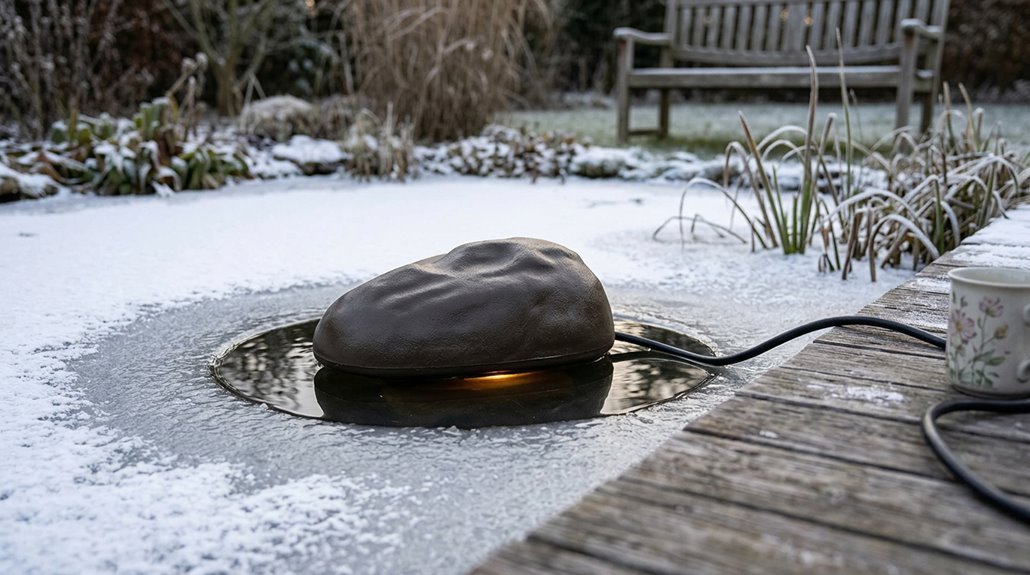
I want to make sure you pick the right de-icer for your setup, so I’ll walk you through what actually matters when you’re comparing models. And don’t worry, I’ll keep this practical because nobody wants to overheat a tiny pond or freeze out a big one! Here’s what to watch for when you’re weighing your options:
Pond Size Compatibility
Heating Wattage Requirements
Thermostat Control Features
Safety Certifications
Cord Length Flexibility
Pond Size Compatibility
How do you pick a de-icer that won’t turn your small pond into a simmering soup or, worse, leave your fish gasping under solid ice? I’ve learned it’s all about matching the unit to your pond’s actual volume.
Look for de-icers rated specifically for your gallon capacity, whether that’s 80–160 gallons or up to 250 gallons. This ensures you’re creating a breathing hole without accidentally heating the whole pond, which small fish definitely don’t need.
Key things I check:
- Product specs mentioning “breathing hole” or “open water area,” not full-volume heating
- Open-water diameter that matches my pond’s dimensions
- Models designed for ponds under my specific gallon threshold
In shallower setups, I gravitate toward lower wattage options, 100–300W, since less power prevents overheating while still maintaining that crucial gas exchange zone.
Heating Wattage Requirements
What wattage actually gets the job done without sending your electric bill through the roof?
I’ve found that small ponds need de-icers between 100–600 watts. Here’s how I break it down:
- 100–250 watts: Perfect for compact ponds in milder climates, maintaining that crucial breathing hole.
- 300–600 watts: Essential when you’re dealing with larger volumes or brutal winter stretches.
The magic isn’t just raw power, it’s matching wattage to your specific situation. Think gallons plus geography. A 200-watt unit might struggle in Minnesota but thrive in Tennessee.
And remember, higher wattage melts ice faster and creates bigger openings, but it’s easy to overdo it. Some designs concentrate heat right at the device rather than attempting to warm your entire pond, which keeps costs sensible while protecting your fish.
Thermostat Control Features
Wattage gets you in the game, but thermostat control is what keeps you from playing electricity roulette all winter.
I look for de-icers with true thermostatic regulation, not just fixed on/off switches. Here’s what matters:
- Fixed thermostatic settings narrow the heating range, cutting runtime and your electric bill
- Auto start/stop cycles the unit without you trudging through snow to flip switches
- Target temps around 68–72°F hit the sweet spot: warm enough to prevent ice, cool enough to avoid cooking your energy budget
Submersible models with built-in water sensors respond directly to actual conditions, not just air temperature guesses. And that’s crucial, because water holds heat differently than air, and you want your heater reacting to the real story, not the weather report.
Safety Certifications
A de-icer without proper safety certifications is basically an expensive paperweight that might electrocute your fish. I won’t let that happen to you, so here’s what I always check first.
Look for these marks on the packaging or product listing:
- UL or ETL certifications, these indicate the device meets rigorous electrical safety standards
- CSA approval, another trusted certification, often paired with UL/ETL listings
- Explicit outdoor pond rating, not just “outdoor safe,” but specifically submersible with proper IP ratings and corrosion resistance
And don’t stop there! I dig deeper for:
- Built-in thermal protections and automatic shutoffs
- GFCI-compatible plug assemblies
- Outdoor-rated cord materials
These features aren’t luxuries, they’re lifesavers. A certified de-icer protects your pond, your fish, and your peace of mind through freezing nights.
Cord Length Flexibility
Safety certifications keep your de-icer from becoming a hazard, but they won’t help much if you can’t actually reach your pond with the thing. That’s where cord length flexibility becomes your best friend.
Most small pond de-icers I’ve come across run between 15 and 32.8 feet. Here’s why that range matters:
- Longer cords let you position the heater optimally without fighting outlet placement
- You’ll dodge the need for sketchy extension cords (fewer connections, fewer headaches!)
- Irregular or larger ponds become way more manageable
Think about your setup. Measure from your outdoor outlet to where you actually want heat distributed. Add a few feet for routing around edges or landscaping.
And hey, that extra length isn’t just convenience, it’s a safety win, too. Nobody wants to daisy-chain cords near water. Match your cord to your pond’s reality, and you’re golden!