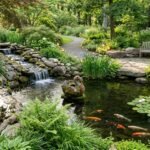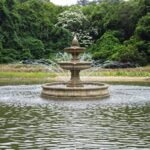

I stand at the edge of my koi pond each morning, watching the hexagon-tiled backdrop shimmer beneath a stone pillar fountain, and I know clarity doesn’t happen by accident.
After fifteen years of battling green water, clogged filtration, and that pervasive film of leaves, I’ve learned that clean water demands more than a pump and hope.
It requires understanding your pond as a living system.
The methods I’m about to share aren’t complicated, but they’re precise, and they’ll save you from the expensive mistakes I made.
Start With a Spring Cleanout to Reset Your Pond

A spring cleanout marks the turning point between dormancy and renewal, the moment I strip away winter’s accumulated burden to reveal what lies beneath. I schedule this reset for late winter, when water temperatures edge upward and biological life stirs from its slowed state.
During debris removal, I’m careful to preserve 80–90% of existing beneficial bacteria, that invisible workforce maintaining water quality beneath the surface. I save old pond water for inoculation, pouring it back through cleaned filters and skimmers to jumpstart pond filtration. Checking aeration equipment, I make sure stone pillar fountains and diffusers function before fish return.
This deliberate spring restart, trimming perennials, testing pumps, shifting diets, creates the pervious foundation we both need for the growing season ahead.
Fix Green Water, String Algae, and Brown Tannins Fast
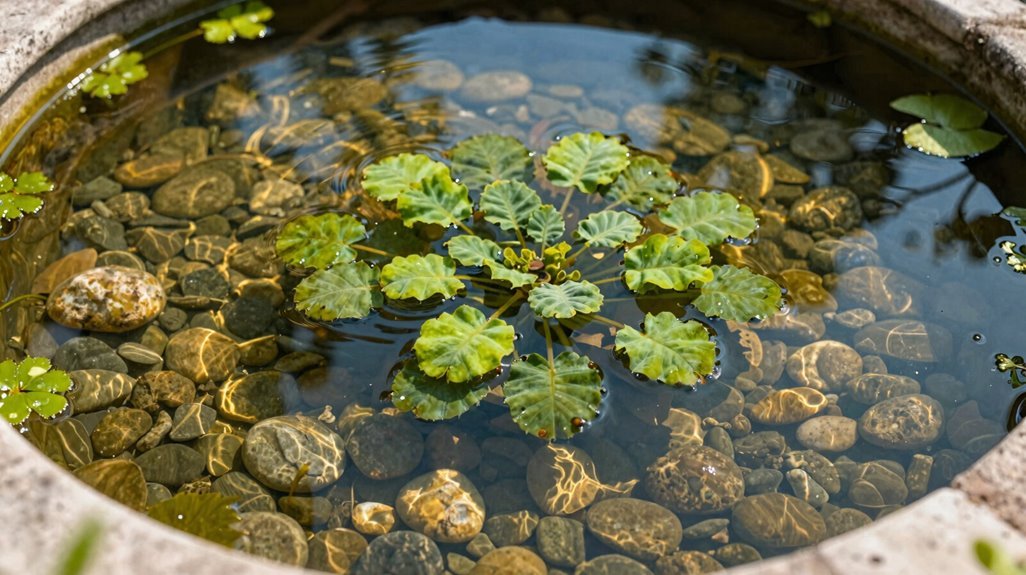
I’ve dealt with my share of pea-soup ponds, slimy green strands draped over the hexagon-tiled backdrop like some neglected aquarium nightmare, and that frustrating tea-colored tint that makes your stone pillar fountain look like it’s pumping steeped oak leaves. Let me walk you through what actually works for each of these three common headaches, starting with the science behind why your water’s misbehaving.
We’ll tackle green water solutions, string algae control, and brown water fixes with specific, proven methods, not guesswork.
Green Water Solutions
Why does your crystal-clear pond suddenly look like a bowl of pea soup? I’ve faced this, and I know you’ve felt that frustration too; green water crashes our peaceful oasis, turning that hexagon-tiled backdrop into murky disappointment.
| Problem | Cause | Solution |
|---|---|---|
| Green water algae | Excess nitrites feeding single-cell blooms | Add beneficial bacteria to outcompete algae |
| Poor filtration | Insufficient biological filtration surface | Upgrade skimmer and biofilter capacity |
| Declining water clarity | Debris breakdown overwhelming system | Maintain biofilter with beneficial microbes |
| Persistent cloudiness | Fine particles resisting removal | Apply flocculants as targeted intervention |
I attack algae control through biological filtration, introducing colonies that devour nitrites before algae feeds. My skimmer pulls leaves before decomposition, while the biofilter houses colonies working 24/7.
We’re restoring that stone pillar fountain view together; clear water belongs to all of us.
String Algae Control
Green water might surrender to bacteria colonies, but string algae demands a different battle plan. I tackle this slimy, green invader by targeting its food source: nitrates. When beneficial bacteria break down ammonia, they create these nutrients, so I boost my biological filtration to outcompete the algae. My filtration system needs ample surface area for bacteria colonies to grow.
I pair this with debris removal, skimming leaves before they decompose into more nitrates. Nutrient control means practicing overfeeding reduction; those uneaten pellets become algae banquets. I balance sun exposure with floating pond plants, which shade the water while absorbing excess nutrients. Regular netting pulls string algae from rocks and liner. Together, we keep our ponds clear without harsh chemicals.
Brown Water Fixes
When tannins leach from decomposing leaves and mulch, my pond takes on that unmistakable tea-stained hue, clear yet stubbornly amber, like water drawn through a pervious filter of oak bark and pine needles. I don’t mind the rustic water color, but when I want true water clarity, I reach for activated carbon in my pond filtration system.
This porous medium traps tannins fast, restoring that crystalline hexagon-tiled backdrop I admire. For stubborn brown water, I add tannin-reducing treatments or a gentle flocculant, watching particulates settle like dust on a stone pillar fountain. Removing tree leaves and refreshing mulch barriers prevents recurrence.
Together, these steps keep my water inviting, neither sterile nor swampy, but balanced, welcoming, and unmistakably mine.
Size Your Pump and Filter to Your Pond Volume
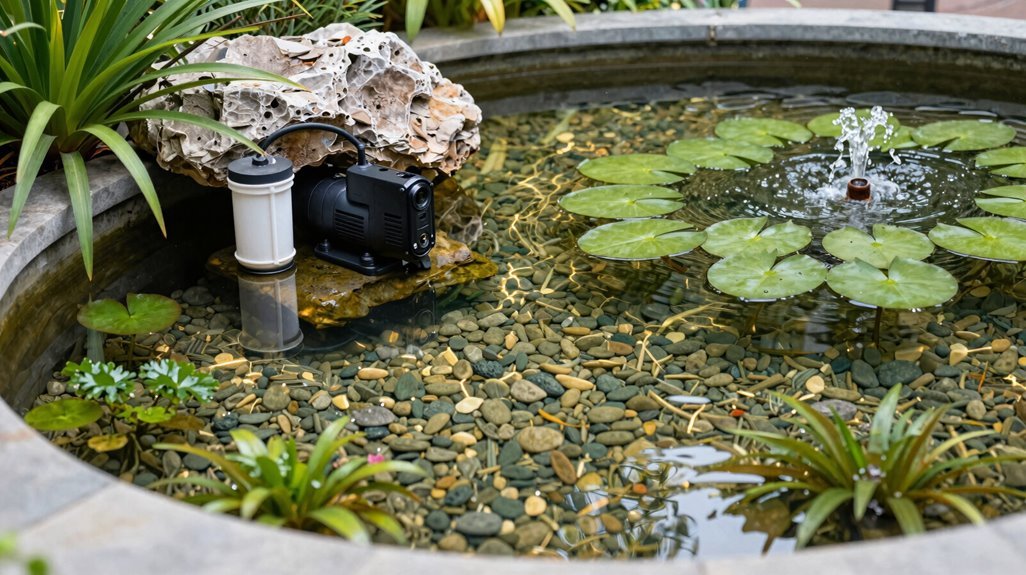
A pump and filter that don’t match your pond’s volume are about as useful as a pervious dam, which is why I’m starting with the numbers. I calculate pond volume first, then target a turnover rate of 1.5 times that volume per hour for proper water circulation and aeration.
For pump sizing, I check the pond head, how high water must climb, since pumps lose flow rate with elevation. I use online pump selection tools to match real-world conditions, not just sticker claims. Filter capacity must handle that same flow without choking; I up-size when my pond filtration faces heavy loads.
Clearing skimmer debris weekly keeps everything running smooth. Get these fundamentals right, and you’re building something that lasts.
Stock the Right Ratio of Fish, Plants, and Bacteria
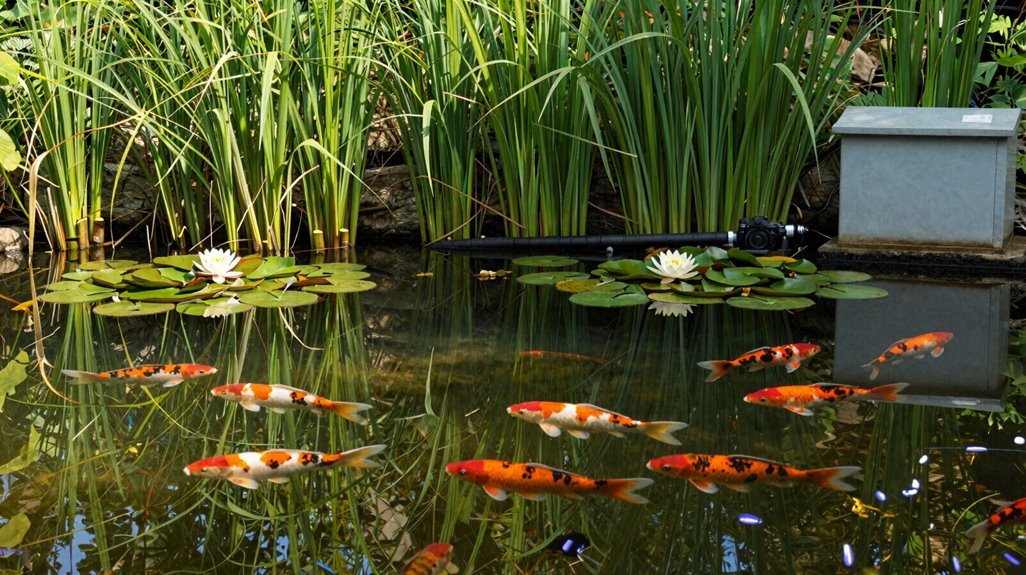
Every balanced pond I’ve built starts with the same calculation: living things in measured proportion, nothing left to chance. I cap my fish load at ten koi per hundred gallons, a stocking ratio that prevents waste from overwhelming my biofilter.
My biological filtration system, layered ceramic media in a hexagon-tiled backdrop, houses colonies of beneficial bacteria performing nitrification, converting toxic ammonia into safer compounds. I pair this with 50% surface shading from water lilies and hyacinth; that plant coverage starves algae while stabilizing oxygen.
For ammonia management, I seed new ponds with bottled cultures, then maintain them through an autodoser dripping weekly supplements. Seasonal adjustments keep the living system in check. When these three pillars—fish, flora, and microbes—align, the water stays pervious and clear.
Feed Less and Skim More to Keep Water Clear

Feeding koi demands restraint, not generosity; I’ve learned that excess food sinks, rots, and feeds the algae blooms I’m trying to prevent. I feed two to four times daily, removing leftovers after ten minutes to protect water quality from ammonia spikes. Observing my fish closely, I adjust portions as they grow and let pond plants—sweet flag, water hyacinth—supplement their diet, reducing waste at its source.
Daily surface skimming transforms my routine. I skim water with a hand net, lifting leaves and pond waste before decay clouds the hexagon-tiled backdrop beneath my stone pillar fountain. This debris removal, practiced several times weekly, sustains water clarity and lightens the organic load on filtration.
| Pond Maintenance Task | Frequency | Impact on Water Clarity |
|---|---|---|
| Koi feeding (5 min sessions) | 2–4× daily | Limits nutrient overload, aids algae control |
| Leftover food removal | After 10 min | Preserves water quality, prevents ammonia |
| Surface skimming | Daily | Removes floating pond debris before sinking |
| Debris removal (hand net) | Several × weekly | Reduces decay, maintains clarity |
| Plant-based snack integration | As available | Decreases feeding frequency, minimizes waste |
Keep Water Cool to Prevent Algae and Protect Clarity
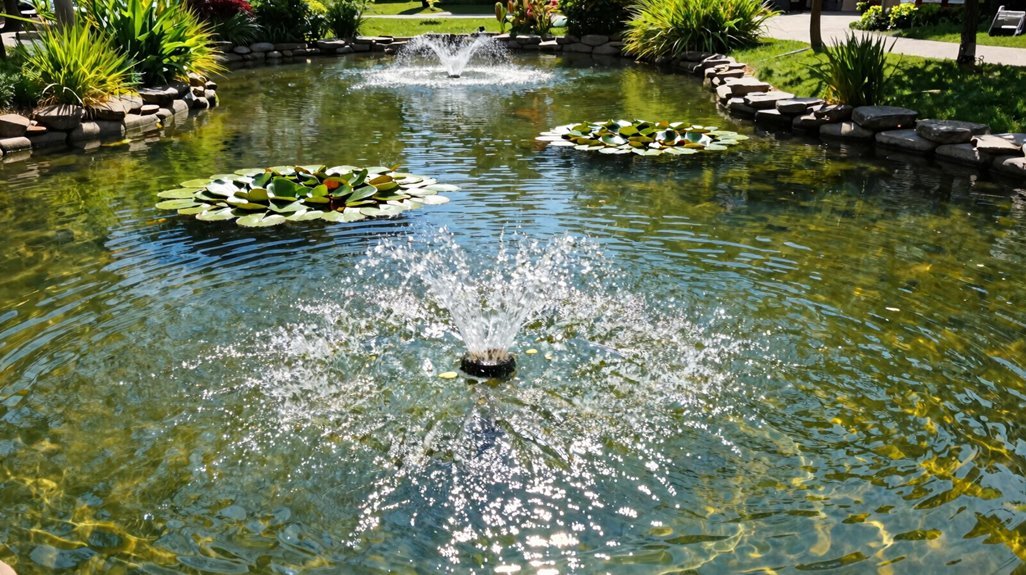
Why let summer heat undo my careful work? I’ve learned that water cooling isn’t optional when temperature climbs past 75 degrees Fahrenheit, because warmer water holds less dissolved oxygen, leaving fish gasping and inviting algae blooms.
I create surface shade with floating aquatic plants, their lily-padded hexagon-tiled backdrop spreading across the water like living filtration. This shade drops the mercury, protecting clarity and the koi beneath. When heat turns extreme, I add aeration, watching the stone pillar fountain churn, driving oxygen exchange through every gallon.
I monitor for that telltale surface gasping, so that’s my signal to act. Combining shade, aeration, and careful vigilance, I maintain cooler water where dissolved oxygen stays stable. This isn’t just maintenance; it’s my commitment to the living community I’ve built.