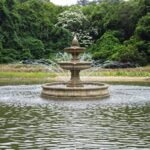
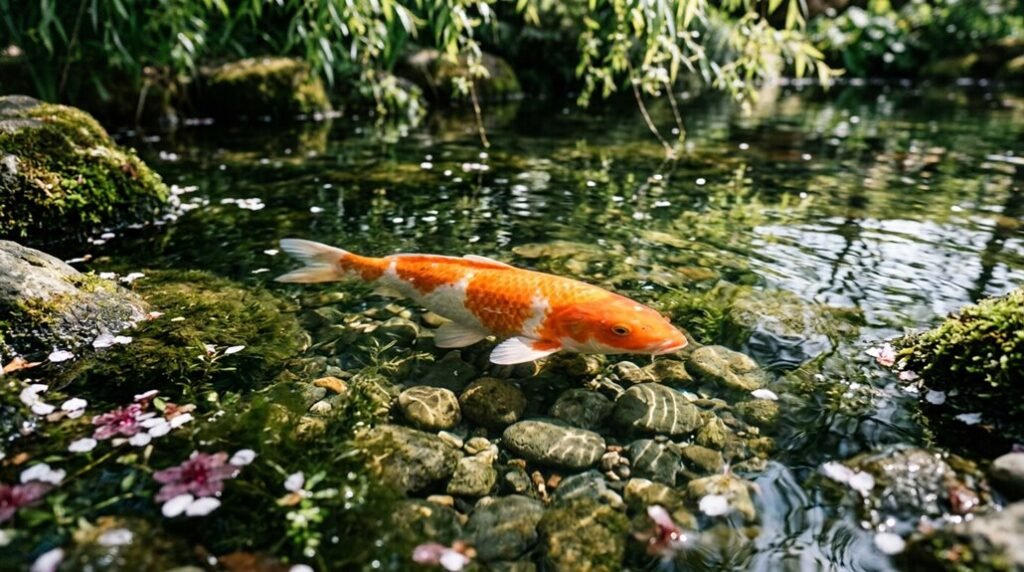
I once watched a client’s koi, vibrant as stained glass against her hexagon-tiled backdrop, fade to listless shadows within weeks. They were victims not of any visible parasite, but of ammonia climbing silently past 2 ppm while she trusted her stone pillar fountain to “keep things moving.” The fish died stressed, immunocompromised, and ultimately infected by pathogens their bodies could no longer fight.
Most koi perish this way: not from single catastrophes, but from cumulative failures we miss until it’s too late. Your pond’s hidden chemistry holds the truth.
Stress Kills More Koi Than Disease: How to Diagnose It
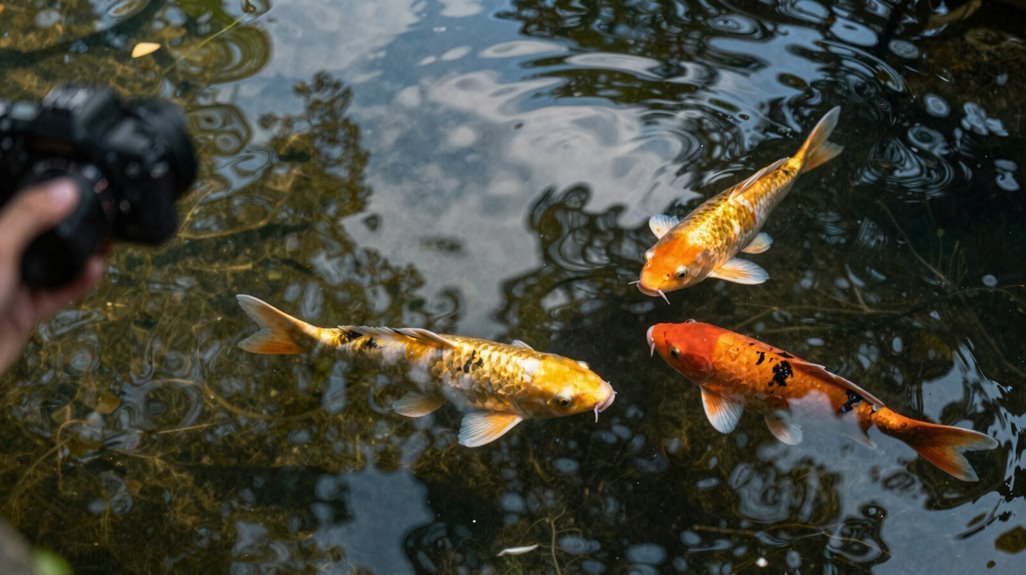
When I first started keeping koi, I assumed disease was the obvious culprit behind every death, until I watched healthy-looking fish fade after a sudden cold front, their colors dulling like wet paint in rain. I’ve learned that stress kills more koi than parasites ever will, and recognizing it means joining a community that looks deeper than surface symptoms.
Acute stress mimics disease: clamped fins, gasping at lily pads, listless drifting near the hexagon-tiled backdrop of your pond’s shallows. Your koi’s immune system collapses under pressure from plummeting oxygen levels, ammonia spikes, or predators lurking beyond the stone pillar fountain.
I check water parameters weekly, KH between 100–200 ppm, stable pH, and perform partial water changes before problems surface. Keeping water quality in check isn’t glamorous, but it’s how we keep our living jewels growing through seasonal shifts that would otherwise break them.
Pond Design Killers: Depth, Filtration, and Flow Failures
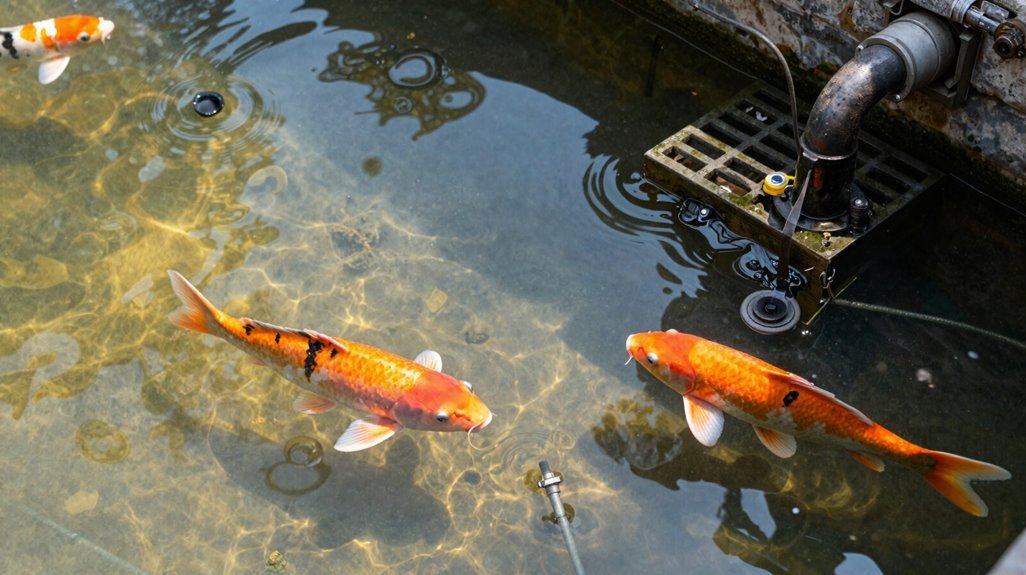
Why do so many of us build ponds that slowly suffocate the fish we love? I’ve watched koi gasp at the surface, their gills flaring against invisible enemies: poor filtration, stagnant flow, and shallow depth conspiring against them.
Koi gasp at the surface, their gills flaring against invisible enemies: poor filtration, stagnant flow, and shallow depth conspiring against them.
Inadequate filtration lets debris accumulate, degrading water quality while ammonia buildup poisons the water column. Without proper flow, dissolved oxygen plummets in dead zones behind stone pillar fountains or beneath hexagon-tiled backdrops.
I install tangential pond returns to push water into every corner, eliminating stagnation that stresses immune systems. Depth matters more than aesthetics. Deeper ponds buffer temperature swings, maintaining stable dissolved oxygen levels that shallow basins cannot.
In-ground construction provides insulation against summer heat and winter chill. Neglecting these design fundamentals, I’ve learned, invites disaster through compromised filtration and thermal stress.
Water Quality Killers: Test and Fix These 5 Parameters
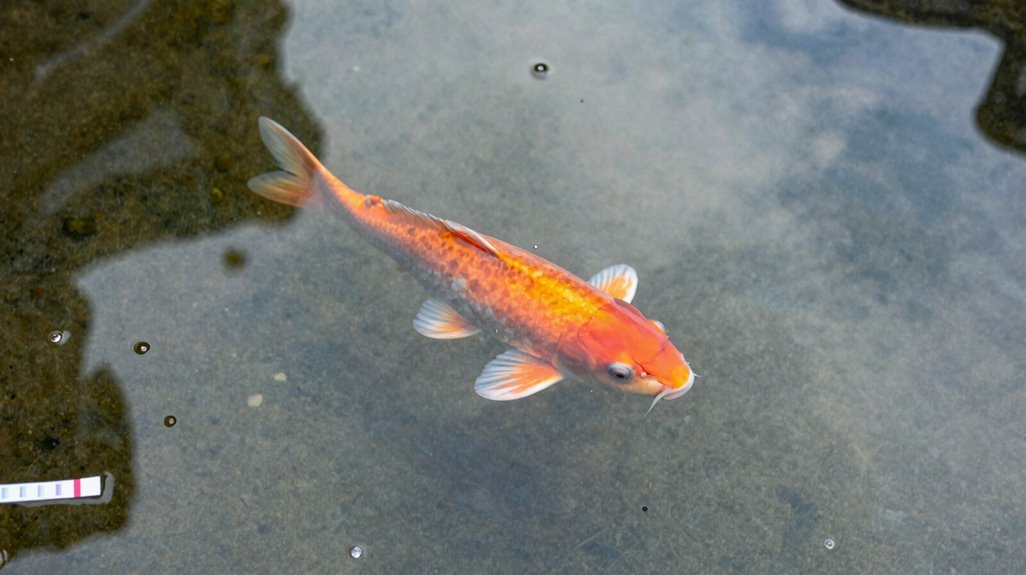
How quickly can invisible chemistry turn a thriving pond into a graveyard? I test my water weekly because I know the danger lurking beneath the surface. Ammonia toxicity strikes at just 0.25 ppm, burning gills and shredding immunity before I spot a single erratic swim.
I maintain my nitrogen cycle (KH) between 100–200 ppm, that invisible buffer keeping pH fluctuations from shattering my koi’s fragile systems. When summer heat presses down, I watch dissolved oxygen like a hawk, adding aeration before dawn reveals gasping fish at the surface.
Water testing isn’t optional; it’s my early warning system. I perform regular partial water changes, draining 25% through my filtration system, replenishing with dechlorinated water that matches temperature and chemistry. Your koi depend on this vigilance. Test today, or mourn tomorrow.
Parasites, Bacteria, Viruses: Catch Infections Before Your Koi Die
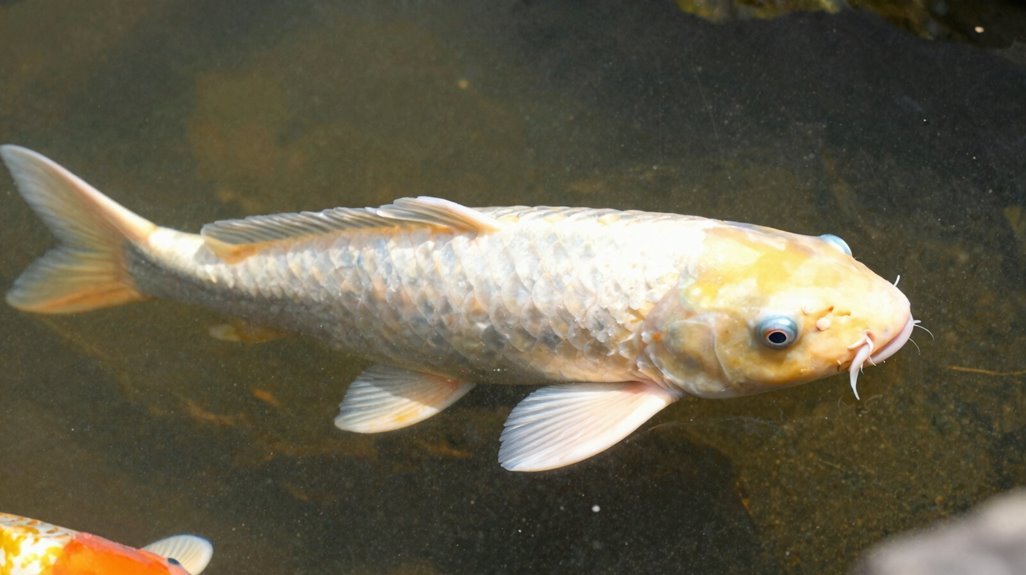
Where exactly do these invisible invaders come from? I’ve learned that parasites slip in through new fish, contaminated water, or visiting wildlife, even when everything looks pristine. That’s why I never skip quarantine; it’s my first defense against disaster.
When my koi start gasping or flashing against the pond’s hexagon-tiled backdrop, I don’t guess. I perform skin scrapes and gill snips, peering through my microscope for the diagnosis that guides every treatment. Praziquantel or Microbe-Lift Parazoryne might follow, but only after I’ve identified the culprit.
Poor water quality weakens koi physiology, making them pervious to secondary bacterial and viral invaders. I maintain rigorous filtration, test parameters weekly, and watch for erratic swimming near my stone pillar fountain. Catching infections early, before gill damage becomes irreversible, keeps my fish healthy and my pond community intact.
Feeding Mistakes That Poison Your Pond (Season-by-Season Fixes)
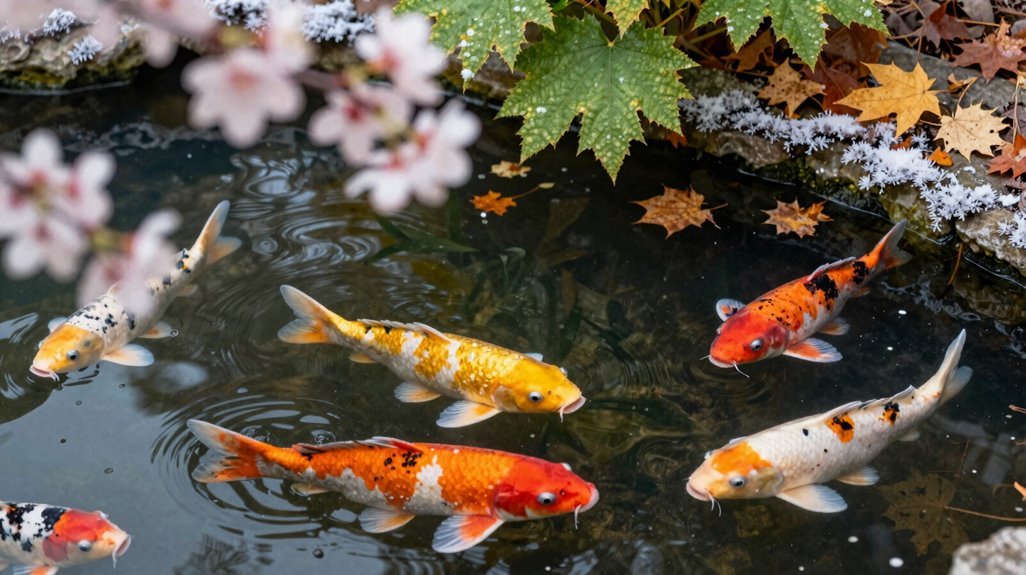
When exactly does a generous hand become a lethal one? I learned this lesson watching my own koi drift, listless, beneath the stone pillar fountain.
Overfeeding, my well-meaning ritual, poisoned everything. Uneaten food settled against the hexagon-tiled backdrop, rotting. Poor water quality followed fast. Dissolved oxygen plummeted while ammonia spiked.
I adjusted season by season. In spring and fall, I cut portions as water temperature dropped; their slowing metabolism couldn’t process excess, and decay accelerated in cooler depths. Summer demanded vigilance: immediate removal of leftovers, strict portion control, to prevent ammonia spikes from their heightened metabolism. Below 50°F, I stopped entirely.
Now I choose fresh, season-appropriate feed. No reused crumbs, no depleted pellets compromising filtration. My koi thrive, and I belong to their quiet world.