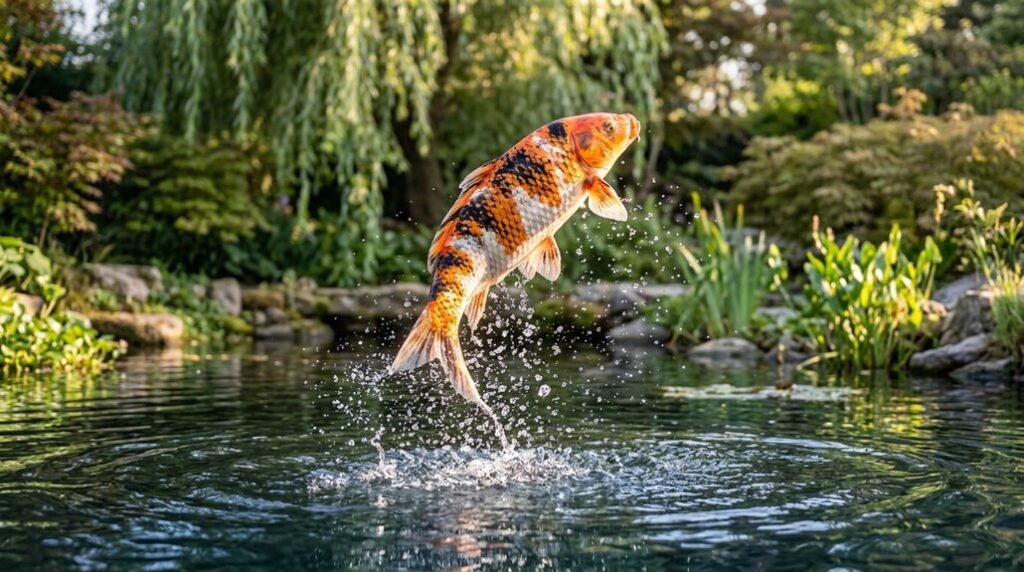
Standing beside my hexagon-tiled pond at dawn, I’ve watched orange-and-white koi break the surface like living missiles, their scales catching light from the stone pillar fountain before they crash back down.
Something’s wrong when fish flee their own water.
I’ve learned to check filtration first, then test for ammonia spikes before any real damage.
The causes are specific, measurable, and entirely fixable, if you know where to look.
Why Koi Jump: 5 Common Causes to Check First
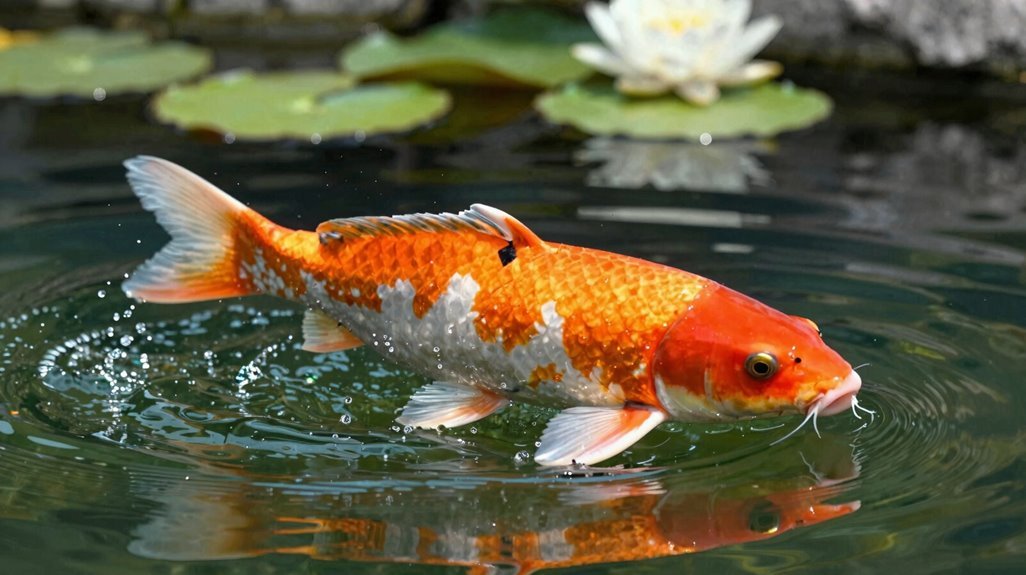
Why do koi leap from their ponds, sometimes with fatal consequences? I’ve learned that a koi jump rarely happens without reason. It’s a distress signal we can’t ignore. When I see my fish breaking the surface, I immediately suspect pond stress rooted in water quality problems.
High ammonia or nitrite levels suffocate silently, driving koi toward oxygen-rich surface air. Low oxygen, unstable pH, or crashing KH creates chemical chaos their gills can’t tolerate. I’ve watched algae blooms, thick as pea soup beneath hexagon-tiled backdrops, deplete dissolved oxygen overnight. Overcrowding, overheating, or clumsy water changes compound the pressure.
Even parasites trigger desperate leaps. Koi fling themselves against stone pillar fountains seeking relief from irritated skin.
Understanding these triggers connects us to fellow keepers who’ve faced midnight emergencies. We’re guardians of living systems, decoding behavior before tragedy strikes.
How to Test Your Water and Match Results to Symptoms
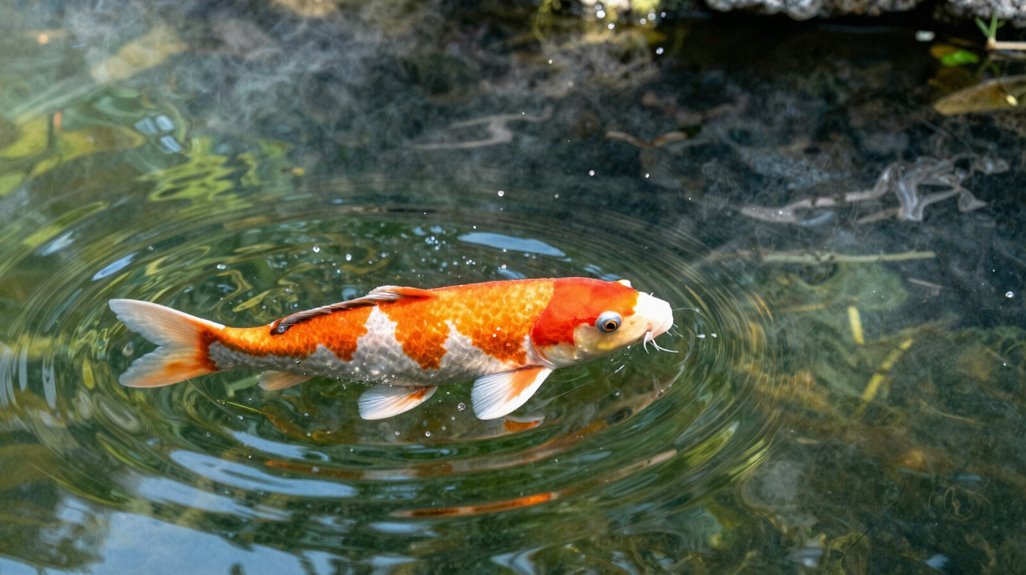
How do I know which invisible culprit is driving my koi toward the surface? I grab my aquarium test kit, measuring ammonia, nitrite, nitrate, pH, KH, and temperature at the same hour each day, building a record I can trust.
I picture the hexagon-tiled backdrop of my pond, imagining test strips revealing what my eyes cannot see. I watch for gill irritation, surface gasping, the desperate choreography that precedes jumping.
I note when ammonia exceeds 0.25 mg/L, when my koi rub against stone pillar fountains, seeking relief. I cross-reference filtration flow with dissolved oxygen, knowing poor water quality suffocates slowly.
Logging each parameter beside observed behavior: jumping, flashing, gasping, I spot patterns. We’re detectives together, tracing invisible threads to protect what swims beneath.
How Ammonia and Nitrite Spikes Trigger Jumping
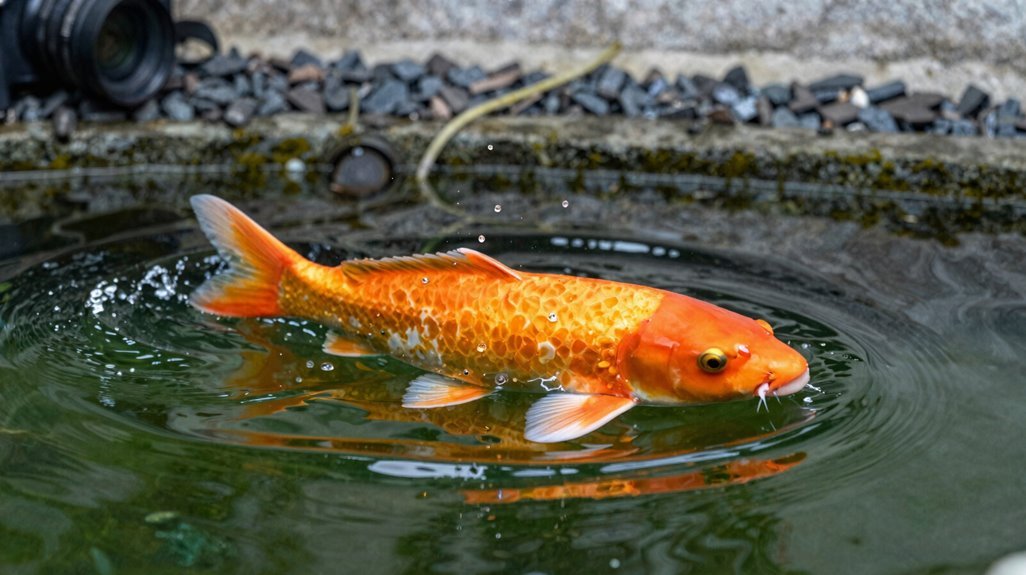
Testing my water gave me numbers, but now I need to understand what those numbers actually do to my fish. When ammonia spikes hit, they burn like chlorine through delicate gill tissue, sending my koi rocketing toward the surface, desperate for relief from the invisible fire. I’ve watched them thrash against the hexagon-tiled backdrop, their bodies arching in repetitive, panicked arcs.
Nitrite spikes follow similar patterns, binding to blood cells and suffocating from within, driving fish to breach waterlines near stone pillar fountains. Poor filtration, overfeeding, or seasonal temperature swings trigger these crises, degrading water quality until escape becomes instinct.
I test weekly now, performing small, immediate changes when parameters drift. Protecting my koi means recognizing that every jump signals suffering I can prevent.
How Low Oxygen Drives Koi to the Surface

I’ve watched koi break the surface with mouths agape, their gills fluttering like wings against a hexagon-tiled backdrop, desperate for oxygen that warm, stagnant water refuses to hold. You’ll notice the signs soon enough: rapid breathing, listless hovering, then sudden bursts toward that stone pillar fountain’s rippling crown, where bubbles promise relief.
When your fish persist in this surface gasping behavior, pervious aeration systems and upgraded filtration aren’t luxuries; they’re necessities I can’t urge you to install quickly enough.
Surface Gasping Behavior
Why do koi sometimes cluster at the surface, their mouths breaking the waterline in rapid, shallow gulps? I’ve watched this surface gasping unfold across my pond’s hexagon-tiled backdrop, and it signals dissolved oxygen distress demanding immediate attention.
Picture your koi in these moments:
- Lips puckering at the meniscus, desperate for oxygen-rich surface film
- Fins splayed like torn silk ribbons against the stone pillar fountain’s spray
- Bodies crowding the aeration bubbler’s perimeter, jostling for position
- Gills flaring crimson beneath translucent operculums, pumping frantically
Warmer water holds less dissolved oxygen, so summer afternoons amplify this behavior. Poor koi water quality, from algae blooms or overcrowding, intensifies the struggle. I check whether gasping concentrates near filtration outflows or stagnant corners, pinpointing hypoxic zones before permanent damage occurs.
Oxygen Depletion Signs
Scanning the water’s surface at dawn, I watch for the first warning signs that oxygen levels have dropped overnight. Surface gasping, that desperate rhythm of koi breaking the meniscus, tells me oxygen depletion has begun its silent creep. I notice them clustering near my stone pillar fountain, drawn to any air-rich refuge.
When water temperature climbs, oxygen solubility plummets, and my fish thrash toward hexagon-tiled backdrops where movement stirs the water. Overfeeding and heavy biomass compound the crisis, creating dead zones where gills labor against thickened water.
I check for time-of-day patterns; warmer afternoons bring the worst surface begging. High ammonia paired with low oxygen stresses gills further, turning tentative rises into frantic jumps. Recognizing these signs, I know my koi are suffocating, not playing.
Aeration Solutions Needed
Recognizing those desperate surface gasps at dawn, I’m already moving toward the aerator controls. We all want our koi doing well, not suffocating, so I check what’s stealing their dissolved oxygen before surface jumping becomes fatal.
- Hexagon-tiled backdrop shimmering as I install diffused aeration across pond depths, breaking up oxygen-stratified zones where fish trap themselves gasping.
- Stone pillar fountain arcing into morning light, driving gas exchange that lifts dissolved oxygen throughout the water column.
- Filtration chambers pervious again after I clear debris clogging flow, restoring circulation that keeps aeration efficient.
- Dawn patrol of aerator lines verifying each bubbler operates, ensuring no corner leaves my koi desperate for breathable water.
Together, we’re building ponds where surface jumping signals play, not panic.
How Parasites and Skin Irritation Cause Leaping

How exactly does a parasite drive a fish to hurl itself from the water? I’ve watched koi tormented by skin irritation, their bodies scraping against hexagon-tiled backdrop, stone pillar fountain, anything to stop the itch. Parasites burrow into gills and scales, creating maddening discomfort that triggers desperate jumping behavior.
Flash: a silver flank breaks the surface. Flash again. The fish rubs against submerged ledges, tails at the waterline, seeking relief that never lasts. I’ve seen temporary calm deceive owners, only to witness the distress return hours later.
You must recognize diagnostic cues: visible gill irritation, repeated flashing, jumping episodes clustering when parasite activity peaks. Don’t chase broad water-quality fixes. Target the parasites specifically. Request scraping tests, confirm infestation, then intervene. Your koi belong here, parasite-free and settled.
How Temperature Swings Stress Koi Into Jumping
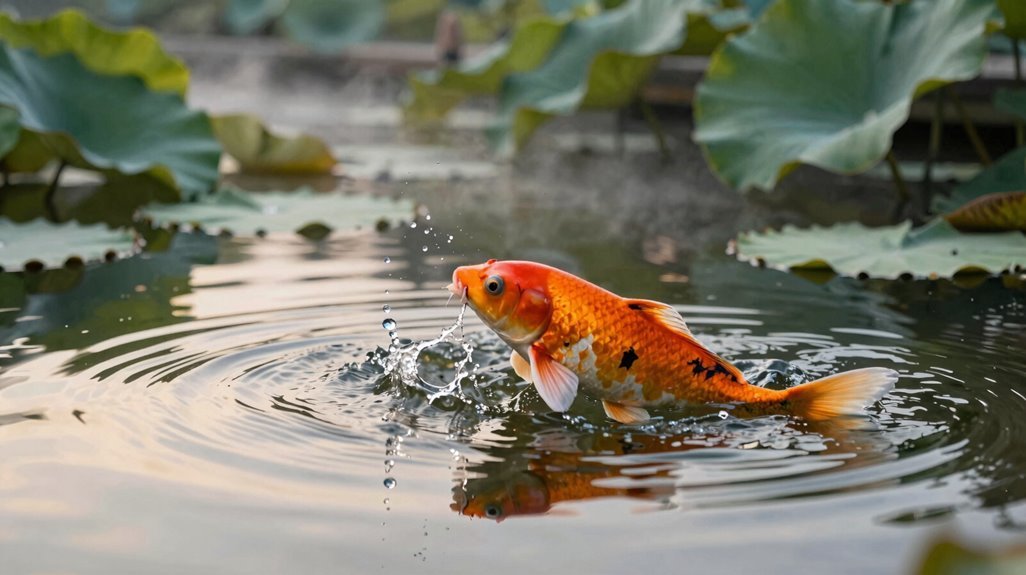
Why does a koi suddenly vault toward the afternoon sky when the thermometer shifts? I’ve watched this happen, and I understand your frustration when your prized fish becomes a projectile.
Temperature swings create invisible chaos. When warmth spikes, oxygen flees the water, and your koi’s metabolism races. They’re suffocating, desperate, jumping toward any promise of relief.
Temperature swings create invisible chaos—oxygen flees, metabolism races, and your koi vault skyward, suffocating, desperate for relief.
Cold snaps bring their own cruelty. Gills strain, digestion halts, and leaping becomes their protest against the pervious barrier of discomfort.
Consider these moments:
- Dawn mist rising off hexagon-tiled backdrop as your koi breaks the surface, gasping
- Midday sun hammering stone pillar fountain while dissolved oxygen vanishes
- Sudden storm dropping temperature ten degrees in an hour
- Filtration systems straining against ammonia spikes the stress unleashes
We’re in this together, protecting what we love.
How Overcrowding and Breeding Aggression Create Escape Behavior
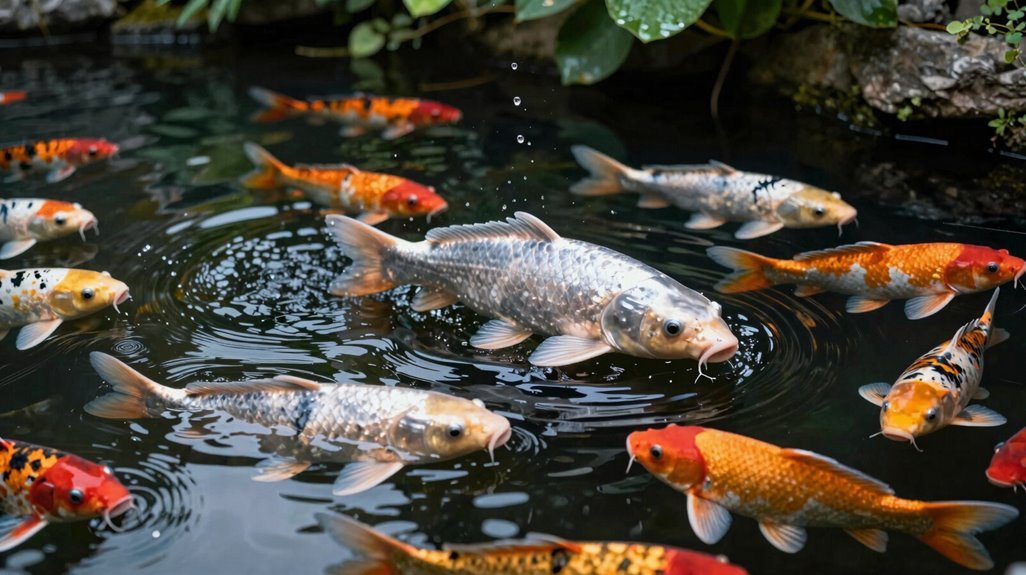
I’ve watched my koi crowd against the hexagon-tiled backdrop of my pond, their bodies packed so tight that individual scales catch light like scattered coins, and I know that overcrowding stress effects are pushing them toward the surface.
When breeding season aggression kicks in, the males chase females past the stone pillar fountain, their dorsal fins slashing through water that can’t dilute the ammonia fast enough, no matter how pervious my filtration system claims to be. Seeing them launch toward the rim, desperate for quieter zones beyond the glassy tension, I’m reminded that escape behavior isn’t mischief; it’s measurable distress demanding concrete intervention.
Overcrowding Stress Effects
When koi begin hurling themselves at pond edges, I’ve learned to first measure what their living space can actually sustain.
- Imagining their world shrinking: Picture fins brushing against every neighbor, no solitude behind the hexagon-tiled backdrop.
- Surface gasping: Watch them crowd the stone pillar fountain’s shadow, mouths breaking water for oxygen that never reaches bottom depths.
- Territorial friction: Feel the tension of limited swimming room, where each body becomes an obstacle.
- Invisible weight: Sense ammonia building, pervious to none, pressing against gills until escape feels necessary.
Overcrowding creates stress that manifests as desperate jumping behavior. Without adequate filtration and square footage, we’re forcing our finned companions toward literal leaps of faith. They deserve breathing room.
Breeding Season Aggression
How does spring’s arrival transform tranquil ponds into pressure cookers of fin and scale? I’ve watched breeding season ignite koi aggression, turning familiar waters into contested territory where every ripple signals confrontation. When spawning hormones surge, males chase females relentlessly, their bodies battering against stone pillar fountain bases and hexagon-tiled backdrops.
This relentless pursuit, amplified by overcrowding, exhausts koi until jumping behavior becomes their desperate exit strategy.
| Breeding Trigger | Observable Sign | Escape Response |
|---|---|---|
| Territorial disputes | Rapid directional changes near nest sites | Surface tail-swimming along pond edges |
| Mate competition | Clustering at territory boundaries | Leaping toward filtration equipment |
| Density stress | Sporadic surface activity spikes | Pervious attempts to clear waterline obstacles |
In smaller ponds, I’ve noticed limited horizontal room intensifies breeding-driven tension. Dominant conspecifics corner subordinates, forcing risky leaps. Understanding these dynamics helps us create refuges where our koi feel secure, not besieged.
How Predators and Sudden Changes Scare Koi Out
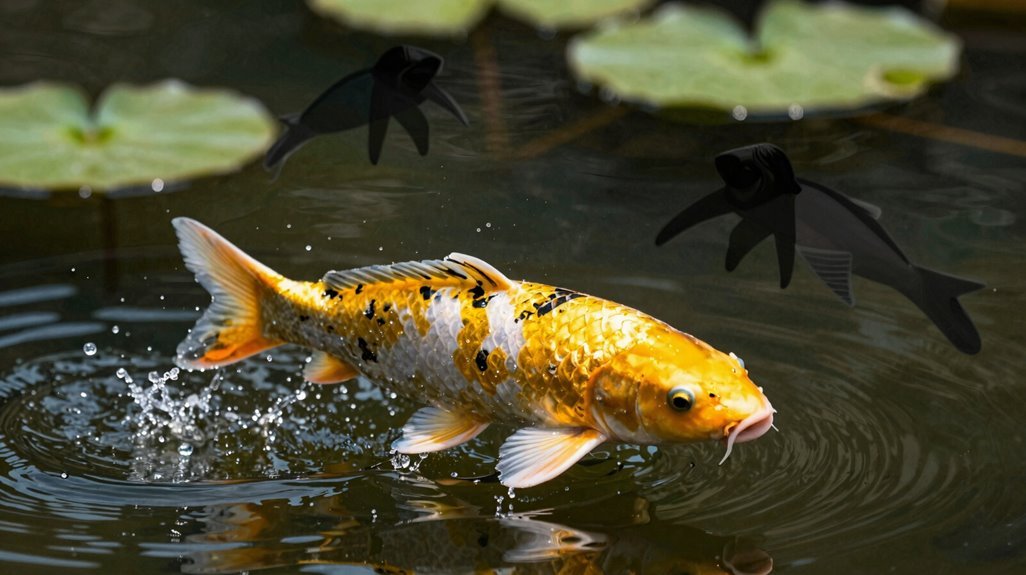
Why do koi sometimes rocket from the water without warning? I’ve watched this happen, and it’s always startling. Predators, or even shadows we mistake for threats, trigger explosive escapes. Sudden changes in their environment, chlorine shocks, rapid water additions, plunge koi into genuine distress. Their survival instinct demands immediate surface departure.
Koi rocket from the water when survival instinct demands immediate surface departure—whether from predators, shadows, or chemical shocks burning through their gills.
Picture your pond’s hexagon-tiled backdrop, your stone pillar fountain casting ripples. Now imagine:
- A heron’s silhouette freezing the water’s surface tension
- Chlorine burning through gills, sending fish vaulting toward air
- Raccoon paws probing the edge, koi exploding upward in silver arcs
- Shadows from passing clouds mimicking wings, provoking panic leaps
These aren’t random acts. They’re hardwired responses to perceived danger, rapid shifts in visual cues that read as attack. Understanding this helps us build safer spaces, where our koi feel protected, and we belong to their world too.
Emergency Fixes: What to Do in the Next 24 Hours
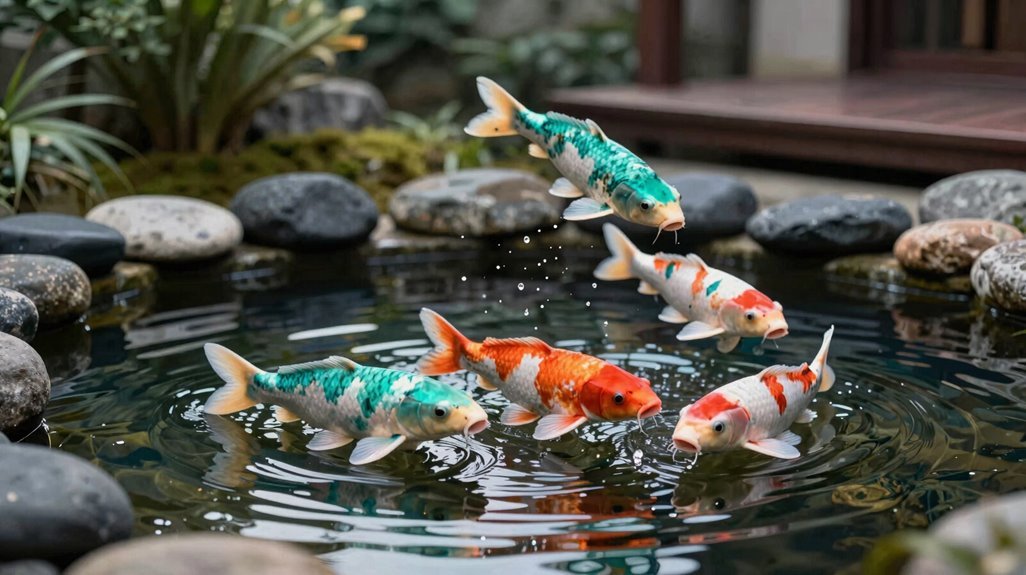
Finding my koi scattered on the deck, gasping, I know panic won’t save them. I grab my test kit, checking ammonia, nitrite, nitrate, pH, and temperature; spikes here explain why koi jump. Poor water quality demands immediate action, so I deploy emergency fixes: cranking aeration with air stones, executing a gentle 10–20% water change with dechlorinated, temperature-matched water, and scrubbing filters choked with debris. I stop feeding until parameters stabilize, preventing further ammonia surges.
| Emergency Action | Purpose |
|---|---|
| Test water parameters | Identify toxins triggering distress |
| Boost aeration | Combat oxygen deprivation |
| Partial water change | Dilute pollutants safely |
These steps, executed within hours, restore the hexagon-tiled backdrop’s tranquility. We’re guardians of these living jewels, and swift, precise intervention keeps our stone pillar fountain community intact.
How to Install Netting and Barriers That Stop Jumping

Wherever my stone pillar fountain’s surface remains unguarded, my koi see opportunity, not boundary. I’ve learned that netting stretched drum-tight across the entire pond, pervious to rain but escape-proof, forms my first defense. When aesthetics demand subtler barriers, I arrange smooth-edged rocks or tall irises along margins, blocking launch points without sacrificing the hexagon-tiled backdrop’s tranquility.
Koi see opportunity where surfaces go unguarded; my drum-tight netting and iris-lined margins speak the language of boundaries they finally understand.
Floating islands create surface boundaries my fish cannot penetrate.
My maintenance routine includes:
- Scanning netting at dawn for tears where morning light fractures through
- Tracing barrier edges with fingertips, feeling for gaps beneath cool stone
- Tightening sagging sections before afternoon heat loosens fibers
- Patching holes immediately, watching my koi circle below, contained
Layering netting with edge barriers, especially during breeding season, keeps my community intact.
How to Treat Parasites and Water Quality Issues
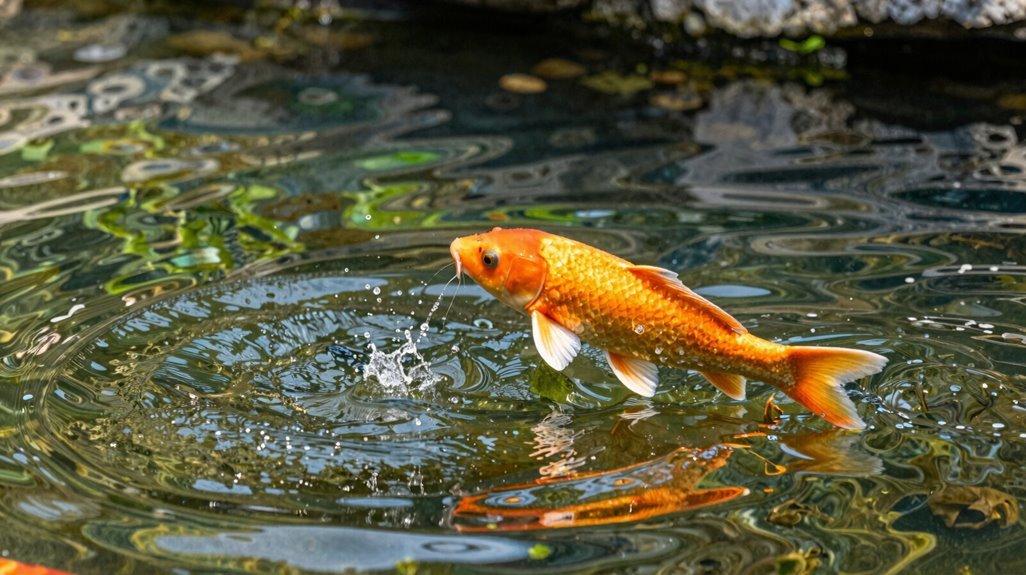
When my koi begin leaping with desperate frequency, I no longer look first to barriers but beneath the surface, where microscopic invaders often wage their quiet war. Parasites, flukes, ich, trichodina, irritate gills and skin, driving fish to flash, rub, and vault skyward seeking relief. I confirm suspicions with scraping tests, examining mucus under magnification before any treatment begins.
My approach stays targeted, never blanket-bombing chemicals. I prioritize water quality first: stable pH, zero ammonia, vigorous aeration through hexagon-tiled backdrop filtration. Clean water reduces parasite stress and supports recovery.
Treatment proceeds gradually, dosing precisely, monitoring behavior daily. Quarantining new stock prevents reinfection. Through consistent observation, stone pillar fountain shadows revealing early flashing, I catch outbreaks before desperate leaps begin, keeping my pond’s community whole.
When Should I Call a Pond Expert?
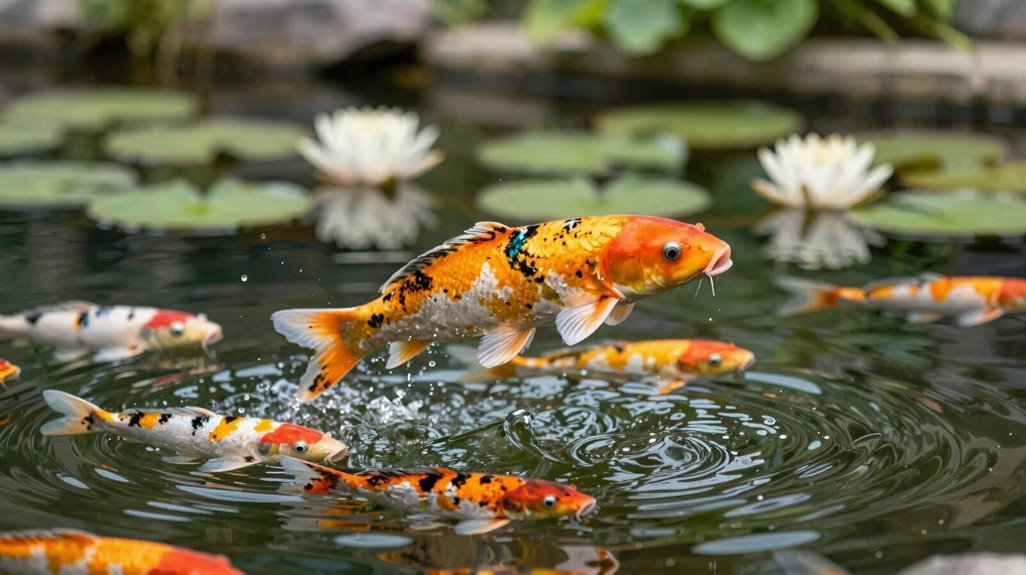
Why exhaust every remedy alone when persistent leaping signals troubles I cannot diagnose from the pond’s edge? When koi jump repeatedly despite my best efforts, I recognize my limits and reach for professional guidance.
Clouded water swirling beneath the hexagon-tiled backdrop, where invisible ammonia spikes poison gills I cannot see. Fish gasping near the stone pillar fountain, their scales catching light as parasites drive them toward the surface.
Dawn revealing another casualty on the pervious concrete edge, fins torn from midnight escapes I failed to prevent. Test strips blurring between colors, pH readings unstable despite my faithful filtration maintenance.
A pond expert brings precision: comprehensive water quality analysis, filtration assessment, and health evaluations. When my interventions fail, I surrender pride for their trained eyes. Together, we restore the calm my koi deserve.
Monthly Routines That Keep Koi Calm and Grounded
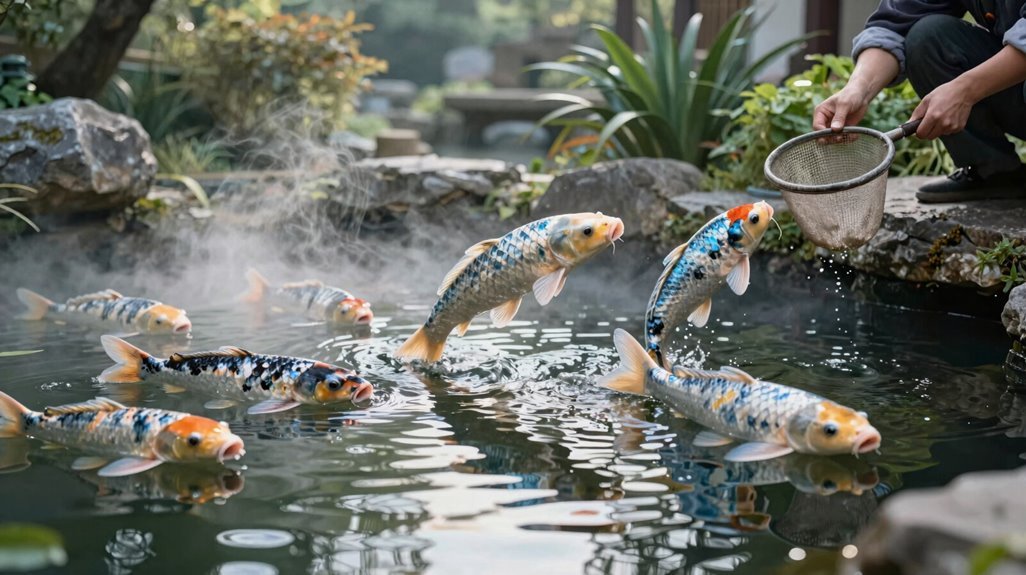
The hexagon-tiled backdrop reflects my own face each morning as I kneel at the pond’s edge, test strips ready. Tracking ammonia, nitrite, nitrate, pH, KH, and dissolved oxygen, I record each reading to catch trends before they trigger koi jump behavior. I’ve learned that stable water quality forms the foundation of calm fish.
My monthly pond maintenance follows a rhythm I never skip. Performing partial water changes, 5 to 15 percent, I match temperature precisely and dechlorinate completely. Running through pumps and skimmers, I confirm filtration and aeration keep oxygen levels steady, preventing the agitation that sends fish toward the surface.
Checking monthly for parasites, I watch for flashing and gill irritation. Removing excess algae, managing density, and feeding consistently, I maintain an environment where my koi stay grounded and secure.